
If houseplants always seem to defeat you, learning the basics of Zamioculca care is the best news you’ll read today. This species — botanically Zamioculca zamiifolia, also known as the “fortune plant” or ZZ plant — is one of the most forgiving choices for anyone who wants to start bringing some green into their home without the stress. At Losteflor, in Chiclana de la Frontera, people ask us about it every week, and almost always for the same reason: they want a beautiful, easy and practically indestructible plant.
What the Zamioculca is and why it adapts so well
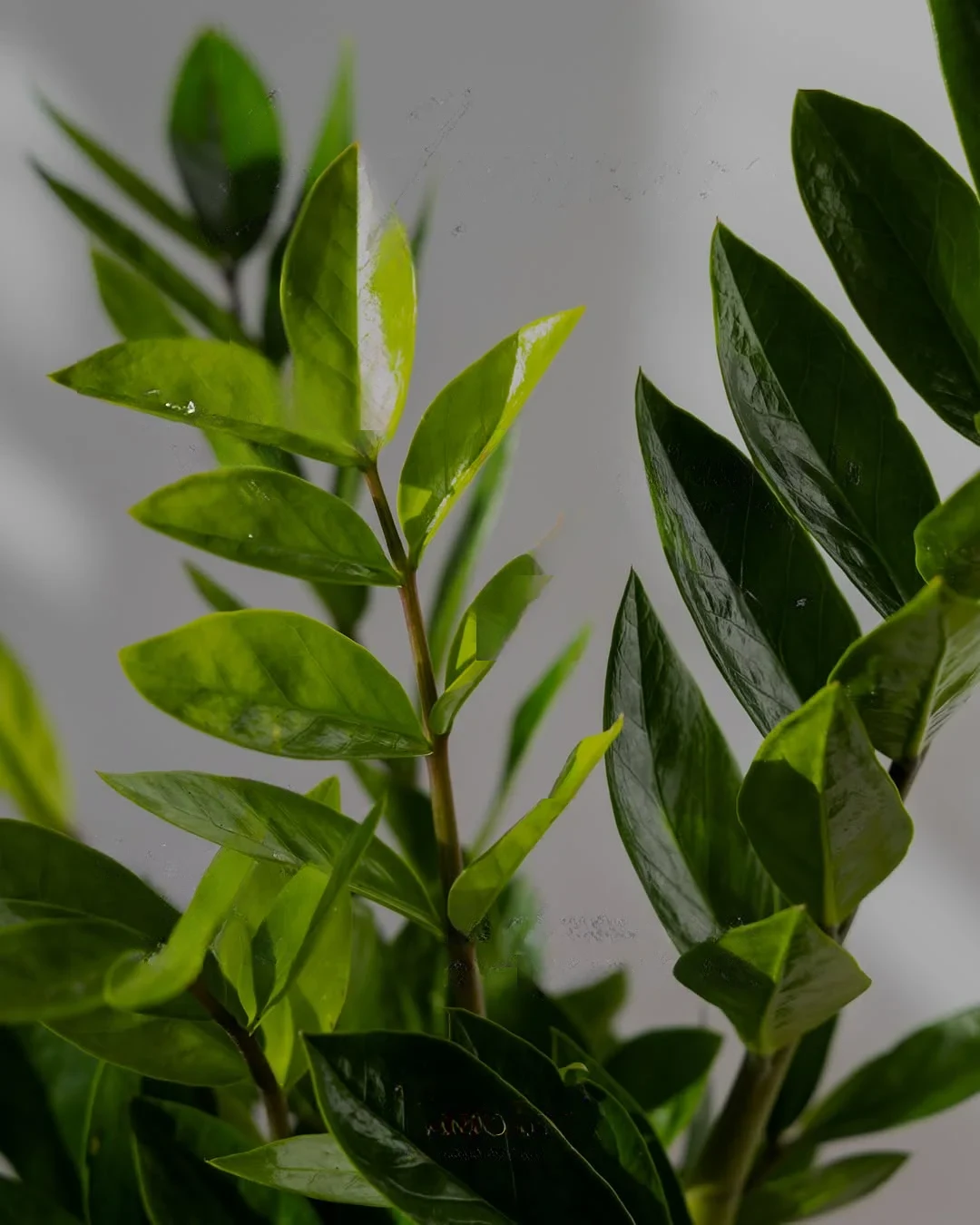
The Zamioculca is an indoor plant native to tropical Africa, known for its pinnate, glossy leaves of an almost lacquered deep green. Its great advantage is structural: it has underground rhizomes that act as a reservoir for water and nutrients, which allows it to withstand long periods without watering. To understand Zamioculca care, you have to start from there: it doesn’t need constant attention, but correct attention.
That makes it the ideal plant for apartments, offices, staircases, entryways and any corner with dim light where other species would simply survive. As we like to say at the nursery, it adapts to almost any corner.
The 3 golden rules of Zamioculca care
1. Minimum watering: less is more
If there is one non-negotiable point within Zamioculca care, it’s watering. Its roots are genuine water reservoirs and, because of that, excess moisture is practically its only deadly enemy. The rule is simple: only water when the soil is 100% dry to the touch. Push your finger into the pot and, if you feel moisture or coolness, wait a few more days.
As a reference, in a well-climatised indoor space you can go two to three weeks between waterings, and even longer in winter. A saucer under the pot is useful for catching overflow, as long as you empty it after each watering: the Zamioculca should never sit with its feet in stagnant water.
2. Bright but always indirect light
Another key point in Zamioculca care is location. It loves bright light, but always indirect. Keep it away from direct midday sun: it can scorch its fleshy leaves and leave irreparable brown marks, especially in climates like ours, with long, very bright summers.
A window facing north or east is usually perfect, as is a corner one or two metres from a south-facing window with a sheer curtain. It also tolerates shadier spots — hence its “indestructible” reputation — though it will grow a little more slowly. If you see it leaning towards the light, simply rotate the pot a quarter turn every fortnight to keep it balanced.
3. Slow growth: patience and no rush
Within Zamioculca care, patience deserves its own chapter. This isn’t a plant in a hurry: enjoy the process and watch it push out new stems calmly, especially in late spring and through the summer. It’s completely normal to see it “still” for weeks and then, all of a sudden, send up a new stem several centimetres long almost overnight.
A small dose of liquid all-purpose fertiliser, diluted to half the recommended dose, once a month in spring and summer, is all it needs. In autumn and winter, zero fertilisation: the plant enters a resting phase in which any excess fertiliser or water does more harm than good.
Zamioculca care in a Mediterranean climate
In the Chiclana, Conil and Cádiz bay area, Zamioculca care is even simpler, because the coastal climate tends to favour it: reasonable ambient humidity, mild winters and a summer that, kept indoors, suits it wonderfully. It’s the perfect plant for holiday rentals, second homes and offices where there isn’t always someone around to water.
That said, in very closed houses with constant air conditioning, it’s wise to move the pot away from the direct flow of cold air. The ideal temperature for Zamioculca care sits between 18 and 26 °C; below 15 °C it goes into stress and its stems can become floppy.
Repotting, propagation and cleaning
Repotting is part of Zamioculca care whenever we see rhizomes peeking out above the soil or through the drainage holes. It usually needs doing every two or three years, in spring, into a pot just a couple of centimetres wider, with well-draining soil (an all-purpose mix with a good handful of perlite or coconut fibre).
If you want to propagate it, the simplest method is to divide the root ball when repotting: each section with a rhizome and at least one stem will work as a new plant. To keep its shine, just wipe the leaves with a soft, damp cloth from time to time — no leaf-shine products, which clog the pores and harm the plant in the long run.
Frequently asked questions about Zamioculca care
How often should you water a Zamioculca?
Only when the soil is fully dry. As a rough guide, every two to three weeks indoors in climate-controlled rooms during spring and summer, and considerably less often in autumn and winter. The finger-in-the-pot test never fails.
Can I keep a Zamioculca in a room with no window?
In very dark rooms it will survive, but it will barely grow and may end up losing leaves. For correct Zamioculca care, the ideal is bright indirect light or, failing that, at least a little natural light each day.
Is it toxic to pets?
The Zamioculca contains calcium oxalate crystals, so it’s wise to keep it out of reach of dogs, cats and small children who might chew its leaves. If living with pets is a concern, at the nursery we can recommend “pet-friendly” green alternatives.
Why are the leaves turning yellow?
Yellowing almost always points to overwatering or to soil that has stayed waterlogged for too long. Within proper Zamioculca care, space your waterings out, make sure the pot drains well and, if the situation is serious, check the rhizomes to rule out rot.
Does your Zamioculca need some extra TLC, or would you like to add a new one to your home? Stop by Losteflor in Chiclana and we’ll advise you personally, or find us on Google Maps to get to us in a couple of minutes.