
Pothos care is surprisingly simple, and that is one of the reasons it has become one of the most requested plants at our nursery in Chiclana. What many people do not know is that pothos has a wilder side: it is not just a hanging plant, but a natural-born climber capable of covering an entire wall if you give it the chance. In this guide we go over everything you need to know to keep it healthy, lush and with those glossy leaves that are so charming.
What pothos is and why it is so popular
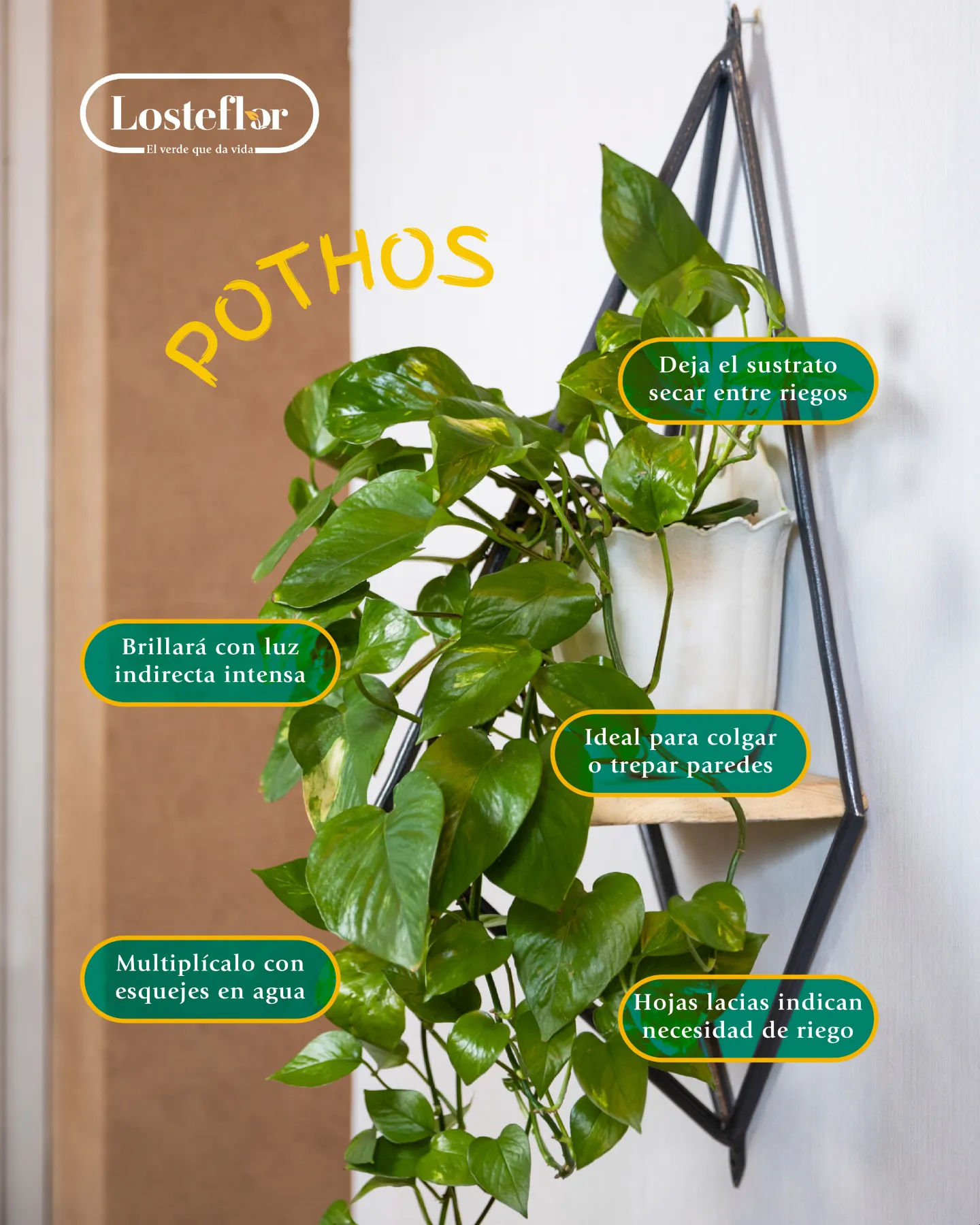
Pothos (Epipremnum aureum) is a houseplant native to Southeast Asia, prized for its heart-shaped leaves in a deep green, often marbled with yellow or cream. Its great advantage is versatility: you can let it cascade down from a shelf or a hanging planter, or train it upwards so it climbs. That dual personality, decorative and climbing, is what makes it so special and what shapes much of pothos care.
Light: the key to pothos care
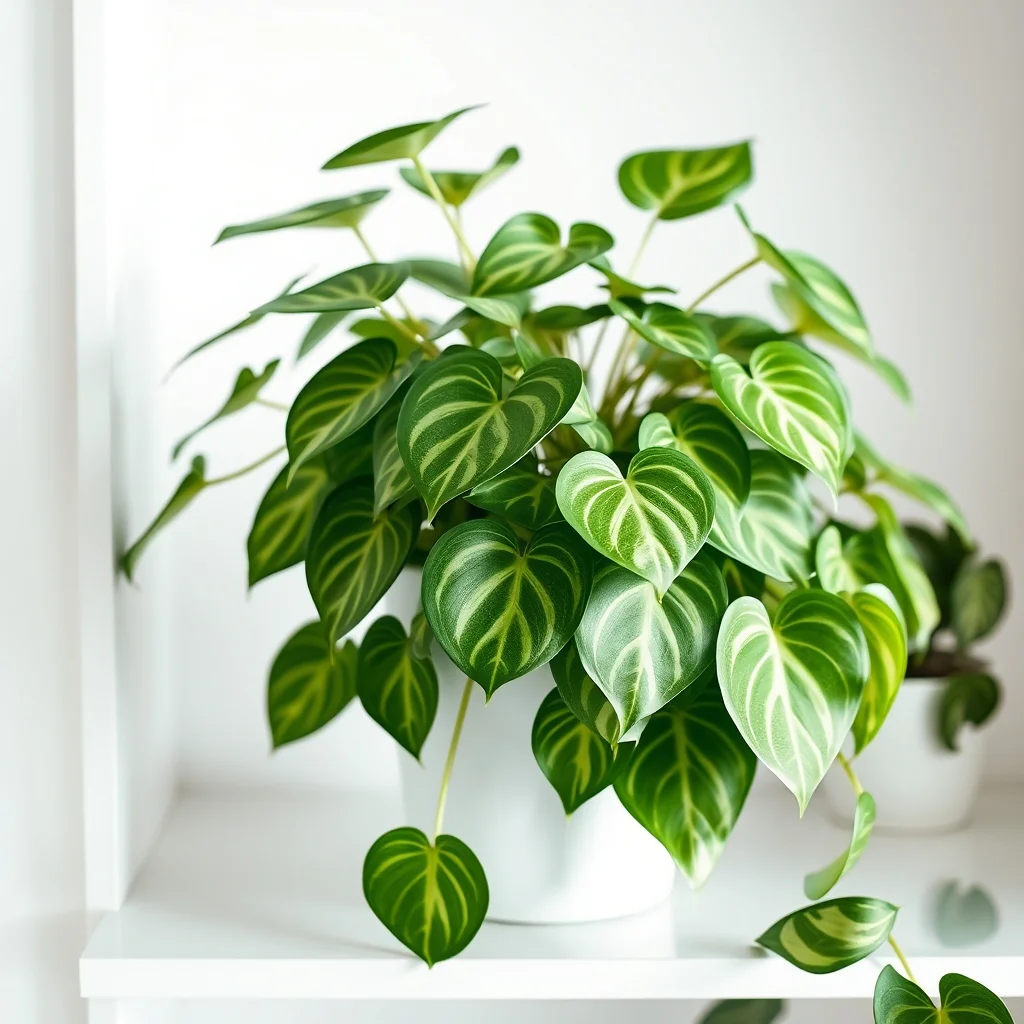
Within pothos care, light makes all the difference: it will thrive in bright, indirect light. It loves brightness, but direct sun can scorch its leaves and fade the marbling. A well-lit spot near a window, but out of direct rays, is its ideal place. It tolerates partial shade well, although in very dark areas it will grow more slowly and lose some of its colours. If you notice the variegated varieties losing their yellow, it is a sign that it needs more light.
Watering: less is more
One of the most important aspects of pothos care is getting the watering right, and here the golden rule is to let the substrate dry out between waterings. This plant prefers to stay slightly dry rather than waterlogged, since excess water rots its roots easily.
How to know when to water
The plant itself will let you know: when the leaves look limp or drooping, it is a sign that it needs watering. Push a finger into the soil and, if the top few centimetres are dry, water generously and let the excess drain well. With this simple check you will avoid both thirst and overwatering, the two most common mistakes in pothos care.
The climbing side: hanging or climbing walls
This is where pothos shows its character. It is ideal for hanging or for climbing walls, and it all depends on how you train it. Training it well is part of pothos care: if you place it up high, its stems will fall to form a very striking green curtain. If you prefer it to grow upwards, add a moss pole or a few small wall supports and you will see how it grips and gains height. When it climbs and receives good light, its leaves tend to grow larger, revealing that wild side that so few people get to enjoy.
Propagate it: cuttings in water
If you want more specimens (or to give them away), pothos propagates from cuttings in water incredibly easily. Cut a stem just below a node, remove the lowest leaves and submerge it in a glass of water. In a few weeks you will see roots appear; when they are a couple of centimetres long, transplant the cutting into a pot with substrate. It is one of the most rewarding plants for getting started with propagation and one of the aspects of pothos care that the little ones of the house enjoy most as a home project.
A word about pets
Pothos care also involves keeping safety in mind: it is not a suitable plant for homes with pets that nibble on leaves, as it can be toxic if ingested. Place it up high or train it along a wall out of the reach of dogs and cats. If you are looking for safe alternatives, at the nursery we can recommend pet-friendly plants with a similar decorative effect.
Left wanting one of your own? Come and get your pothos at Losteflor and discover how to make it grow without limits. You can write to us or drop by the nursery to take yours home and clear up any doubts about pothos care. You will find us easily at our location in Chiclana de la Frontera, where we will help you choose the perfect specimen.
Frequently asked questions about pothos care
How often should you water a pothos?
There is no fixed frequency: what matters is letting the substrate dry out between waterings. Check the soil with your finger and only water when the top few centimetres are dry or when you see the leaves looking a little limp.
Does pothos need a lot of light?
It prefers bright, indirect light. Avoid direct sun, which scorches its leaves, but do not leave it in a dark corner either if you want it to keep its marbling and grow strongly.
How does pothos reproduce?
With cuttings in water. Cut a stem below a node, put it in a glass of water and, when it grows roots, transplant it into a pot. It is one of the most gratifying and simple aspects of pothos care.
Is pothos toxic to pets?
Yes, it can be toxic if dogs or cats nibble on its leaves. Place it up high or out of their reach, or ask us about pet-friendly alternatives.