


The Ficus Lyrata does not speak with words, but it does speak through its leaves: every change in color, gloss or texture is a small clue about how it feels. Learning to read those signals turns caring for this plant into something much simpler and, above all, far more accurate.
At Losteflor we welcome neighbors from Chiclana and the whole Bay of Cádiz every week with this plant in their hands and the same question: “what is happening to my leaves?”. That is why we have put together this practical guide with the four most useful Ficus Lyrata leaf signals so you can read your plant and react in time.
The language of Ficus Lyrata leaves
The large, violin-shaped leaves are this species’ signature. They are also its control panel: imbalances in light, watering or adaptation to the environment show up there first. Looking at them regularly, even a couple of minutes a week, lets you catch problems before they become serious.
The general rule is simple. Firm, green and glossy leaves point to a comfortable plant. Any significant change in color, texture or drop is an invitation to review the light, the watering or the substrate. From there, let’s go step by step.
Light: the first signal on Ficus Lyrata leaves

Light is almost always the first factor worth checking. A healthy Ficus Lyrata needs plenty of natural brightness, but filtered, without direct sun during the central hours of the day.
- “I need more light”: if the leaves look pale, soft and weak, the plant is probably too far from a window. Move it closer to a bright spot, but without direct sun.
- “I have too much light”: uneven yellow patches or small burns appear on the surface. In that case, pull it a few steps back from the glass or shield the area with a light curtain.
- “Perfect light”: large leaves, deep green, firm and glossy. The best signal that the spot is the right one.
Watering: when the spots on Ficus Lyrata leaves tell the story
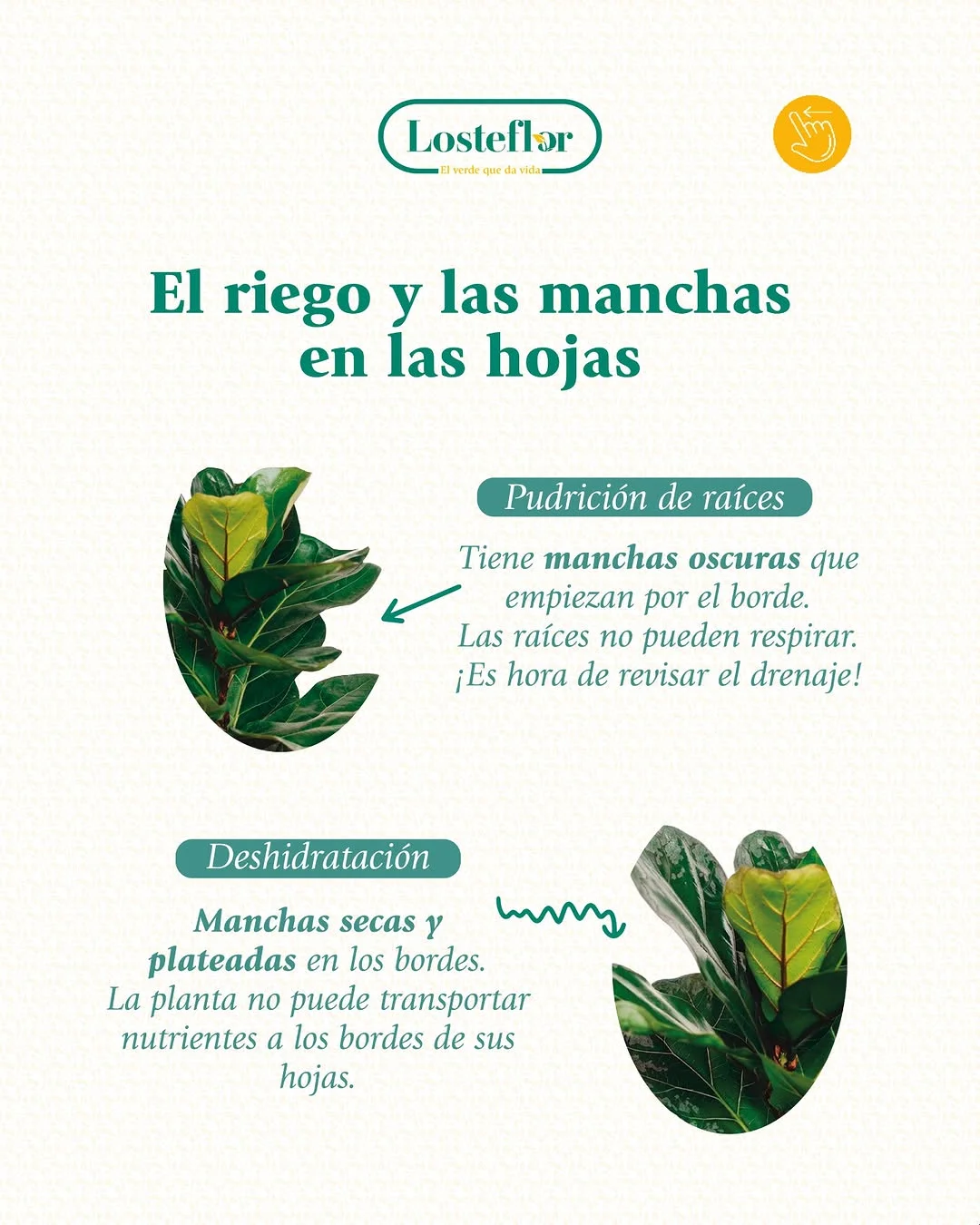
Watering is the other big source of clues. The Ficus Lyrata is very expressive with water and usually warns you before the damage is irreversible. There are two patterns worth recognizing.
Root rot
If dark spots appear starting at the leaf edge and moving toward the center, the roots are most likely suffering from too much water. When the substrate compacts and stops draining, the roots cannot breathe and the Ficus Lyrata shows it on the leaves. It is time to check the drainage, let the substrate dry out and, if needed, consider repotting with fresh, well-aerated soil.
Dehydration
If, on the other hand, the spots are dry, silvery and concentrated along the edges, the plant is not getting enough water or the substrate has become so dry that it no longer carries it. The leaf cannot deliver nutrients to the edge and wilts there first. The fix is to get back to a regular watering routine and, if the soil is compacted, gently loosen it so it absorbs again.
New shoots: the green signal of the Ficus Lyrata

There is one signal that always brings peace of mind: new shoots. When tender leaves appear at the top of the stem, firm and with a freshly minted bright green, it means the plant is healthy, well nourished and adapted to the environment you have prepared for it.
This is the moment to change nothing: not the spot, not the watering routine, not the pot. The Ficus Lyrata is comfortable and growing is its way of telling you. Take the chance to wipe its leaves with a damp cloth from time to time, so they keep their shine and breathe better.
When to ask for help in Chiclana
If after reviewing light and watering you still see odd signals, do not wait for the plant to lose leaves. In Chiclana’s Mediterranean climate, with temperature shifts between indoors and outdoors, Ficus may need small location tweaks throughout the year. A visit to the nursery can save you weeks of trial and error.
At Losteflor we look at the leaves in hand, check the substrate and give you specific guidance based on your home, your window and your routine. If you would like to drop by, check our location and opening hours or find us directly on Google Maps.
Frequently asked questions about the Ficus Lyrata
How much light does a Ficus Lyrata need?
Plenty of natural light, but filtered. The ideal spot is near a large window with a light curtain, avoiding direct sun during the central hours of the day.
How often should it be watered?
There is no fixed frequency. The rule is to check the substrate: when the top centimeters feel dry to the touch, it is time to water. In winter, waterings are spaced out; in summer, they get closer together. A little less is better than a little more.
Why do its leaves drop all at once?
A sudden drop usually responds to a strong change: a cold draft, a move, a repotting or overwatering. The Ficus Lyrata is sensitive to transitions, so return it to a stable setting and watch for a week or two before making more decisions.
Can I keep it in the garden in Chiclana?
In spots sheltered from wind and free of frost, the Ficus Lyrata does well outdoors. The usual choice in the Bay of Cádiz is to grow it in a large pot on a porch or terrace, where it gets plenty of light without suffering the midday sun or the westerly wind gusts.