That orchid you were given, the one that ended up with nothing but leaves, hasn’t had its final say yet. An orchid not blooming isn’t a lost plant: almost always, it’s a plant waiting for something from you. We’ll show you how to read it and help it along until it flowers again.
With an orchid not blooming, you don’t need strange tricks. All it takes is paying attention to what the plant shows you and giving it what it asks for at each moment: water when it needs it, cool nights in autumn, a good cut when flowering ends and freedom for its roots.
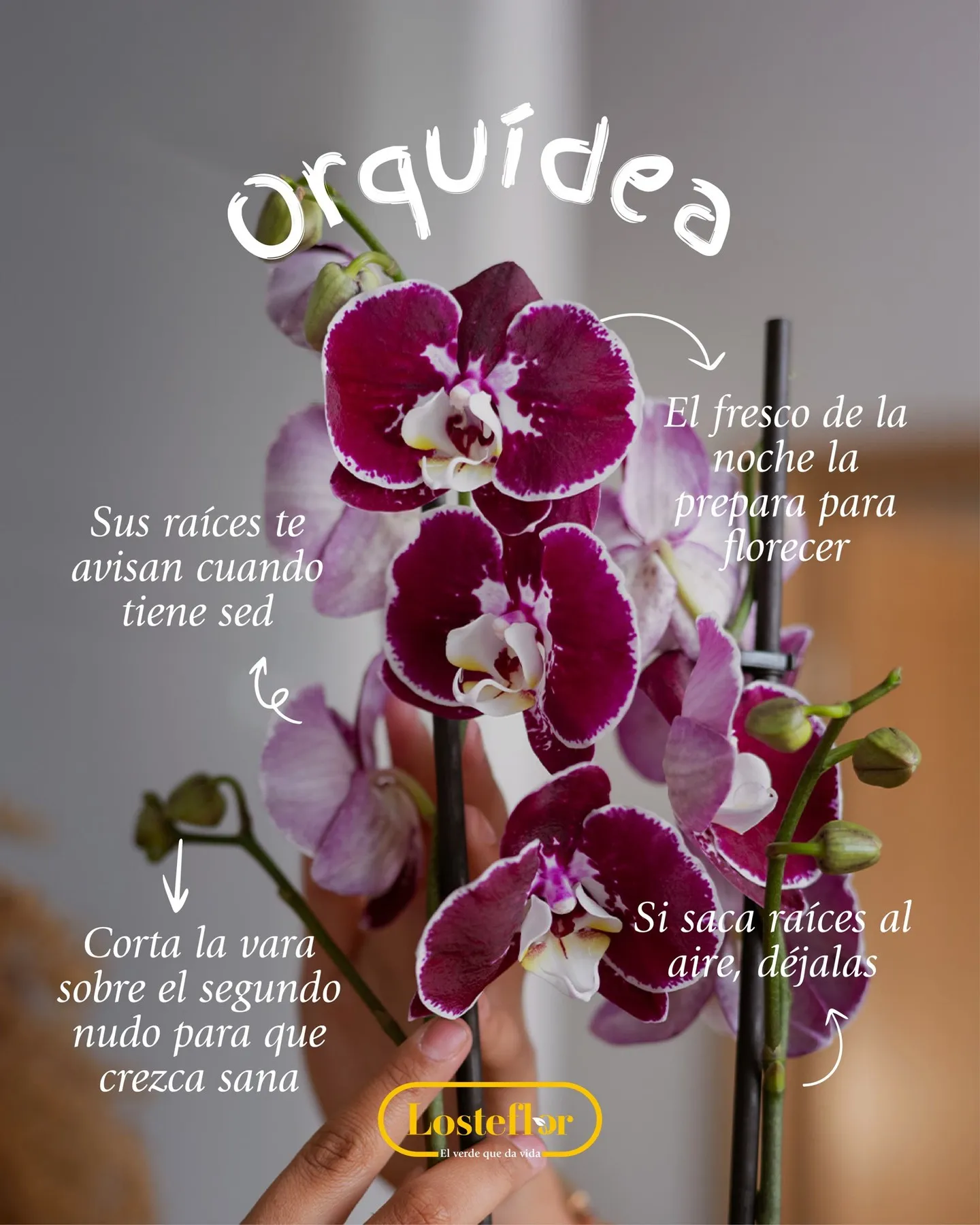
Its roots tell you when it’s thirsty
An orchid speaks through its roots. When they’re green, it’s comfortable: it has the water it needs. When they turn silvery, it’s telling you it’s thirsty.
It’s the most reliable sign of when to water, far better than following a fixed schedule. Before you reach for the watering can, check the colour of the roots. If they’re green, wait; if you see that silvery tone, it’s time. That way you avoid both thirst and overwatering, and an orchid not blooming is usually very grateful when we stop watering it blindly.
An orchid not blooming loves the cool of the night
Here’s the detail hardly anyone knows. In autumn, orchids love to feel the cool of the night. When night temperatures drop by about 5 °C, the plant notices and starts preparing a new spike, the stem where the flowers will later appear.
Check where you keep it. If your orchid not blooming lives in a room with the same temperature day and night, you’re taking that signal away from it. A spot where it can feel the night cooling down may be just the nudge it needs.
Cut the spike above the second node
When the flowers drop, don’t leave the dry spike in place or just pull it off. Cut it above the second node, those small marks you’ll see along the stem. That helps the plant grow healthily.
And then, patience. After the cut, an orchid not blooming needs its time to prepare the next flowering. Weeks without visible changes are normal: don’t give up on it.
If it grows aerial roots, leave them
Often, when we see roots growing out of the pot, we think something’s wrong and cut them or try to tuck them back in. Better not. If your orchid not blooming grows aerial roots, leave them be: it’s its way of looking for air.
Those roots also help you read the plant, just like the ones inside. Green, all good; silvery, time to water. And if you also see the plant has run out of room in its pot, take a look at the signs that a plant needs repotting.
An orchid that’s waiting, not an orchid that’s lost
Roots that talk to you, cool nights in autumn, a cut in just the right place and freedom to grow. With this care, your orchid not blooming has every chance of filling up with flowers again.
And if you have questions about yours, drop by our nursery in Chiclana and tell us what’s going on. We’ll help you understand it.
Frequently asked questions about an orchid not blooming
Should you throw the orchid away when all its flowers drop?
No. Losing its flowers is part of its cycle. Cut the spike and keep caring for it: the plant is still alive and can flower again.
Do silvery roots mean the plant is dying?
Not necessarily. That silvery tone is its way of asking for water. Water it and you’ll see them turn green again once it’s comfortable.
Why is autumn a good time to pay attention to it?
Because that’s when nights get cooler, and that temperature contrast is what encourages the orchid to prepare a new spike.