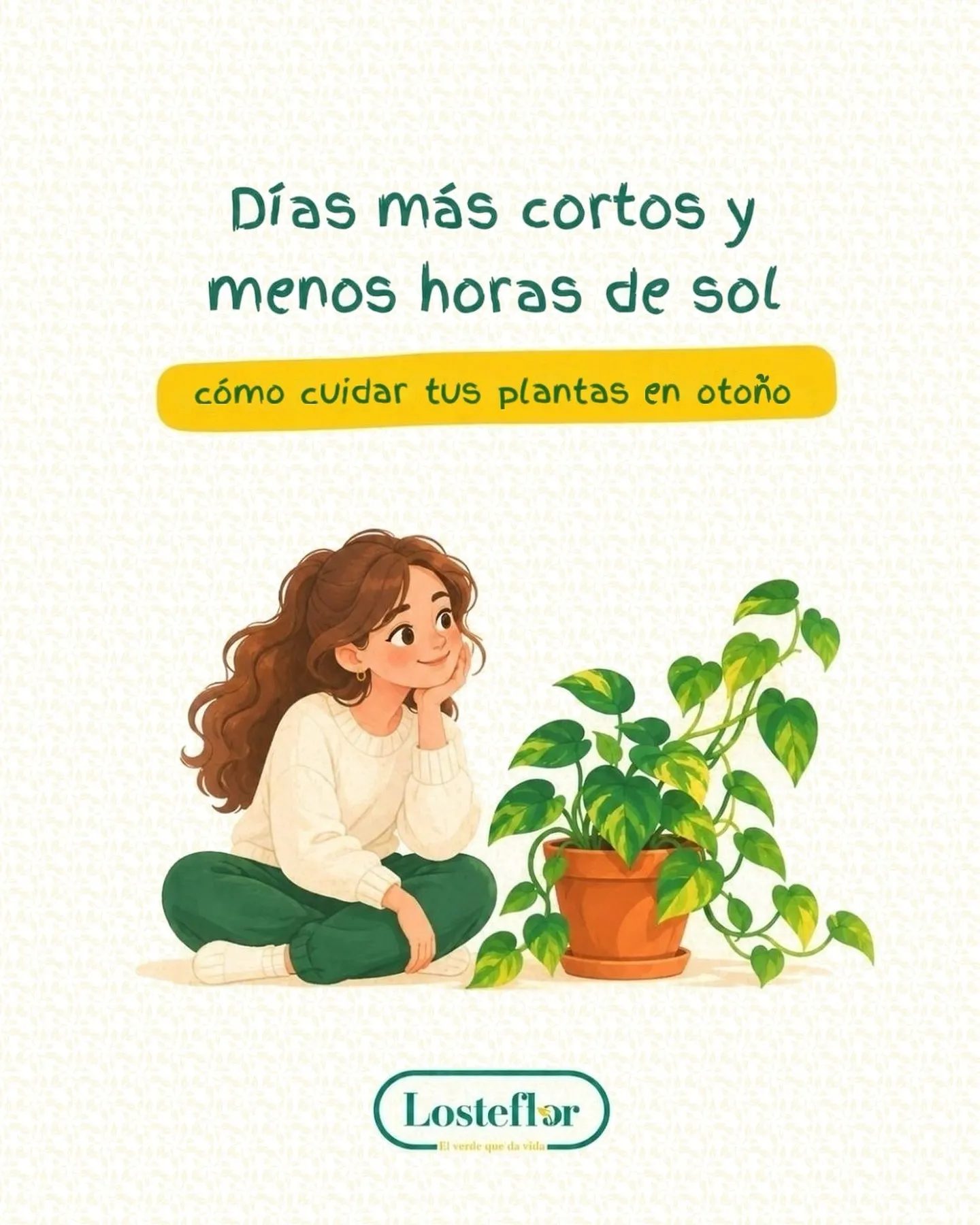
The days are getting shorter and the cold is setting in, but your plants notice it before you do. Indoor plants in winter get fewer hours of sun, grow more slowly and need different care than in summer. With 4 simple habits they get through these months strong and beautiful, and here we go through them one by one, with the reason behind each tip.
Three signs your plant is asking for light
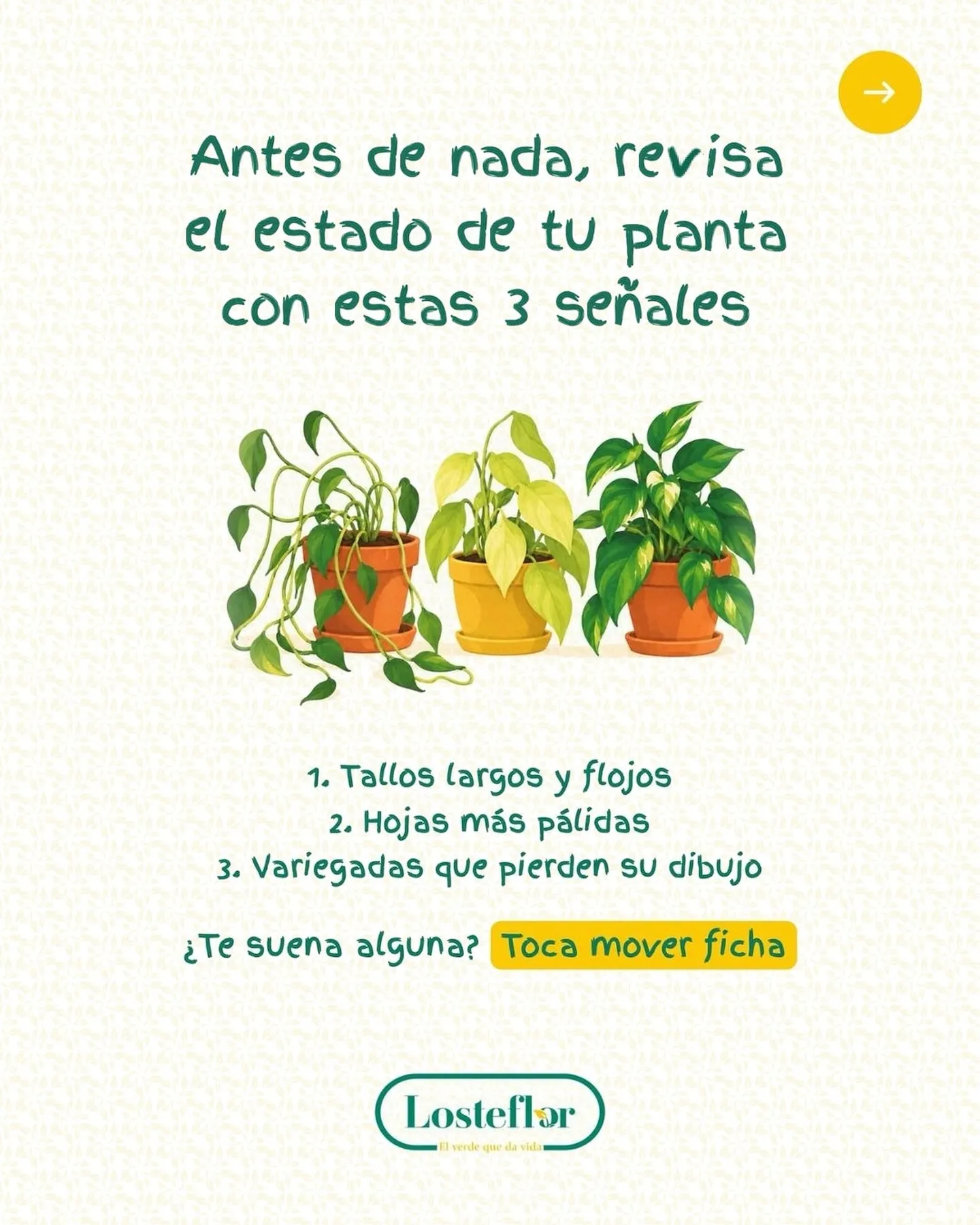
Before changing anything, check how your plant is doing. With indoor plants in winter there are 3 signs that give away a lack of light:
- Long, floppy stems. The plant stretches its stems looking for light that is not reaching it. They grow thin, with more space between one leaf and the next, and end up flopping over.
- Paler leaves. With little light, the plant makes less chlorophyll and the green loses intensity.
- Variegated leaves losing their pattern. The white or yellow areas of a variegated leaf do not photosynthesise. When light is scarce, the plant turns to green to compensate and the markings fade.
Sound familiar? Time to make a move. The good news is that indoor plants in winter respond quickly when you change a couple of things.
Bring it closer to the light: every ray counts

Move your plant next to the brightest window in the house, ideally south-facing, and open the curtains during the day. In these months the sun sits lower and shines in for less time, so a south-facing window is the one that makes the most of direct light.
In summer you may have kept the plant in a corner a bit further away because the sun was strong. Now things change: for indoor plants in winter every ray counts, and a few steps closer to the window make a difference.
Turn it and clean it every week
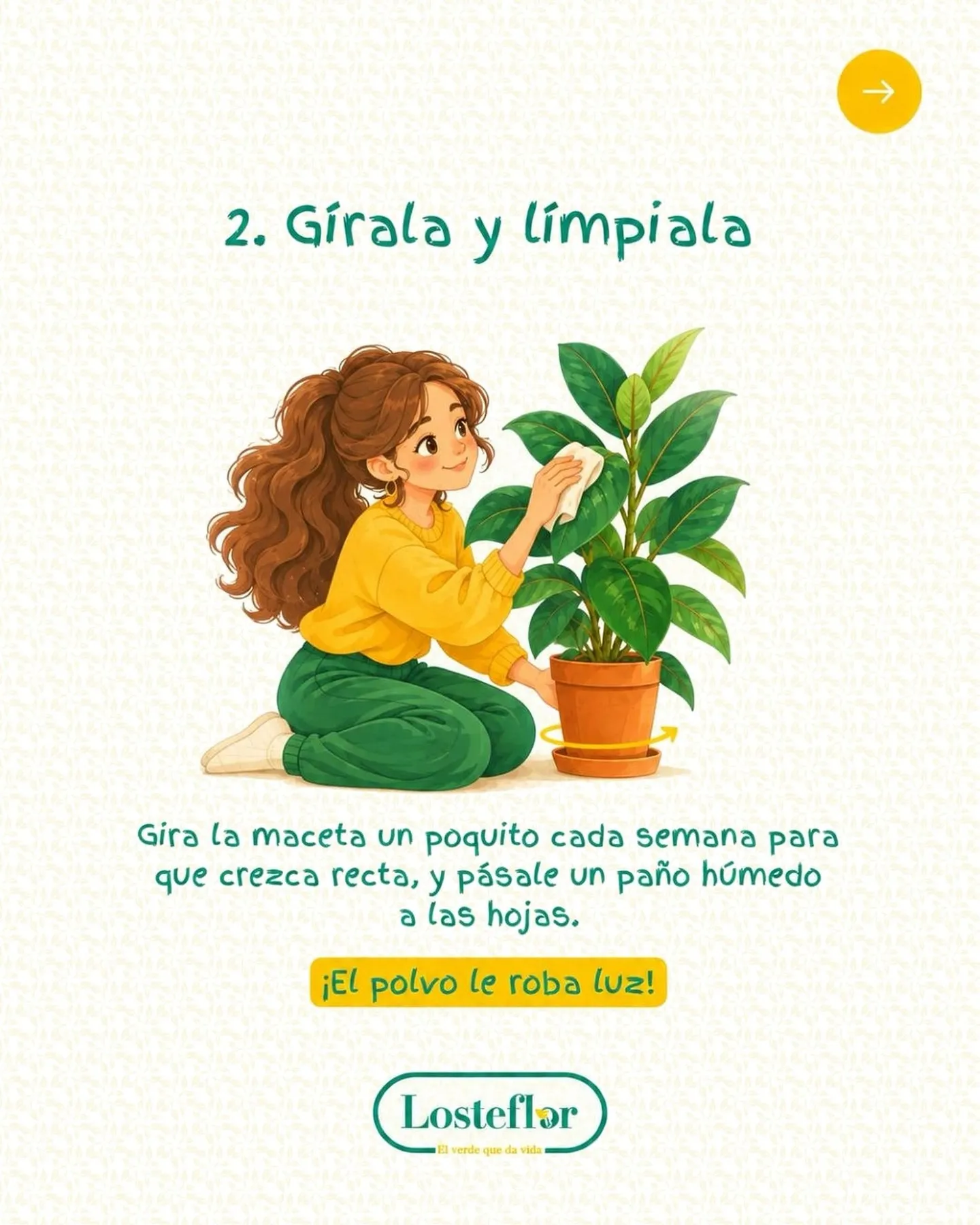
Turn the pot a little every week so it grows straight. Plants lean towards the side the light comes from; if it always gets light from the same side, it ends up crooked and barer at the back. A small turn spreads the light and keeps it balanced.
And wipe the leaves with a damp cloth. Dust steals light: it forms a thin layer on the leaf that filters out part of the little it receives. For indoor plants in winter, with light so limited, clean leaves make better use of every hour of sun. Do it gently, holding the leaf from underneath with your other hand.
Less water and no fertiliser until spring
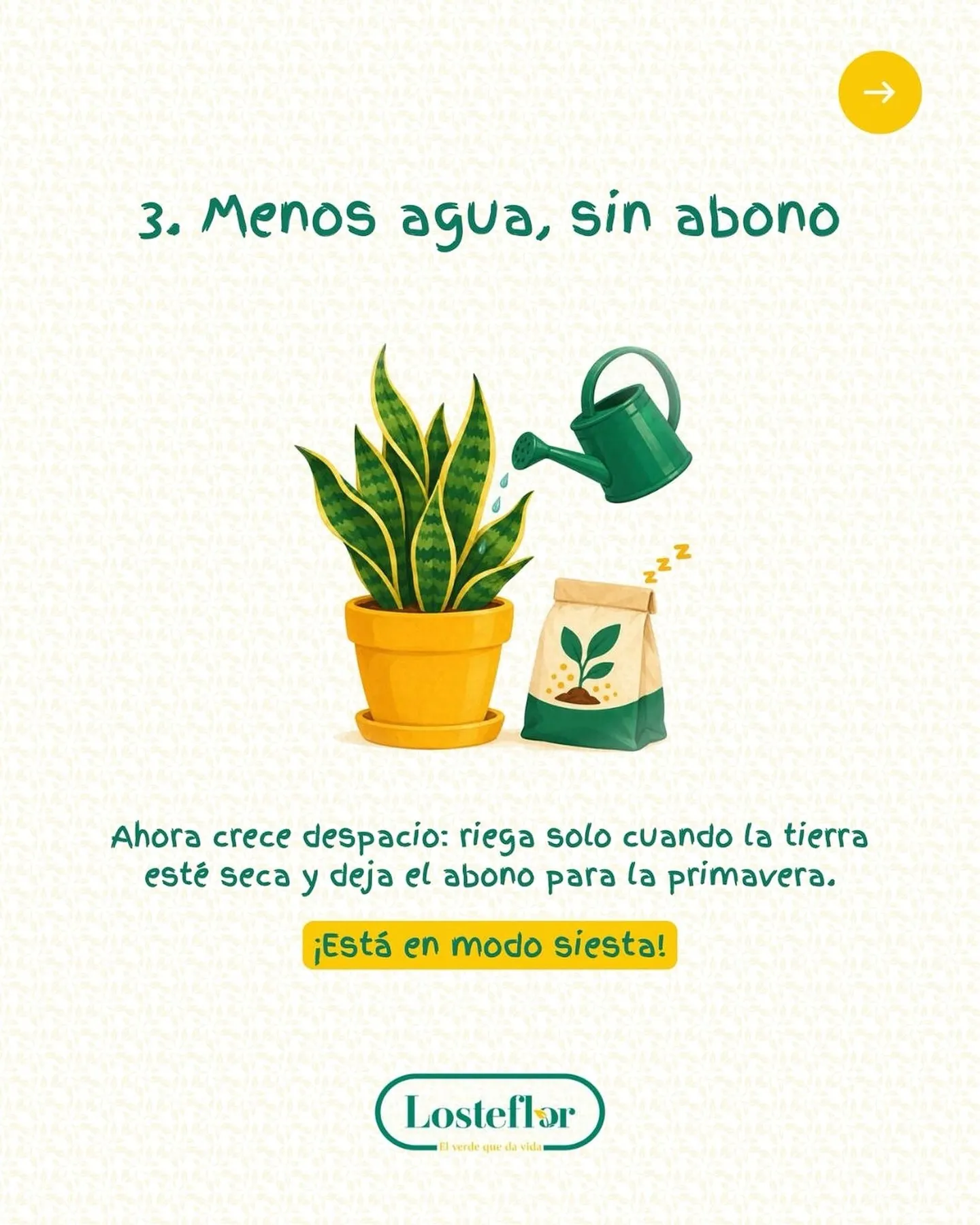
Your plant is growing slowly now; it is in nap mode. With less light it works less and uses less water, so the soil takes longer to dry out. That is normal for indoor plants in winter. If you keep watering at your summer pace, the compost stays wet for too long and the roots suffer.
The rule is easy: water only when the soil is dry. And save the fertiliser for spring. A plant that is barely growing does not use the extra nutrients, so keeping it for when it starts growing again is the most sensible approach with indoor plants in winter.
At night, away from the cold glass
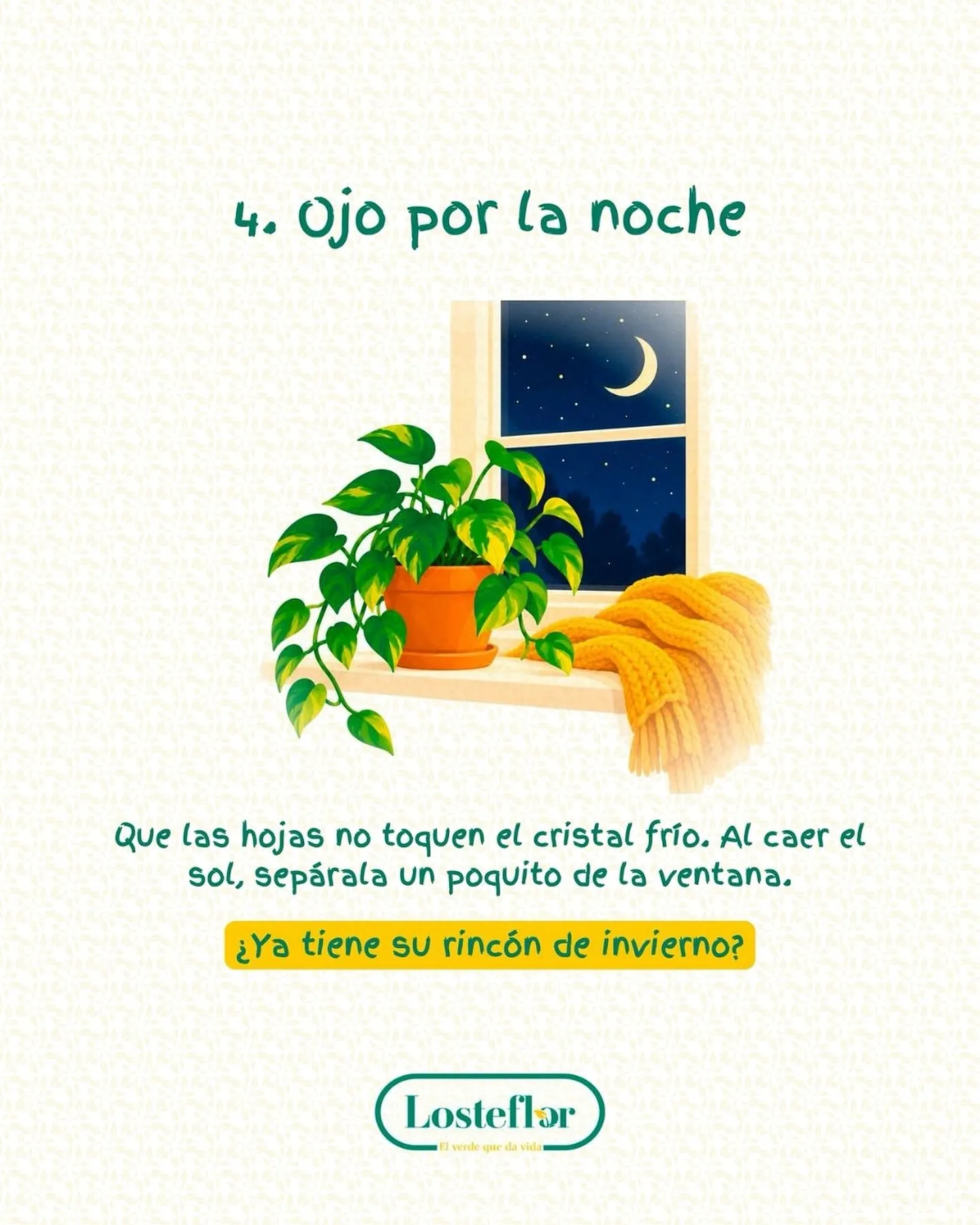
We said to move it closer to the window, but be careful at night. Do not let the leaves touch the cold glass: glass gets much colder than the air in the room and direct contact can damage the leaf. When the sun goes down, move it a little away from the window and bring it back in the morning.
That is the balance indoor plants in winter are looking for: all the light possible by day and a little distance from the glass at night. Has your plant found its winter spot yet?
We will help you set up its winter spot

If you have a pothos, like the one in the illustrations, our guide to pothos care has everything it needs throughout the year. And if you also have a garden, remember that these months are also good for autumn planting to give the roots a head start.
Any questions about your indoor plants in winter? Write to us or drop by Losteflor, in Chiclana, and we will help you look after your plant this winter.
Frequently asked questions about indoor plants in winter
How do I know if the soil is dry before watering?
Touch the soil with your finger, pushing it a little way into the compost. If it comes out dry, it is time to water; if you feel moisture, wait a few days and check again.
Does a variegated leaf get its pattern back?
Leaves that have already turned green do not usually get it back. What you can achieve is for new leaves to come out with their pattern when the plant gets more light again.
Does this care work for any houseplant?
They are general guidelines that work for most indoor plants in winter. Each species has its quirks, so if there is a particular plant you are worried about, tell us which one and we will tell you how to look after it.