
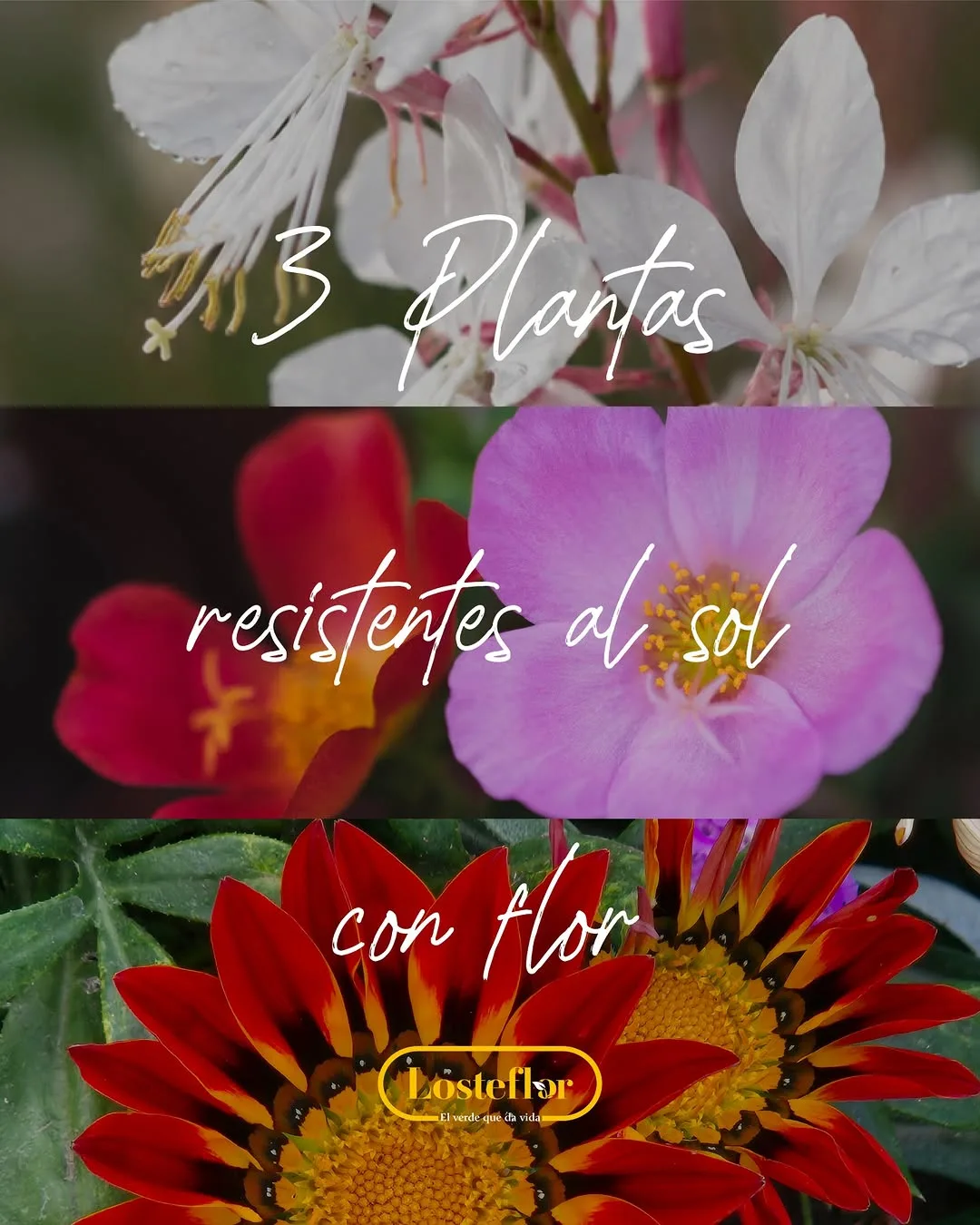
Before summer hits hard, it is worth busting a myth: heat is not the enemy of a garden full of blooms. You just have to choose the right species. At Losteflor we work with several sun-loving flowering plants that, far from wilting under the strong sun of Chiclana, become more radiant the more light they receive.
In this guide we introduce three very different sun-loving flowering plants —portulaca, gazania and gaura— so you understand what to expect from each one. The three coexist nicely in Mediterranean gardens and in pots in full sun, without turning watering into a daily obsession.
Sun-loving flowering plants for full sun: why these three work
For sun-loving flowering plants to truly thrive in summer it is not enough that they tolerate the sun: they have to bloom while exposed, bounce back from the easterly wind and not demand constant watering. The three you will see below meet that profile from very different angles: one stores water in its tissue, another reacts to light like a sensor, and the third “cleans” itself.
The common rule is simple: a sunny location, substrate with good drainage and watering that is spaced out but deep. From there, each species adds its own charm.
Portulaca: the flowering succulent that saves water
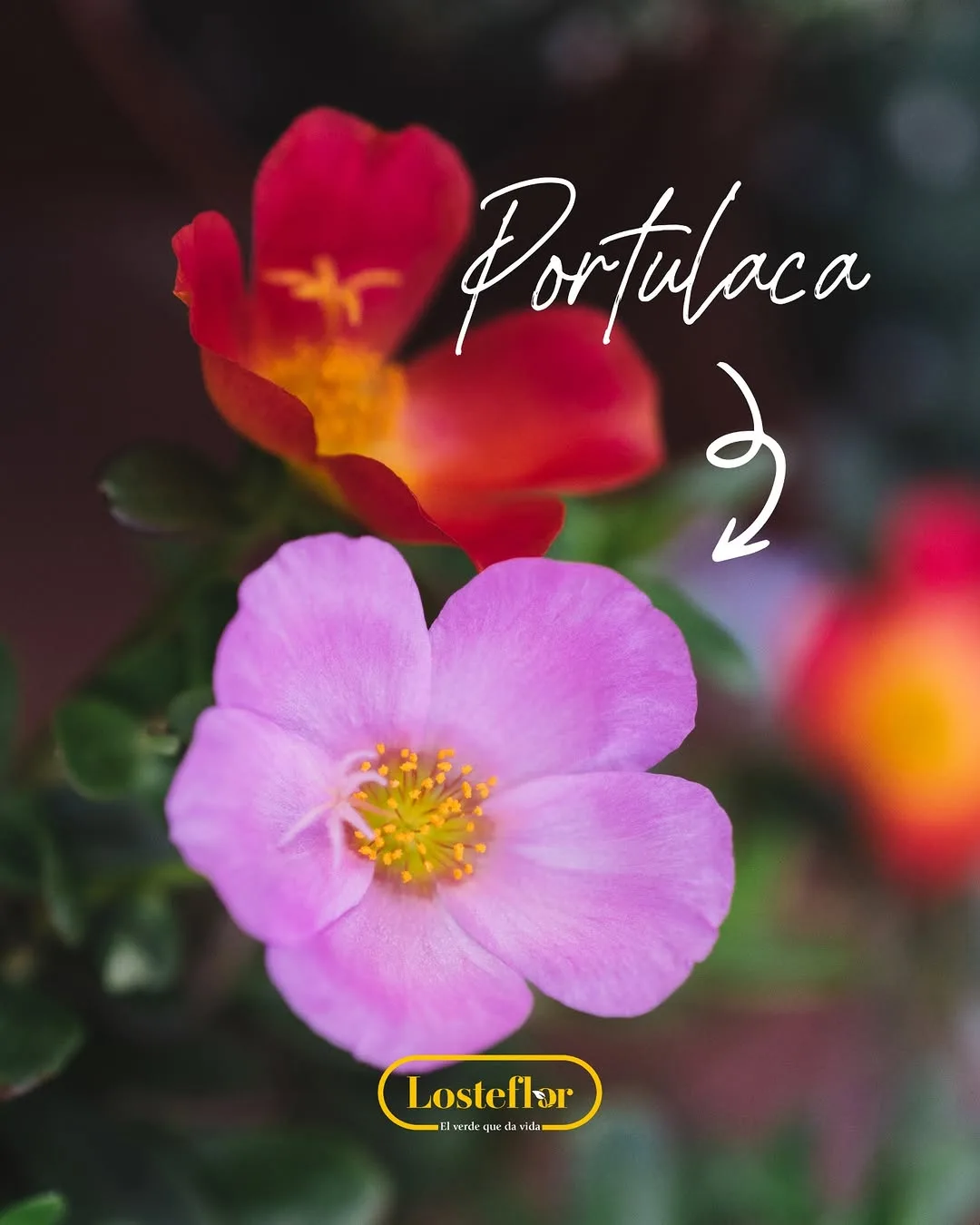
Portulaca grandiflora, popularly known as moss rose or silk flower, is one of the most rewarding sun-loving flowering plants for beginners. Its secret lies in its fleshy leaves and stems: they store water like a small succulent, so it handles drought with great efficiency.
- Watering: sparse. Better too little than too much; one watering per week in summer is usually enough if the substrate drains well.
- Location: full sun, the more the better. In the shade it barely opens its blooms.
- Use: ideal for balcony planters, rockeries, path edges and any sunny gap where other species would not hold up.
It blooms in a very wide palette —pink, fuchsia, orange, red, white, yellow— and, since the flowers open with the sun, it puts on a different show every morning. Perfect for those who are starting out and afraid of overwatering.
Gazania: the flower that closes when it clouds over
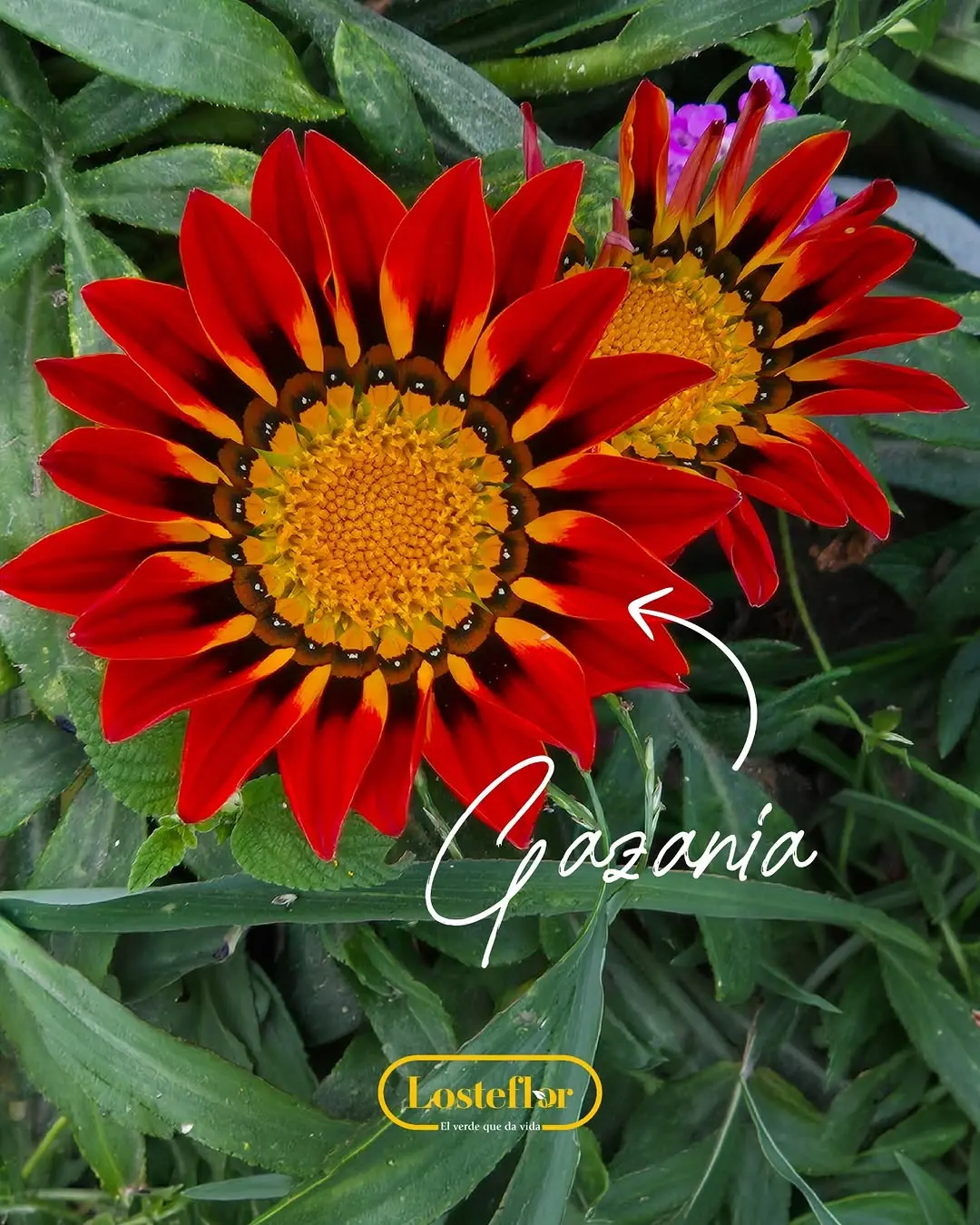
Gazania rigens is probably one of the most theatrical sun-loving flowering plants in the Mediterranean garden. Its flower heads —the cluster of small blooms that form what we perceive as “the flower”— are large, showy and almost always bicolored, with dark stripes or crowns around the center.
A natural light sensor
Its great curiosity is the behavior of the petals. When the sky clouds over or the afternoon falls, it closes them in an instant, forming a capsule that protects the pollen and the internal moisture. As soon as the sun returns, it opens them again at once. If you plant a whole bed of gazanias, that collective movement is plain to the naked eye.
Basic care
- Watering: moderate. It tolerates drought very well once established; in summer, a deep watering every 5-7 days is usually enough.
- Soil: light and well-drained. It does not like waterlogging.
- Maintenance: removing faded blooms from time to time encourages new ones to appear.
As a groundcover in coastal gardens it works wonderfully, because it withstands the salt and the westerly wind that we know so well in the Bay of Cádiz. Few sun-loving flowering plants tolerate sea breeze as well as this one.
Gaura: the self-cleaning plant that looks like a cloud of butterflies
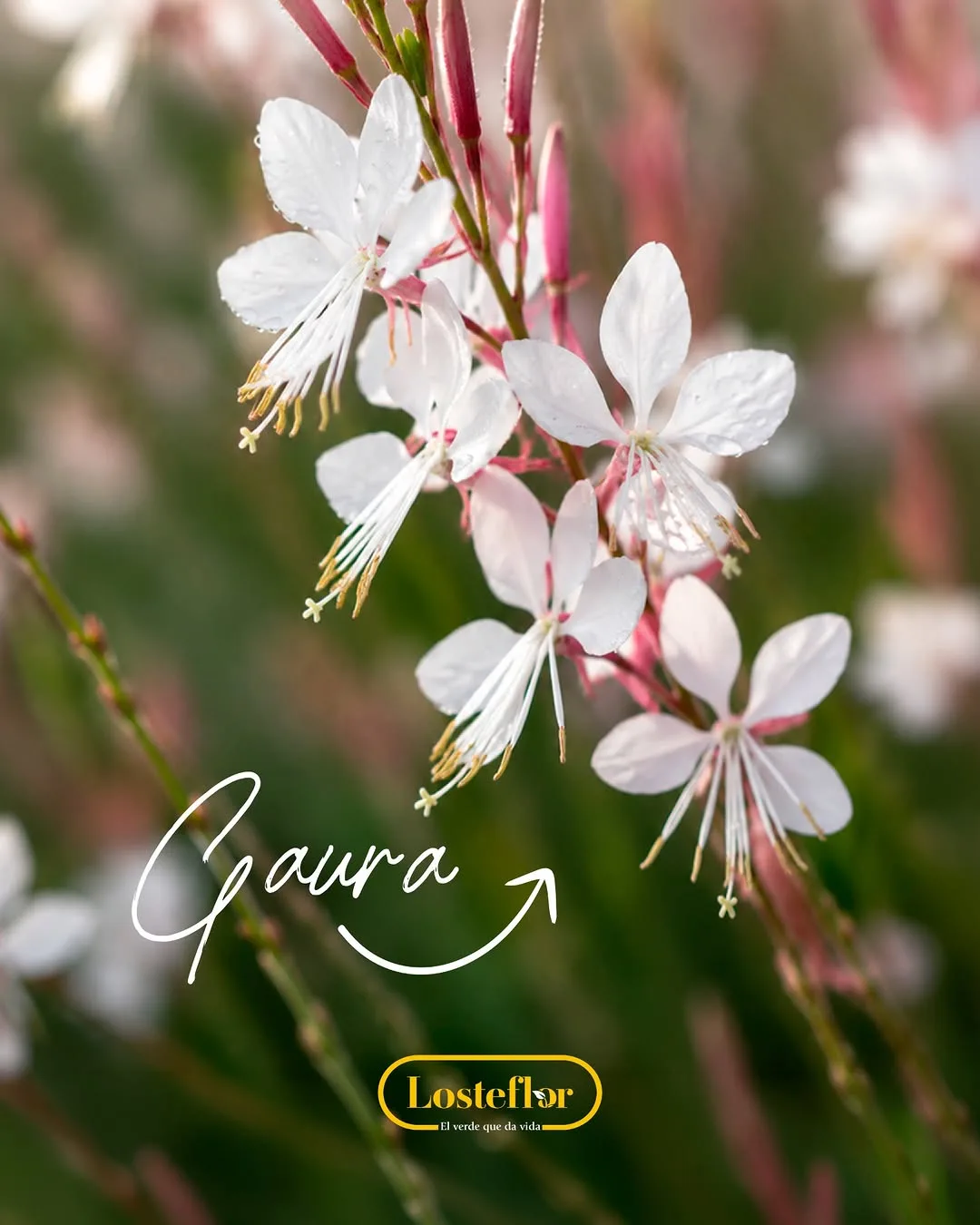
Gaura lindheimeri breaks with the classic image of a compact summer plant. Its slender, arching stems rise above the mound and, at their tips, open small white or pink blooms that seem to float on the wind. Hence its nickname: butterfly plant.
Beyond its looks, gaura has a huge practical virtue: it is self-cleaning. When a flower finishes its cycle, it drops off on its own and falls to the ground, without leaving wilted petals stuck to the stem. The result is one of those sun-loving flowering plants that always looks tidy, even without pruning or pinching every week.
- Watering: moderate. Once established, it resists drought very well thanks to its deep taproot.
- Location: full sun. It accepts partial shade, but blooms much less.
- Use: ideal to add height and movement in flower beds, combined with more compact plants like lavenders or santolinas.
Combining the three in a Mediterranean garden
These three sun-loving flowering plants work wonderfully together because they occupy different layers. Portulaca stays low, covering the ground and carpeting pots. Gazania takes the middle plane, with its large, luminous blooms. And gaura lifts the gaze, bringing lightness up top with its arching stems.
If you want a sunny corner with color and movement without complicating your daily watering, this trio is a safe bet for summer in Chiclana and the whole coastal area. To dig deeper into each species you can check the botanical fact sheet for Gaura lindheimeri at the Missouri Botanical Garden.
If you prefer in-person advice, drop by the nursery and we will show you these sun-loving flowering plants live so you can see with your own eyes which one fits best with your balcony or your garden.
FAQ about sun-loving flowering plants for full sun
Which are the most resilient sun-loving flowering plants under strong sun?
Among the most rewarding in a Mediterranean climate, portulaca, gazania and gaura stand out. All three handle full sun exposure and, in addition, require little water once established, which makes them ideal for summer in Chiclana.
Is it true that gazania closes its flowers when there is no sun?
Yes. It is one of the few sun-loving flowering plants that reacts to light this quickly: its petals fold in a matter of minutes when the sky clouds over or at sunset, and they open again as soon as the sun returns. It is a natural mechanism to protect the pollen and the flower’s moisture.
Does portulaca survive the winter in Cádiz?
It usually behaves as an annual: it is sown or planted in spring, blooms throughout the summer and weakens with the first cold snap. In sheltered areas without frost it can resprout, but the usual approach is to renew it every season.
Does gaura need pruning?
Very little, an advantage over other sun-loving flowering plants. Being self-cleaning, you do not have to remove faded blooms one by one. A rejuvenation pruning at the end of winter or the start of spring is enough to keep the mound compact and stimulate abundant flowering.