A jumble of shapes and colours that somehow works
The scene that opens this post is one of those nursery corners. Columnar stems in a deep burgundy, with a toothed edge, growing tightly packed upwards. Behind them, fans of stiff, bluish leaves that look like needles. In front, green silhouettes with a desert feel and fleshy leaves in an almost matte grey-green. And at the back, out of focus, a splash of pink flower that nobody put there on purpose.
None of it is planned as a composition. It’s simply how the work of a nursery organises itself: whatever shares the same needs ends up together, and the result has more charm than any staged set-up. That’s why the nursery corners change without us doing anything special, just from the way the plants move and grow.
It’s also what makes a walk around here nothing like reading a product sheet. There’s contrast in the textures, heights that don’t line up, a colour that shows up where you least expect it. That mix, repeated all over the nursery corners, is what gives you ideas for your own terrace or garden.
Passiflora caerulea, the jewel of the nursery corners
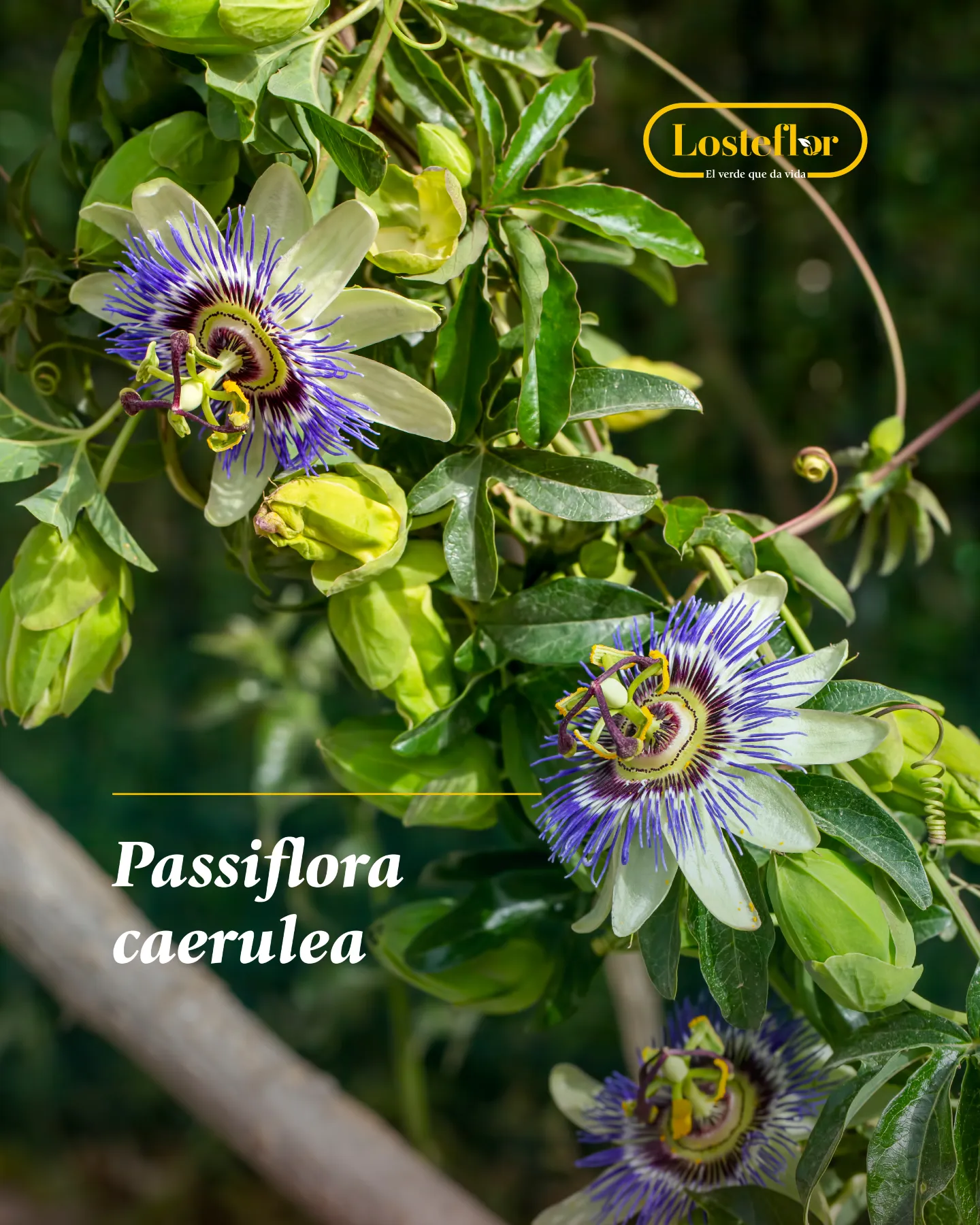
If there’s one plant that stops people in their tracks, it’s this one. Passiflora caerulea, the classic passion flower, has a bloom that’s hard to believe is real: a crown of very fine filaments in blue and purple over creamy white petals, and in the centre a structure that looks like it was drawn with a ruler and compass.
In the photo you can see it climbing, gripping with those spiral tendrils of its own, with green buds waiting their turn all around. Impossible geometric shapes, vivid colours and an elegance that turns any outdoor corner into a jewel. It’s here at the nursery, and seeing it up close is another story altogether. If you’re drawn to flowers that can take the sun down here, take a look as well at our selection of sun-resistant flowering plants.
How to walk the nursery corners without missing a thing
Our advice is simple: come with a photo of the spot you want to fill. The living room, the corner of the terrace, the wall that has been asking for something for years. With that photo in front of you it’s far easier to decide, because you’re no longer choosing a pretty plant in the abstract, you’re choosing the plant for that particular gap.
Then walk slowly. The nursery corners reward anyone who looks twice: there are small specimens hidden underneath the big ones and combinations you only spot when you crouch down a little. And if something catches your eye and you don’t even know its name, just ask. That’s what we’re here for.
Seeing them in person changes the decision
A photo shows you the colour. It doesn’t show you the real habit, or how that plant looks next to the one you already have at home, or the size it will be in two years. That’s why we insist so much on taking the walk: the nursery corners work as a living catalogue, and ten minutes between the aisles settles doubts that messages never do.
We’re in Chiclana de la Frontera, Cádiz. Bring your question with you, that’s what the team is for.
Frequently asked questions
Where is the Losteflor nursery?
In Chiclana de la Frontera, Cádiz. You can open the location on the map with the button above and come and walk the nursery corners whenever you like.
Does Passiflora caerulea climb on its own?
In the picture you can see it holding on with its tendrils, which is how it naturally grabs whatever is around it. If you want it for a trellis, a wall or a pergola, ask us at the nursery and we’ll tell you how we keep it.
How do I know whether you have a particular plant before coming over?
Ask us through the contact form and we’ll tell you if we have it. That way you can use the walk around the nursery corners to discover everything else.
]]>Yellow is the colour that changes a space fastest
Golden foliage works like a natural spotlight: it catches the eye before any other tone and makes the green around it look deeper. That is why yellow is used so often to mark a path, finish off a flower bed or lift a room that gets little afternoon light. And there are two routes into it: yellow plants with variegated leaves, which hold their colour all year, and flowering ones, which hand it over by season.
6 yellow plants for home and garden
There are indoor species, outdoor shrubs and flowers you have known all your life: between the six of them they cover almost any situation.
Variegated Schefflera arboricola
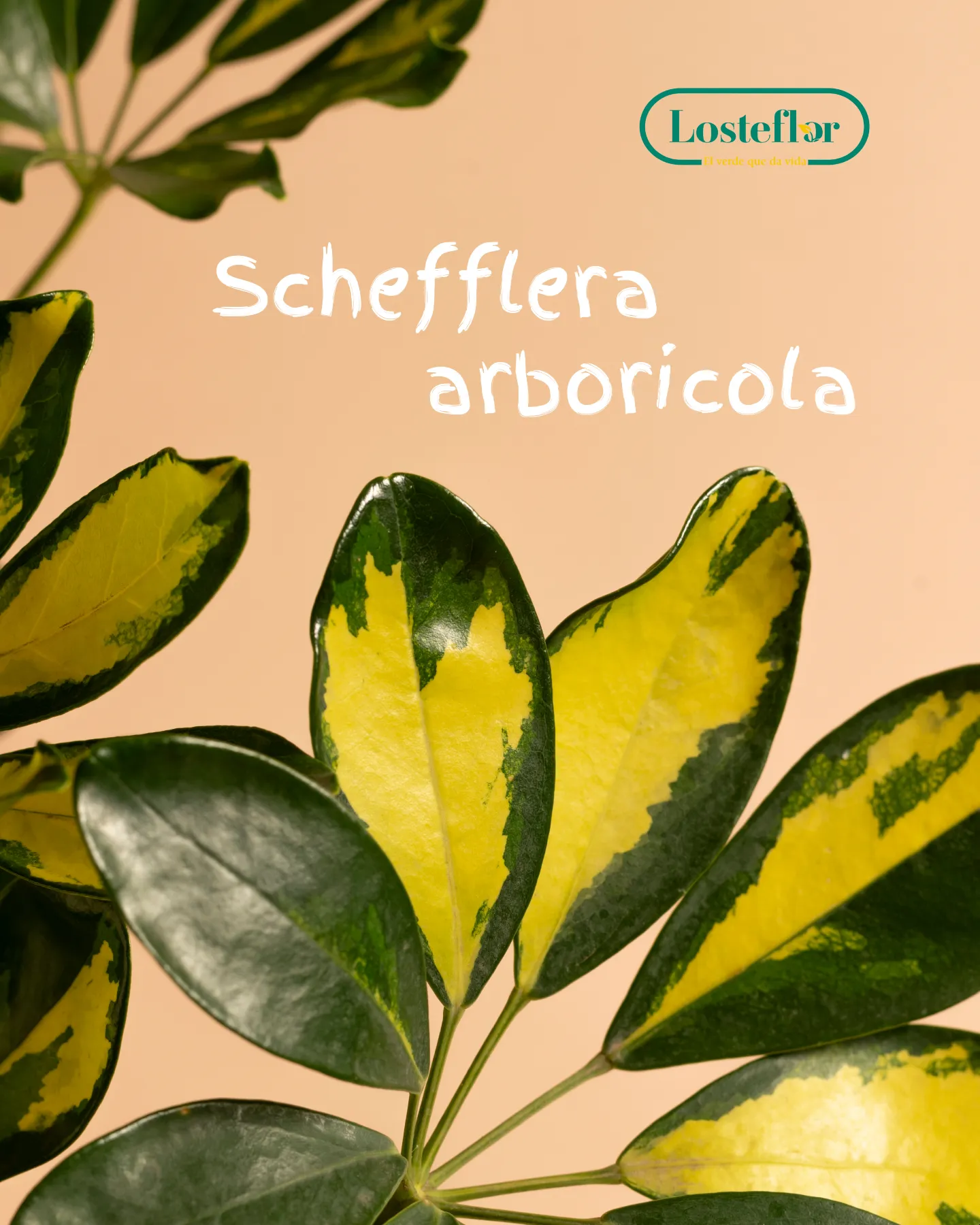
Schefflera arboricola, known as the dwarf umbrella tree because its leaves open out like a fan from a single point, is the perfect way into the world of indoor yellow plants. The variegated version mixes dark green and golden patches on the same leaf, with a shine that looks almost varnished. It asks for plenty of light, filtered rather than direct — the more light, the more yellow — and water only when the top layer of the substrate dries out. Careful if you have pets that like to nibble: this is not a species for them to try.
Golden pothos
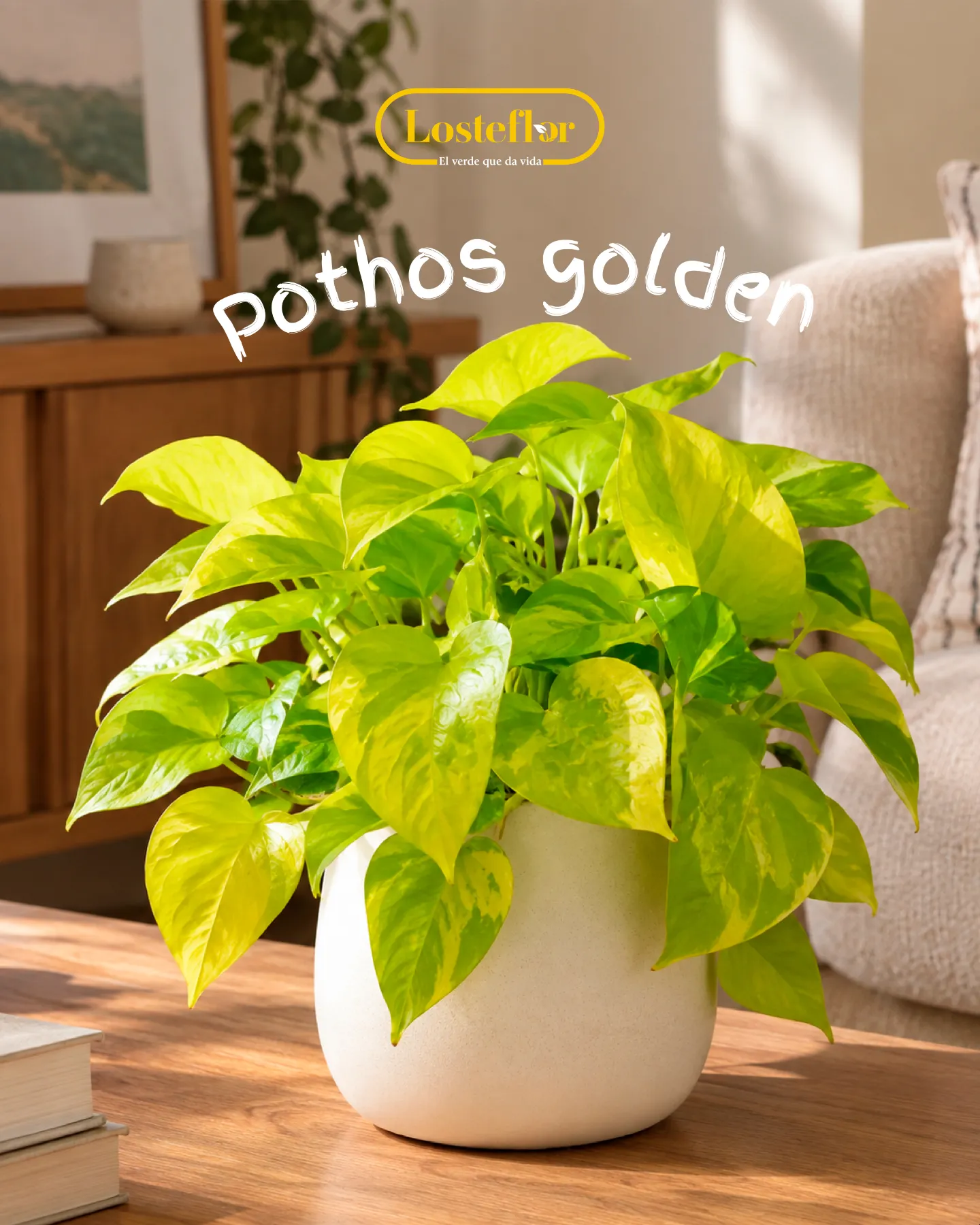
If you could only keep one houseplant, it would probably be this one. Golden pothos trails or climbs, grows fast and forgives a forgotten watering better than almost anything else. Its heart-shaped leaves run from lime green to gold, and that marbling is exactly what fades away in a corner that is too dark. It looks great on high shelves, in hanging pots or trained along a wall.
Blue-leaved acacia
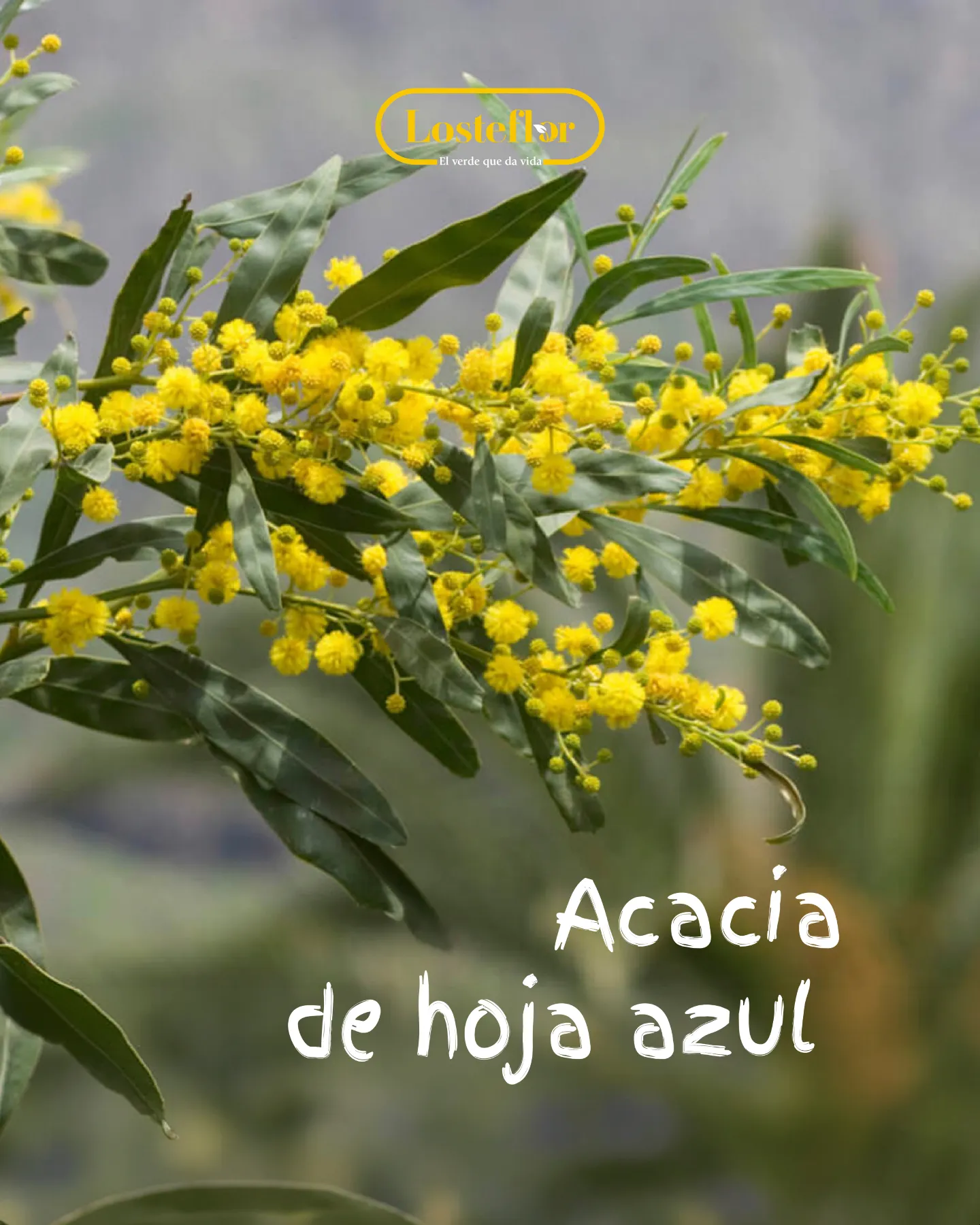
The name throws you off, because what makes you fall for the blue-leaved acacia is the flowering: hundreds of yellow pompoms bursting open at once over long, grey-green, almost bluish foliage. It is a fast-growing tree, built for the Mediterranean climate and the coast, for poor soils and dry summers. In a garden in Chiclana it is one of those yellow plants that gives back far more than it asks for.
Dandelion
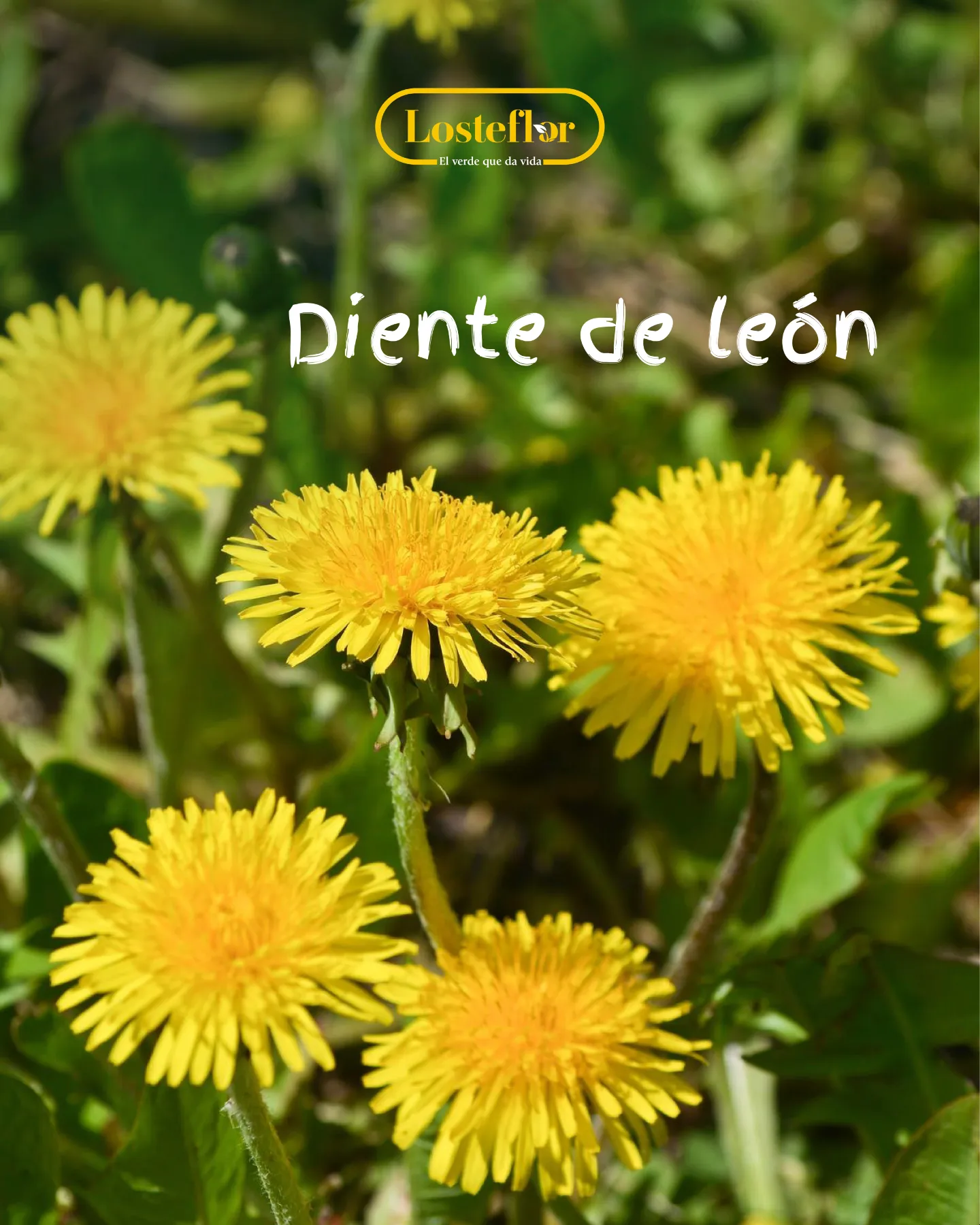
We walk over it without looking and it turns out to be a gem. The dandelion opens flowers with the finest petals, which later turn into that globe of seeds we have all blown on at some point. Its name comes from the leaves, toothed like a saw. It is one of the yellow plants that grow on their own, put up with anything you throw at them and feed bees and other pollinators the moment the weather turns. Before you pull it out of the lawn, think twice.
Sunflower
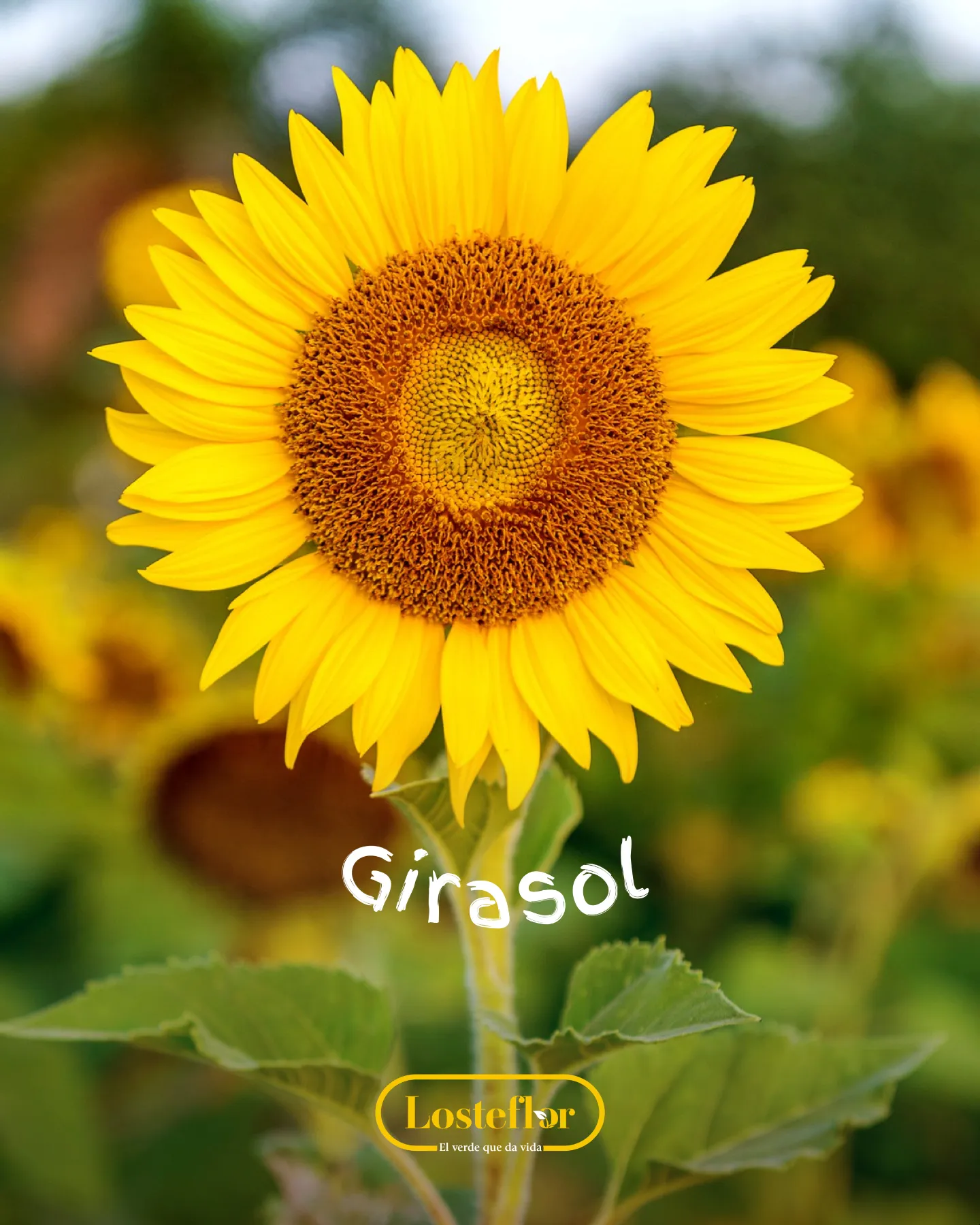
No list of yellow plants would be complete without the sunflower. It is an annual, one of those that finish their cycle in a single season and go out in style, with that enormous head ringed by petals like rays. While young it follows the sun with its stem, the gesture that gave it its name. It wants direct sun, room to grow and generous watering; in exchange it fills the garden with bees and leaves you seeds for next year.
Golden duranta
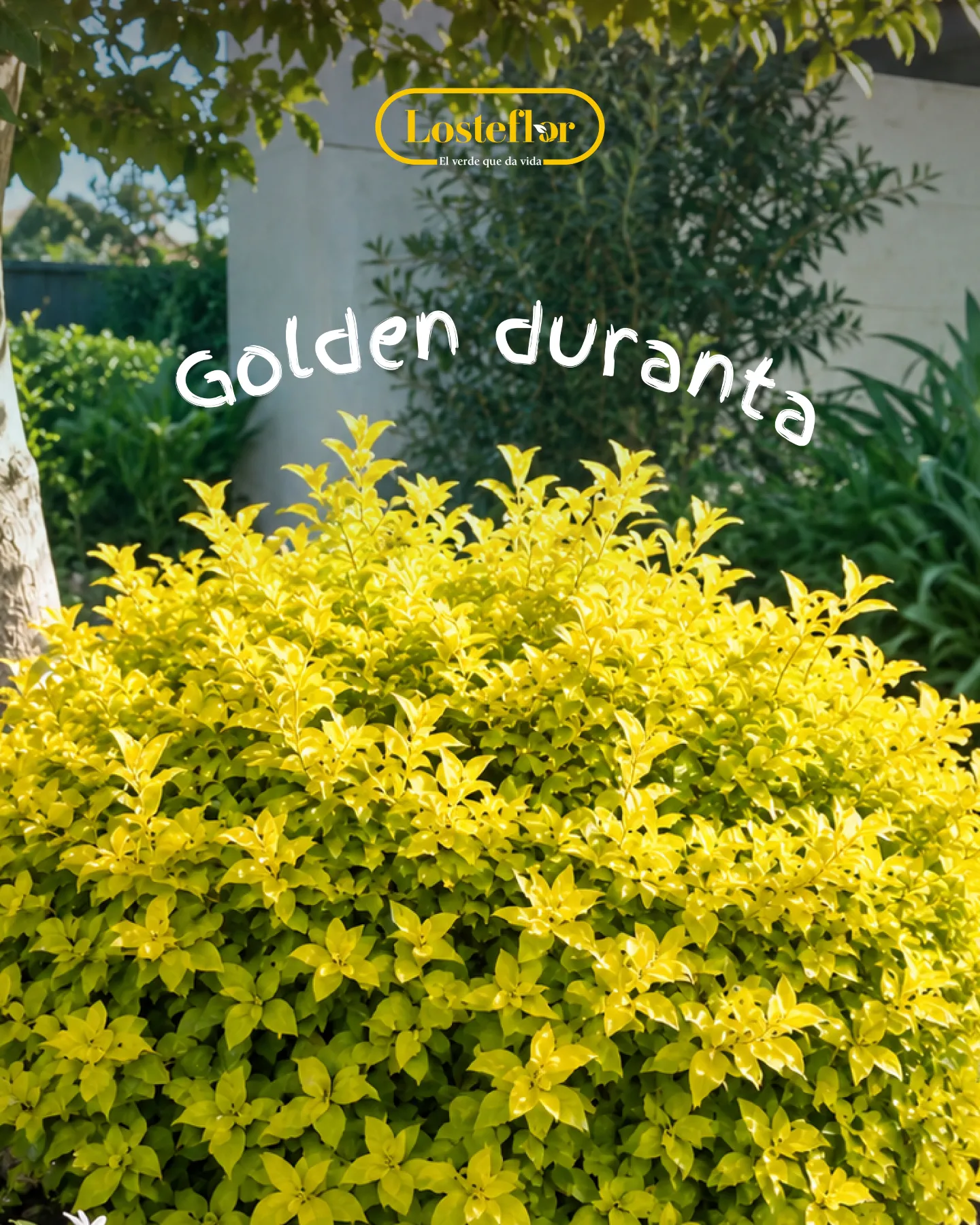
Golden duranta closes the selection and takes the cover photo. It is a shrub with golden foliage that keeps its colour all year, without depending on any flowering. It takes the shears beautifully, so it is used a lot for low hedges, borders and beds. The more sun it gets, the more intense the yellow; in the shade it tends to fade towards lime green.
Use yellow without saturating the whole scene
Yellow is a dominant colour, and that is both its charm and its risk. One trick that always works: use it as an accent, never as a background. A trimmed golden duranta among green shrubs looks a thousand times better than an entirely golden bed. Combine yellow plants with dark greens and with warm materials — clay, wood, earth-toned gravel — which are the ones that give the light back best.
Every plant in the nursery, 20% off
Right now we have every plant at 20% off, so it is a good moment to take home that species you have been eyeing for a while. If you are torn between two, come by and we will look at it together: how each one behaves in your orientation, how much water it will ask for in summer and which yellow plants fit with what you have already planted.
Frequently asked questions about yellow plants
Is yellow on the leaves a colour or a sign that something is wrong?
They are two different things. On a variegated variety the yellow forms a stable pattern, spread across the leaf and present on the new ones coming through. When it is a problem, the yellowing appears all at once, starts on the lower leaves and comes with a soft feel or with spots. If you are unsure, bring us a leaf at the nursery.
Which species cope best on a terrace in full sun?
The outdoor ones: blue-leaved acacia, golden duranta and sunflower are built for direct sun. Schefflera and pothos burn in the midday sun, so on a terrace they only work in the shade or under an awning.
Can I grow them all in pots?
Schefflera, pothos and golden duranta get on very well with a pot, always with good drainage. The sunflower needs a deep container because its root stretches a long way. The acacia is a tree: it holds out a few years in a container, but it ends up asking for open ground.
Which is the easiest for someone starting out?
Golden pothos, no question. It tolerates irregular watering, adapts to different light levels and tells you clearly when it is thirsty. It is the one we recommend among these yellow plants to anyone starting out who wants colour from day one.
]]>What the Losteflor palm tree pruning service includes
Our palm and tree pruning service covers the full cycle, from scheduled annual maintenance to emergency call-outs:
- Sanitation and clean-up pruning
- Red palm weevil prevention
- Post-pruning phytosanitary treatment
- Ornamental tree pruning
- Formative pruning and crown balancing
- Emergency pruning after a storm
- Scheduled regular maintenance
- Green waste handling and removal
We work both for private owners with a garden and for hotels, tourist complexes and residential developments, with regular plans so green areas don’t depend on emergency calls.
Three types of pruning, three different goals
Not every palm tree pruning job has the same goal: one cleans, another shapes and the third one fixes. Here is what each does and when it applies.
Sanitation and clean-up
This is the palm tree pruning of every year: out go the dead fronds, out goes the hanging debris, out go the pest hotspots. The specimen is left clean, the garden stops collecting problem material and the other two jobs are needed far less often.
Formative pruning and crown balancing
Here you don’t cut for the sake of cutting, you steer. The structure is worked so the palm grows evenly and spreads its weight properly. The result isn’t visible the same day: it shows in how the specimen holds up years later.
Emergency work after a storm
When the wind has already been through and left damage behind, palm tree pruning becomes damage control: taking down whatever threatens to fall and stabilising what is still standing, as soon as possible.
Every specimen calls for its own technique
We apply techniques adapted to each species, to the local climate and to the real condition of the specimen in front of us. A young palm in a sheltered garden is not the same as a hundred-year-old one on the front line, and treating them alike is the fastest way to weaken both. Before planning any palm tree pruning we look at species, health, wind exposure and what the tree will be asked to do over the coming years.

The two underlying reasons to prune
Safety against the Levante wind
In areas like Chiclana, a palm carrying too much weight or with dead fronds piled up in the crown is a real hazard once the Levante wind picks up. The wind finds the crown out of balance, pulls at whatever is loose and drops it onto people, cars or property. Palm tree pruning done properly balances the crown and takes away anything that could come loose.
Red palm weevil prevention
Dead fronds and accumulated plant debris are the ideal habitat for the red palm weevil and other pathogens. While that dead matter stays up in the crown, the specimen is rolling out the red carpet for an infection that can prove lethal. That is why preventive clean-up through regular pruning is the first line of defence, and that is why we finish every palm tree pruning job with a phytosanitary treatment, sealing the fresh cuts before they turn into a way in.
September and October are the best window
If palm tree pruning has been pending for a while, this is the moment: September and October, before the rains arrive. Reaching autumn with a clean crown stops water and wind from finding loose fronds and built-up debris waiting up there.

On every visit we climb with the height and technique that specimen calls for, cut without damaging the trunk and check there is no red palm weevil. That is more than 35 years caring for palms in Cádiz — not just anyone should touch yours.
Certified machinery, insurance and a clean garden when we leave
Working at height on a living specimen is no job for a ladder and a borrowed chainsaw. We have a technical team, certified machinery and public liability insurance, which is what turns palm tree pruning into work that carries no risk for you. And when we finish, the garden is left clean: handling and removal of green waste is part of the service, not a surprise billed separately.
Scheduled maintenance costs less than an emergency
A well-structured tree grows with more vigour and avoids far more expensive emergency work. The maths is simple: one professional palm tree pruning a year against an emergency call-out after a storm, a weevil treatment or, worst case, removing and replacing a specimen that can no longer be saved.
More than 2,000 palms pruned along the Cádiz coast
We are a gardening company with more than 35 years devoted to maintaining green areas and carrying out garden works, in Spain and Portugal. In palm tree pruning we have passed 2,000 specimens treated, and that figure is what lets us look at a crown and know what it needs before touching it.
Frequently asked questions about palm tree pruning
Do you work for residents’ associations and housing developments?
Yes. Maintenance for housing developments and hotels is one of our lines of work, with scheduled regular plans.
Who takes away the pruning waste?
We do. Handling and removal of green waste is included in the service, along with cleaning the area once we finish.
Do you only prune palms?
No. We also work on ornamental trees, planting and full garden maintenance, as well as running the nursery with our own production in Chiclana.
How far do you travel?
Our base is in Chiclana de la Frontera and we work all along the Cádiz coast; as a gardening company we operate in Spain and Portugal.
]]>Air-purifying plants change the mood in September
In summer the doors stay open and the indoors breathes by itself. Back at the office or at your desk at home, the air goes still and rooms turn drier. That is where green shows: a well-placed plant adds humidity, breaks that closed-office feeling and gives you something pleasant to look at when you lift your eyes off the screen.
You do not need to fill the house with pots: two or three well-chosen specimens change the character of a room. These five air-purifying plants are the ones we recommend most at the nursery to kick off the new season.
Spider plant: the most rewarding one to start with

The spider plant is the beginner plant par excellence and the first of the air-purifying plants we recommend to anyone who has never owned a pot. Its arching leaves, with that pale stripe down the centre, spill over the edge of the table without stealing any working space. It puts up with forgotten waterings and keeps throwing out little offsets that hang like stars: once they root, you have new plants to give away.
It likes bright light with no direct sun on top of it: it works very well on a high shelf or on the corner of a desk next to a window.
Spathiphyllum or peace lily: white flowers and a calm room

The Spathiphyllum is the quiet elegance of this group: dark, glossy green leaves and those white spathes that stay open for weeks. It is one of the few that flower indoors without asking you for a south-facing window, so it solves a hallway or a corridor with indirect light very nicely.
It has one practical virtue: when it runs short of water, the leaves droop and tell you straight to your face. You water it and it picks itself back up within hours, so it is perfect for anyone who never knows when it is watering time.
Zamioculca zamiifolia: green that forgives forgetfulness

If your week leaves no room even to glance at the pot, the ZZ plant is your plant. It stores water reserves in its rhizomes and in those thick stems, so it tolerates days without watering better than most. Its oval, varnished leaves give any corner a very polished air, and it grows slowly.
If you want to go deeper, on the blog you have the care guide for the zamioculca step by step.
Sansevieria or snake plant: verticality that takes anything

The Sansevieria is pure straight line: stiff leaves, mottled pattern and a yellow edge. It works to add height where there are only flat surfaces, and it is one of the least likely to complain if the corner is short on light or the air is dry. In an open-plan office it looks great on top of a filing cabinet.
Its only weak spot is watering: better to fall short, because its enemy is water sitting at the base.
Pothos (Epipremnum aureum): the shelf climber

The pothos is the most generous of these air-purifying plants: it grows fast, adapts to almost any light and its trails cascade down from a shelf or from the top of a cupboard. You can also train it upwards with a moss pole. We tell you everything about pothos care in another article.
Where to place air-purifying plants in a workspace
The spot matters as much as the species: air-purifying plants only give their best where the light suits them. These are the combinations that work best when we set up a workspace:
- On the desk: spider plant or pothos, because they fall downwards and do not block your screen.
- In an empty corner: Sansevieria or ZZ plant, which add height without taking up floor space.
- In hallways and corridors: peace lily, which appreciates indirect light and brings flowers.
- Next to a window with a sheer curtain: any of the five, since that is where they do best.
Keep them out of the direct blast from the air conditioning or the radiator: nothing dries the leaves faster.
Care these air-purifying plants have in common
They all ask for the same thing, and it is not much: bright but filtered light, watering only when the substrate feels dry to the touch and a saucer with no standing water underneath. Dust the leaves now and then with a damp cloth, because a clean leaf breathes better and looks twice as good. And if you notice dry tips, it is usually dry air or too much direct sun, not a lack of fertiliser.
One important note if you share your home with a dog or a cat: not all of these species are pet-friendly. Drop by the nursery and we will tell you which air-purifying plants you can keep without worrying and which ones are better placed out of reach.
Frequently asked questions about air-purifying plants
How many plants do I need for a room to feel different?
There is no magic number. Start with two or three good-sized specimens rather than lots of small pots: they are easier to look after and the visual effect is bigger.
Do they work the same in an office with artificial light?
The Sansevieria, the ZZ plant and the pothos cope better with spots far from the window. Even so, none of them lives on artificial light alone: they need some natural light, even if it is indirect.
Can they be left alone over a long weekend or a short holiday?
The ZZ plant and the Sansevieria handle a week with no trouble. The spider plant, the pothos and the peace lily prefer a thorough watering before you leave and a spot away from direct sun.
Which one is best as a gift for someone just starting out?
The pothos and the spider plant, no question. They grow fast, forgive beginner mistakes and give that visual reward that gets you hooked on adding more green at home.
]]>Why purple plants are so much fun
Purple is an unusual colour in the plant world, and that is exactly why it catches the eye. A purple leaf stands out next to green species, adds depth to any arrangement and works just as well in a bright living room as on a terrace. On top of that, there is something for every taste within this group: some show off velvety foliage, others bell-shaped or spiked flowers.
6 purple plants to fall in love with the colour purple
These are the six species we want you to get to know today. Each one brings a different shade of purple, and they are all waiting for you at the nursery.
Campanula
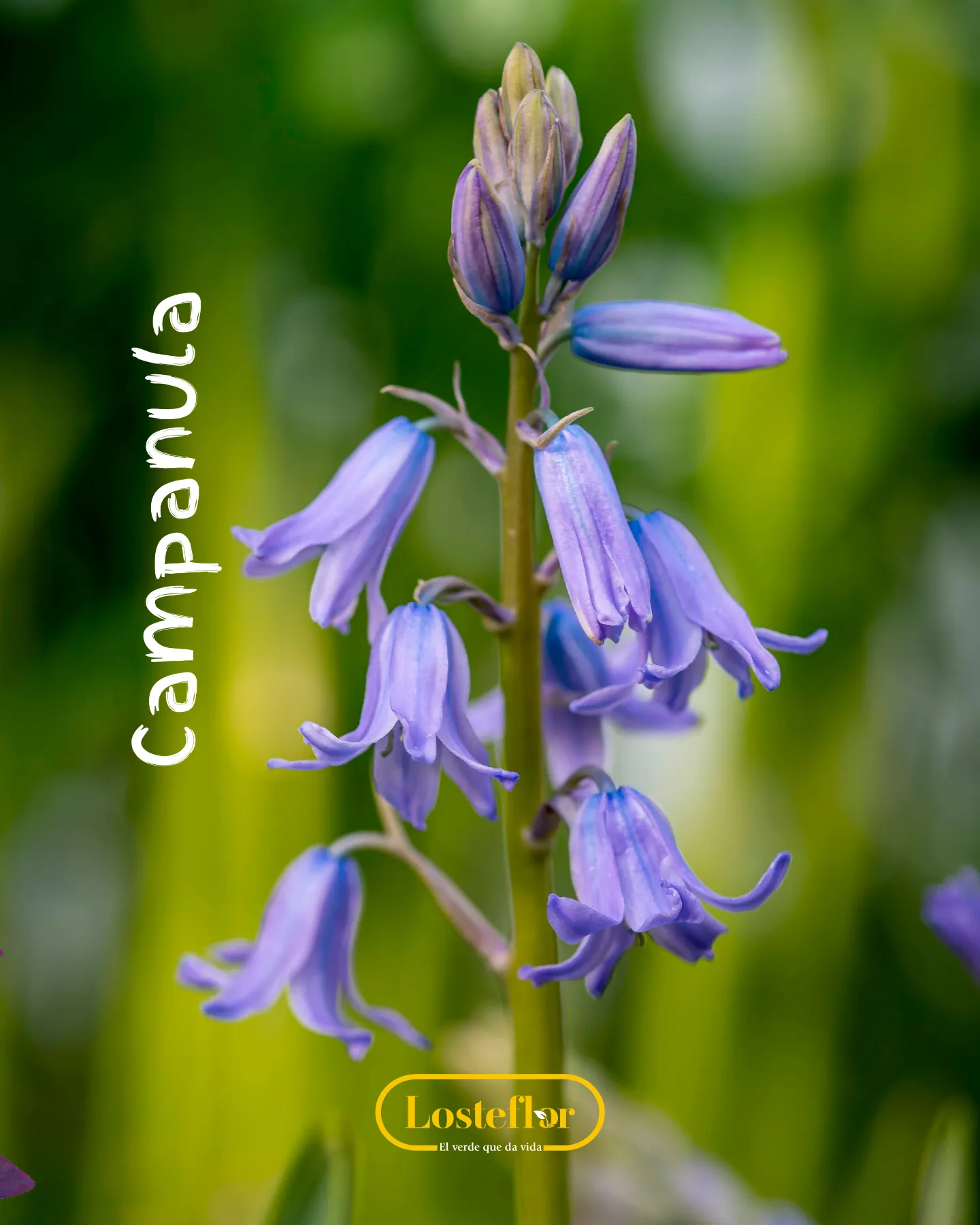
The campanula opens small bell-shaped flowers (hence its name) in tones ranging from blue to violet. It is a cheerful plant, perfect for garden edges, planters and balconies, where it flowers for much of the season. It likes light and appreciates regular watering without letting the soil become waterlogged.
Tradescantia zebrina
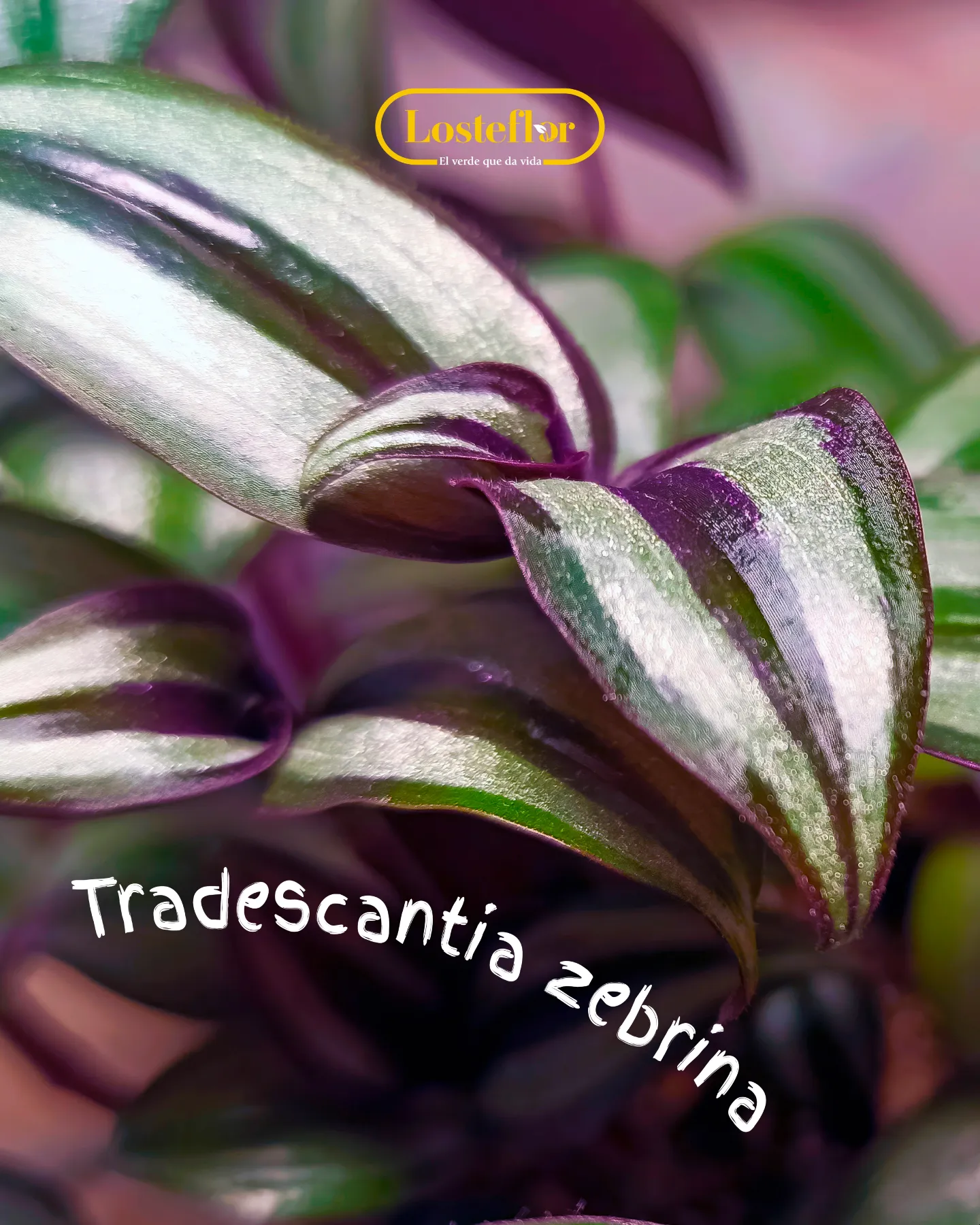
If you are after an easy, rewarding indoor plant, the Tradescantia zebrina is a safe bet. Its leaves combine silver and green stripes on top with an intense purple underneath, a contrast that looks especially good in hanging pots. It grows fast and only asks for bright indirect light to keep its colour vivid.
Oxalis triangularis
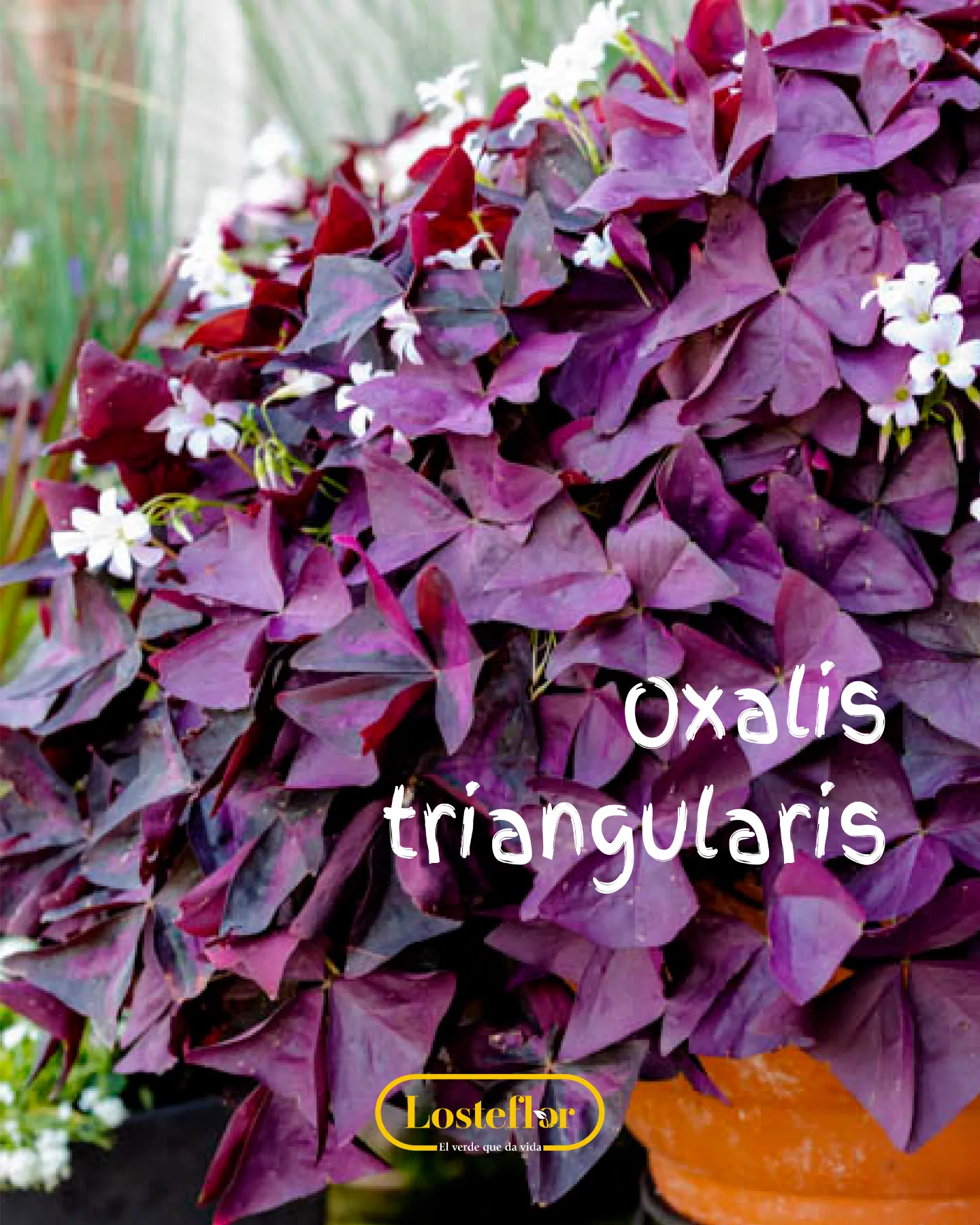
Also known as purple shamrock, the Oxalis triangularis has triangular leaves in a deep purple that open and close following the daylight. Now and then it is crowned with delicate white or pink flowers. It is one of the most striking purple plants and looks spectacular both indoors by a window and out in the garden.
Gynura aurantiaca
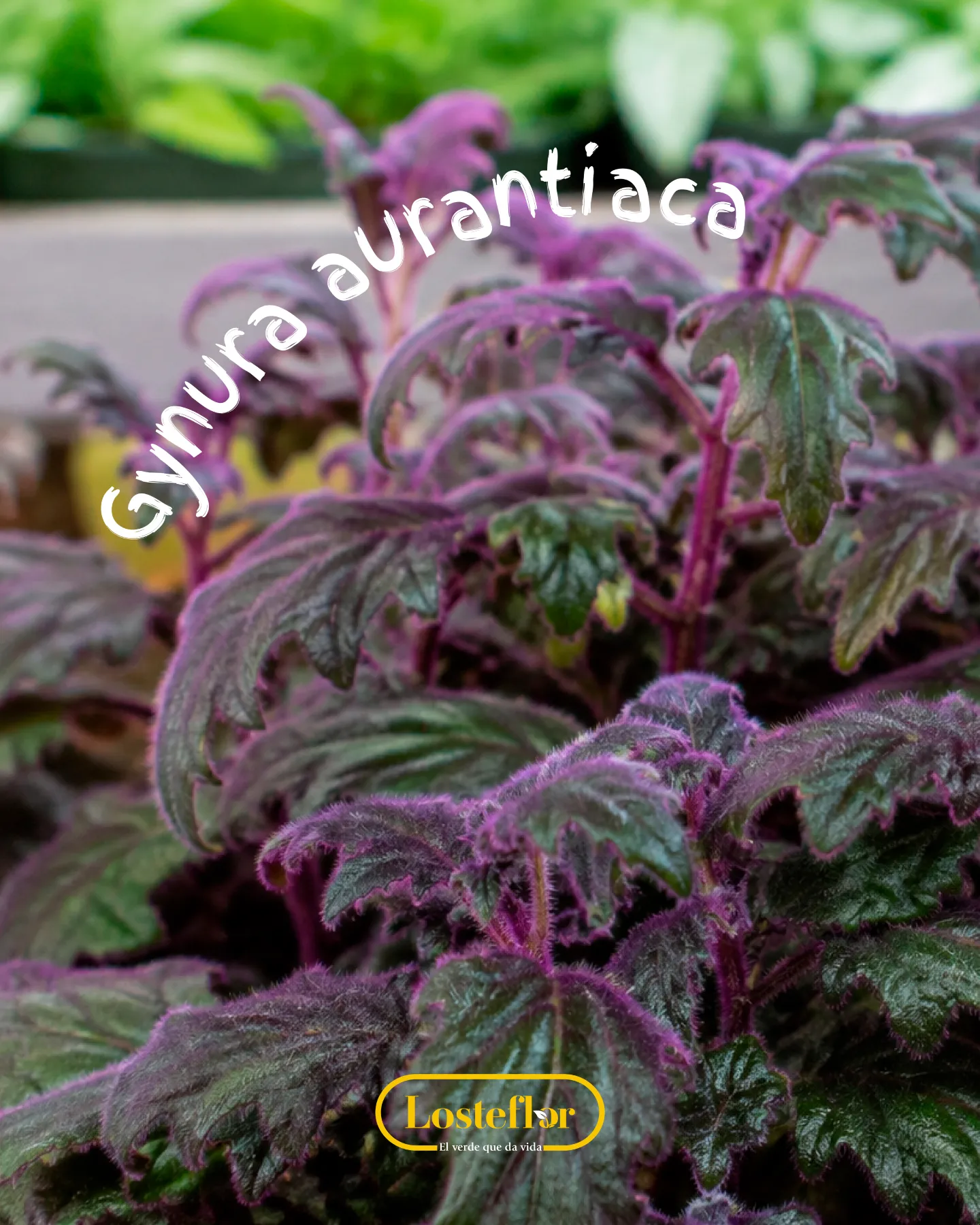
The Gynura aurantiaca, or velvet plant, owes its name to the fine purple hairs that cover its leaves and give them a velvety feel and a violet sheen when the light hits them. It is a showy, original indoor plant, ideal for anyone looking for something different. The more light it gets (always filtered), the deeper its purple becomes.
Strobilanthes dyeriana
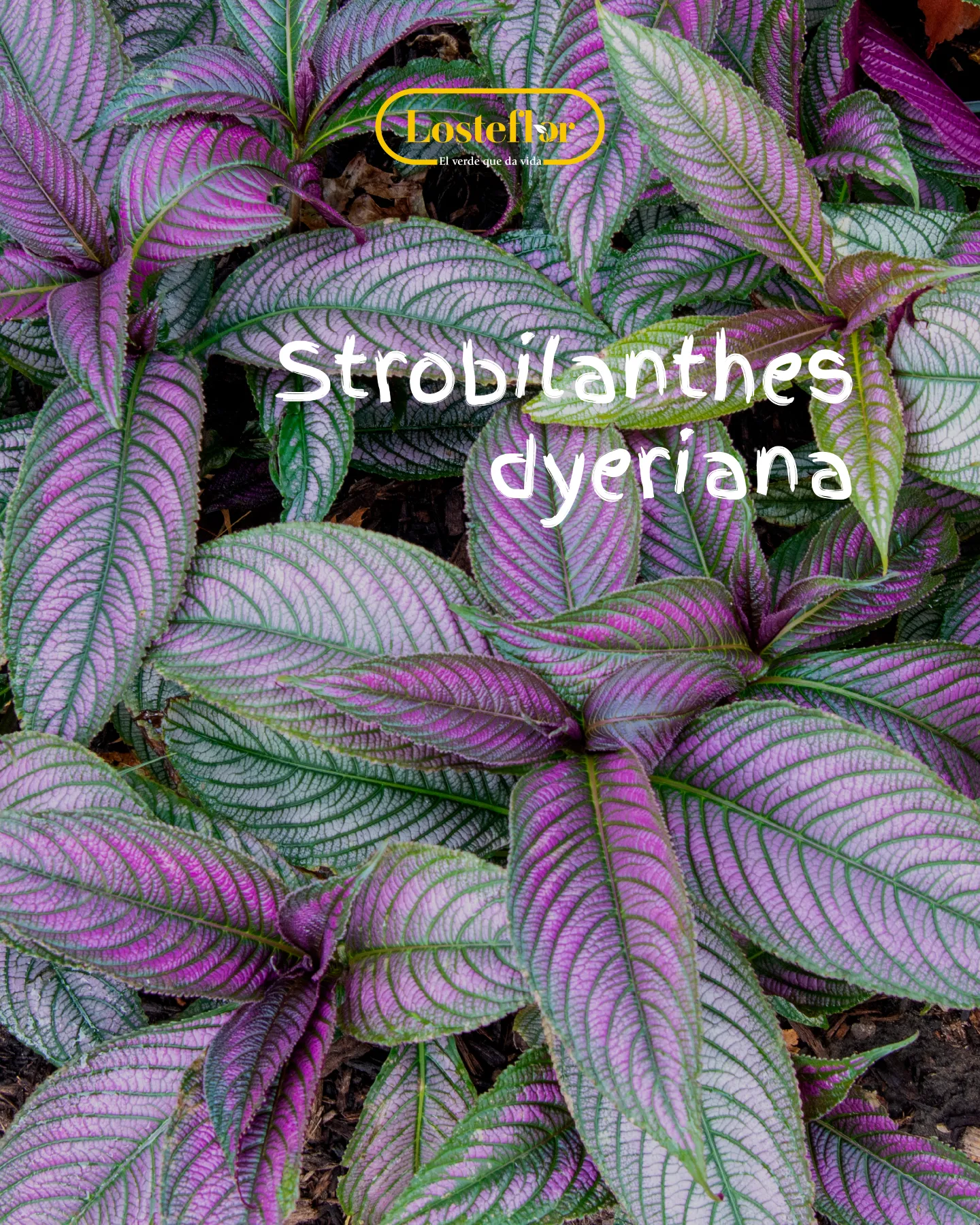
Known as the Persian shield, the Strobilanthes dyeriana is pure fantasy: its leaves blend metallic purple, silver and green with an almost iridescent finish. It is one of those purple plants that never go unnoticed and brings a tropical feel to any space. It prefers warm, humid settings with plenty of light.
Lavender
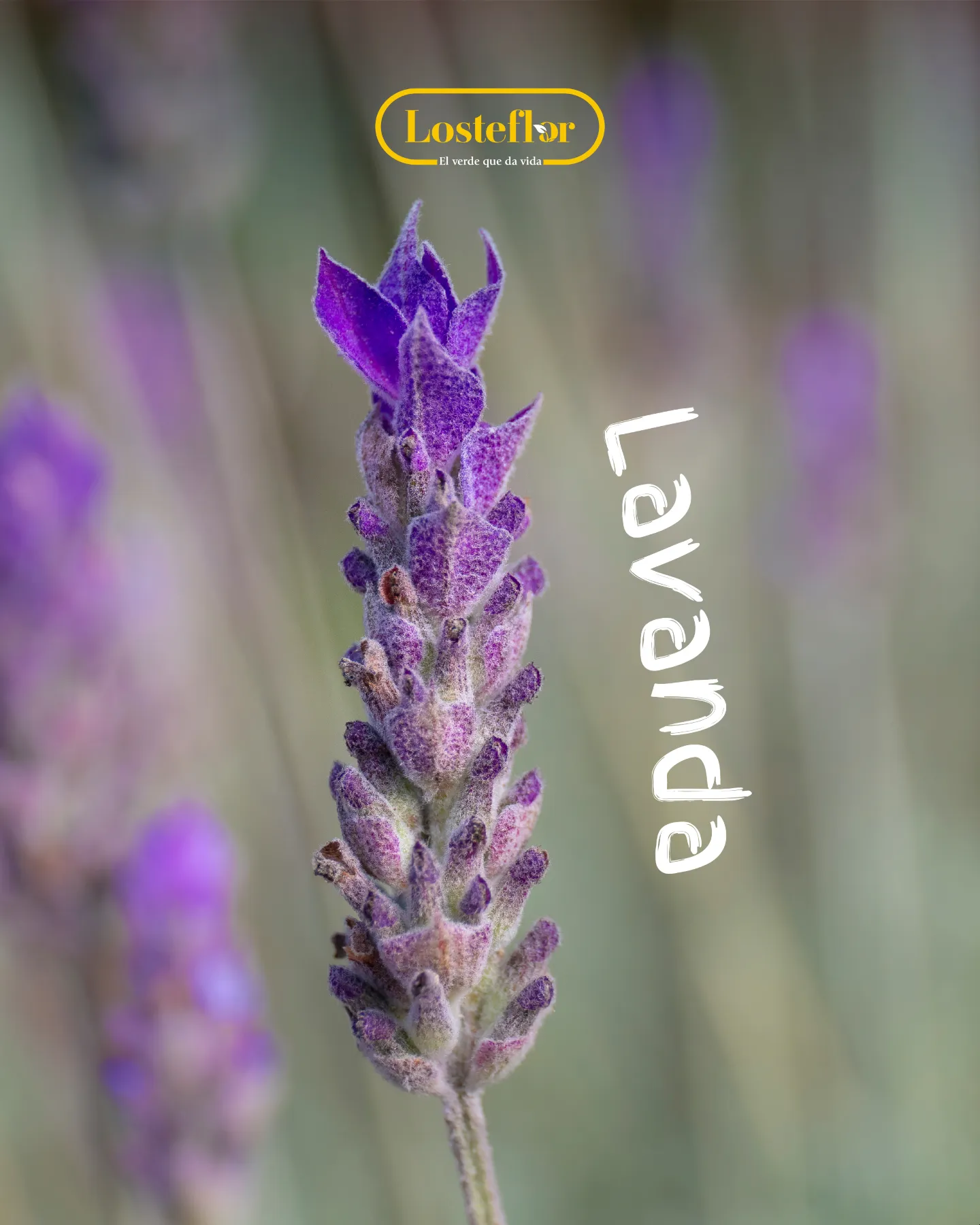
Lavender closes the selection with its unmistakable violet spikes and relaxing scent. It is a hardy Mediterranean plant that loves sun and well-drained soils, and it also attracts bees and other pollinators. Perfect for the garden, the terrace or for scenting the house once dried.
How to combine purple plants in your decor
Purple looks even better when you play with it. A simple trick: group them with green or silvery foliage so the purple stands out, or combine them with each other at different heights to create a corner full of nuance. Indoors, place them on light shelves or next to neutral walls; in the garden, mix them with gravel and earth-toned ceramics. And remember that purple pairs wonderfully with pink and white.
Basic care for purple plants
Each species has its quirks, but most purple plants share one golden rule: they need good light to keep their colour. In low light, many turn towards green and lose intensity. Adjust the watering to each one —indoor plants when the soil dries out; lavender, without excess— and watch their leaves, which are the first to warn you if something is wrong. If any doubt comes up, drop by the nursery and we will advise you with no obligation.
Frequently asked questions about purple plants
Why do some purple plants turn green?
It is almost always down to a lack of light. The purple pigment intensifies with plenty of light; when light is scarce, the plant produces more chlorophyll and the foliage shifts towards green. If you notice it losing colour, move it closer to a bright window.
Which of these species can I keep indoors?
The Tradescantia zebrina, the Oxalis triangularis, the Gynura aurantiaca and the Persian shield adapt very well indoors with good indirect light. The campanula and lavender prefer the outdoors, although lavender can also cope on a sunny terrace.
Do they need very different care from one another?
They share the need for light, but watering varies quite a bit: indoor plants want more constant moisture, while lavender hates excess water. The best approach is to treat each plant according to its Mediterranean or tropical origin.
Can I see these purple plants at Losteflor?
Yes. We have these and many more waiting for you at the nursery in Chiclana de la Frontera. Come and see them in person, and we will help you choose the one that best fits your home or garden.
]]>Why fill your home with indoor plants
Beyond the way they look, these plants bring life, freshness and a touch of calm to any space. They turn a bare wall into a little oasis, keep you company day to day and create cosier settings with barely any effort. There’s also one for every kind of person: from the toughest, ideal for beginners with little time, to the most exotic and eye-catching for gardening lovers after a unique specimen.
At our nursery you’ll find a wide variety, cared for since they were tiny, so you can choose at your own pace with our team’s advice. These are some of the favourites you can take home.
Orchids: timeless elegance
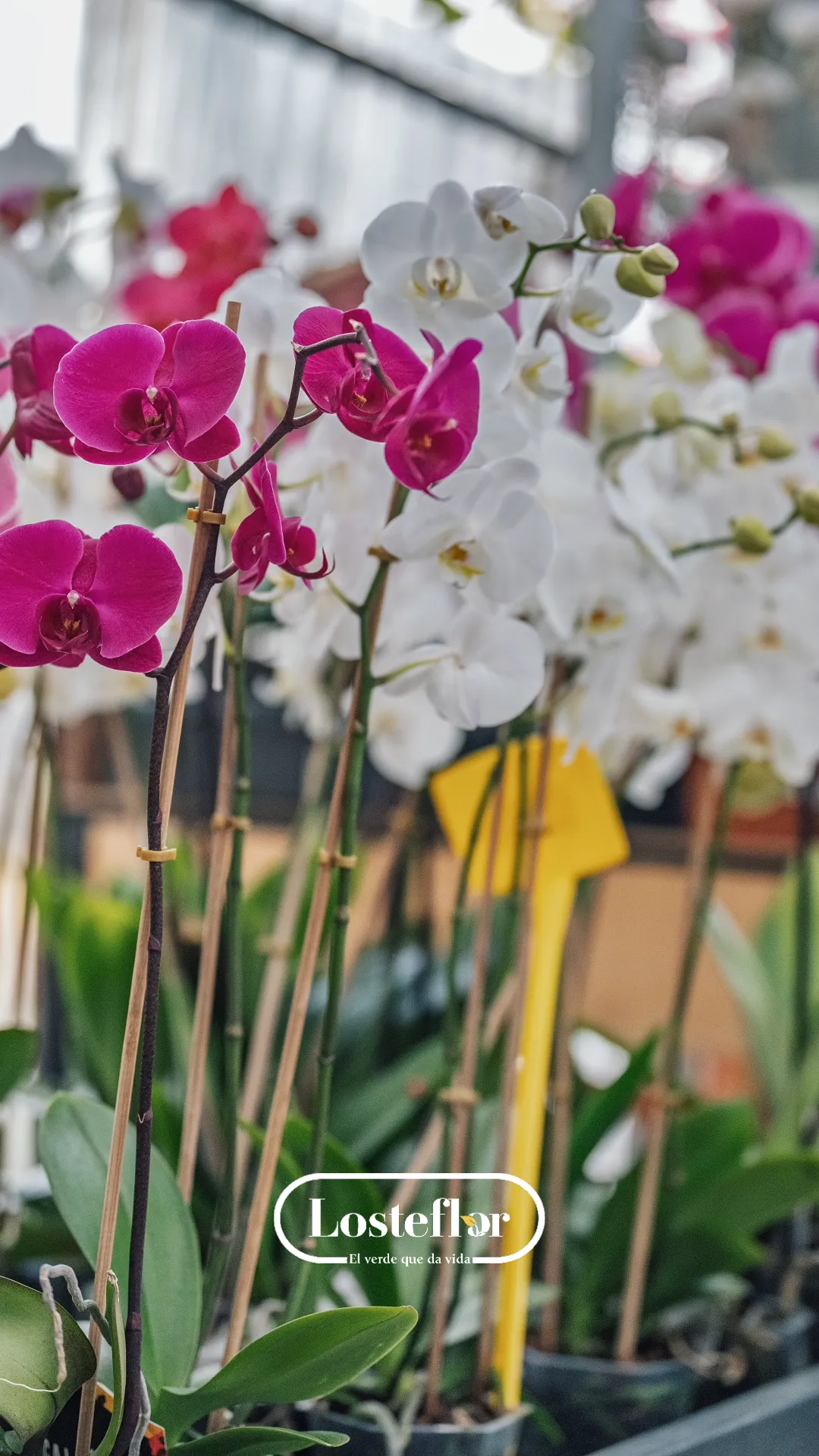
Few plants convey as much sophistication as orchids. Their flowers, in shades from pure white to the most intense fuchsia, last for weeks and add a delicate touch to tables, hallways and shelves. Although they have a reputation for being fussy, they really ask for just a few clear things: bright but indirect light, moderate watering and good drainage so their roots can breathe. They’re perfect to give as a gift or to treat yourself, and their presence instantly lifts any room.
Anthurium: colour all year round
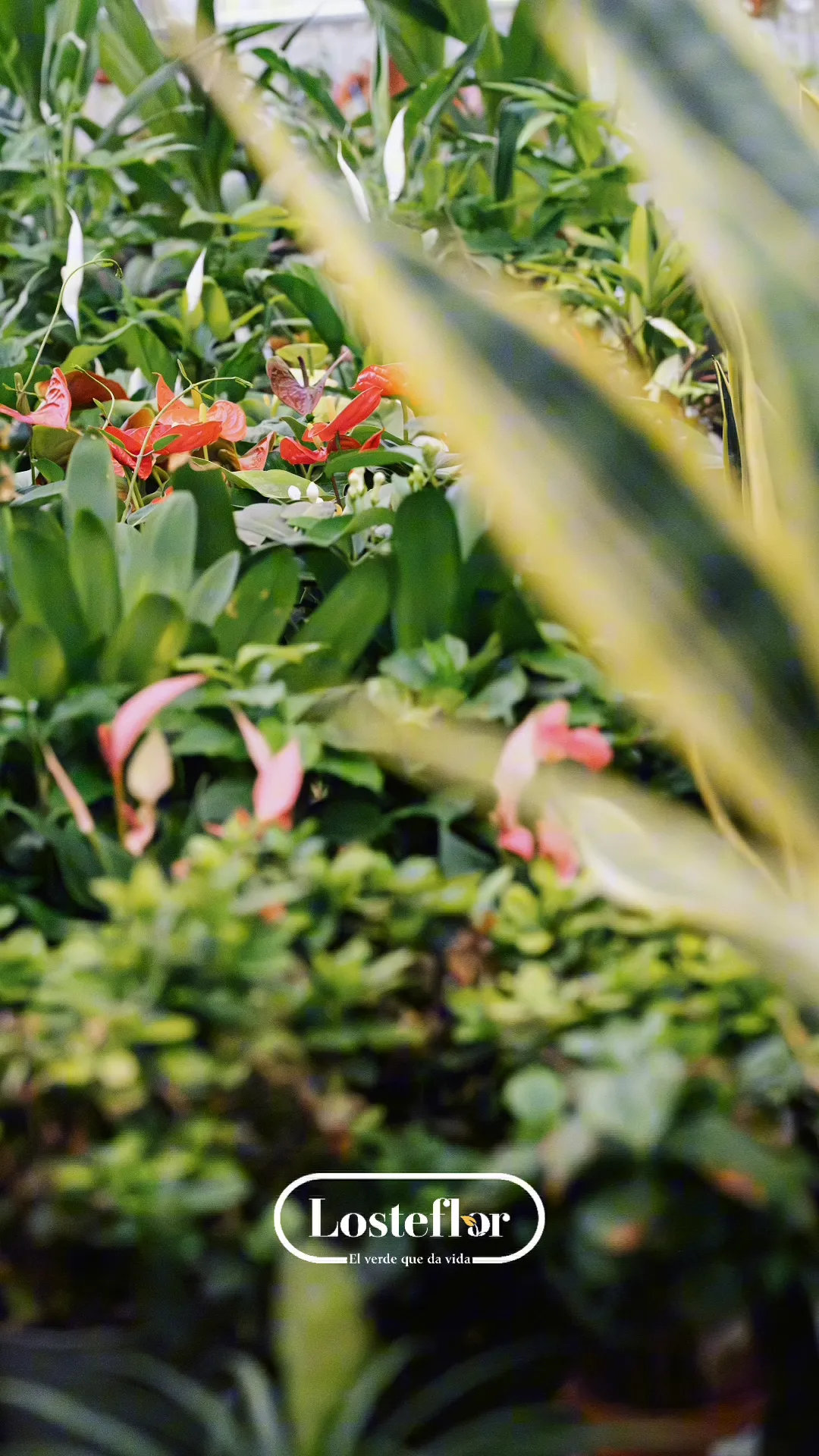
If you’re after a plant that brings colour consistently, the anthurium is a safe bet. Its bright, heart-shaped red bracts make it one of the most rewarding plants: it flowers for much of the year and needs simple care. It likes indirect light, a substrate that holds a little moisture without waterlogging and a warm setting, something very easy to achieve indoors. Its intense colour makes it stand out in any corner.
How to choose your indoor plants
Before you decide, it’s worth observing your home. Each space has different light needs, and getting the location right is half the battle. By the windows, where plenty of light comes in, the species that ask for direct or very bright light look stunning. In corners and shady areas, hardy plants that tolerate less light work better. And for tables or shelves, the more compact varieties add life without cluttering.
Our advice is to also think about the time you want to give them. Some species are almost indestructible and others appreciate a little more care. At Losteflor we help you find the one that best fits your pace of life and the light in your home, so the relationship gets off to a good start.
Come and choose yours at Losteflor
The best way to get it right is to see them in person: compare sizes, colours and leaves, and let us advise you based on the light you have at home. At our nursery in Chiclana de la Frontera we care for every plant from when it’s small and guide you through the choice, whether it’s your first pot or you already have a little indoor garden. Drop by whenever you like and find your next great green companion.
Frequently asked questions
Can I have indoor plants if I travel often?
Yes. There are very hardy species that cope well for several days without watering. Tell us about your lifestyle and we’ll recommend the ones that best suit a home that’s often empty.
Are indoor plants hard to care for?
It depends on the species. There are very hardy options, ideal for beginners, and others that are a little more demanding. At Losteflor we explain the care each one needs so you get it right.
Which plant do you recommend if I have little light at home?
There are indoor plants that tolerate shady or low-light areas well. Tell us what your space is like and we’ll advise you on the varieties that adapt best.
Where is the Losteflor nursery?
We’re in Chiclana de la Frontera, Cádiz. You can see how to get here on the map and come and discover all the variety we have waiting for you.
]]>Why red plants bring so much life to your home
Colour shapes how we perceive a space, and few shades have the strength of red. Red plants add warmth, draw the eye and work as a natural focal point in any room. They combine wonderfully with the green of foliage, with neutral terracotta or cement pots and with settings both modern and rustic. What is more, the variety is enormous: there are flowering ones, ornamental-leaf ones and tropical spiked ones, so you will always find one that suits the light and style of your home.
7 red plants to fill your home with energy
This is our selection with the most character. Some shine as indoor plants and others unfold all their colour in the garden or on the terrace; in each entry we tell you which setting they prefer.
1. Anthurium
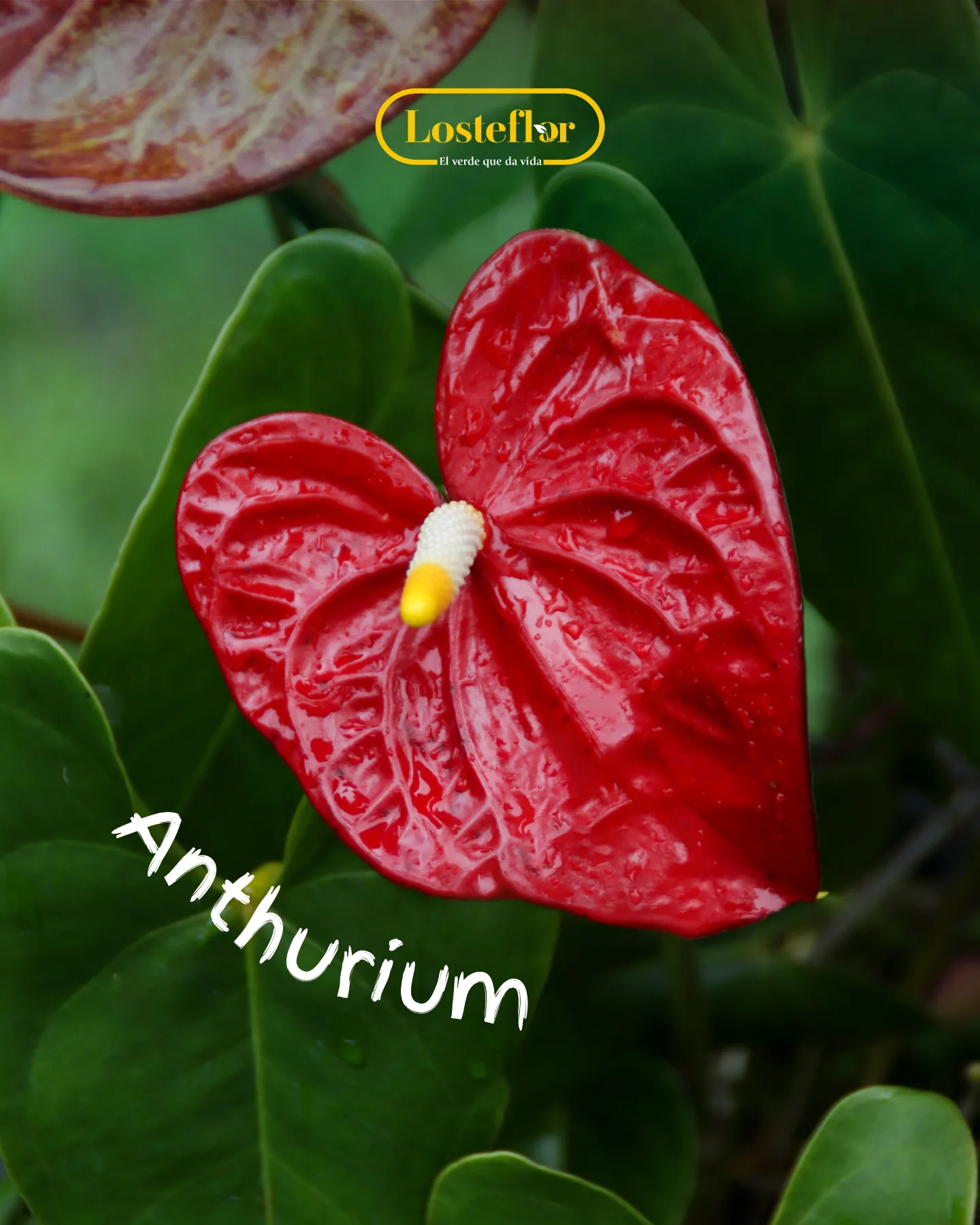
The anthurium is probably the most elegant of the indoor red plants. Its heart-shaped spathe, glossy and almost lacquered, is paired with a central spadix that makes it unmistakable. It appreciates bright but indirect light, a setting with some humidity and moderate watering that does not waterlog the pot. It is a perfect choice as a gift or to add a tropical touch to a living room.
2. Salvia splendens
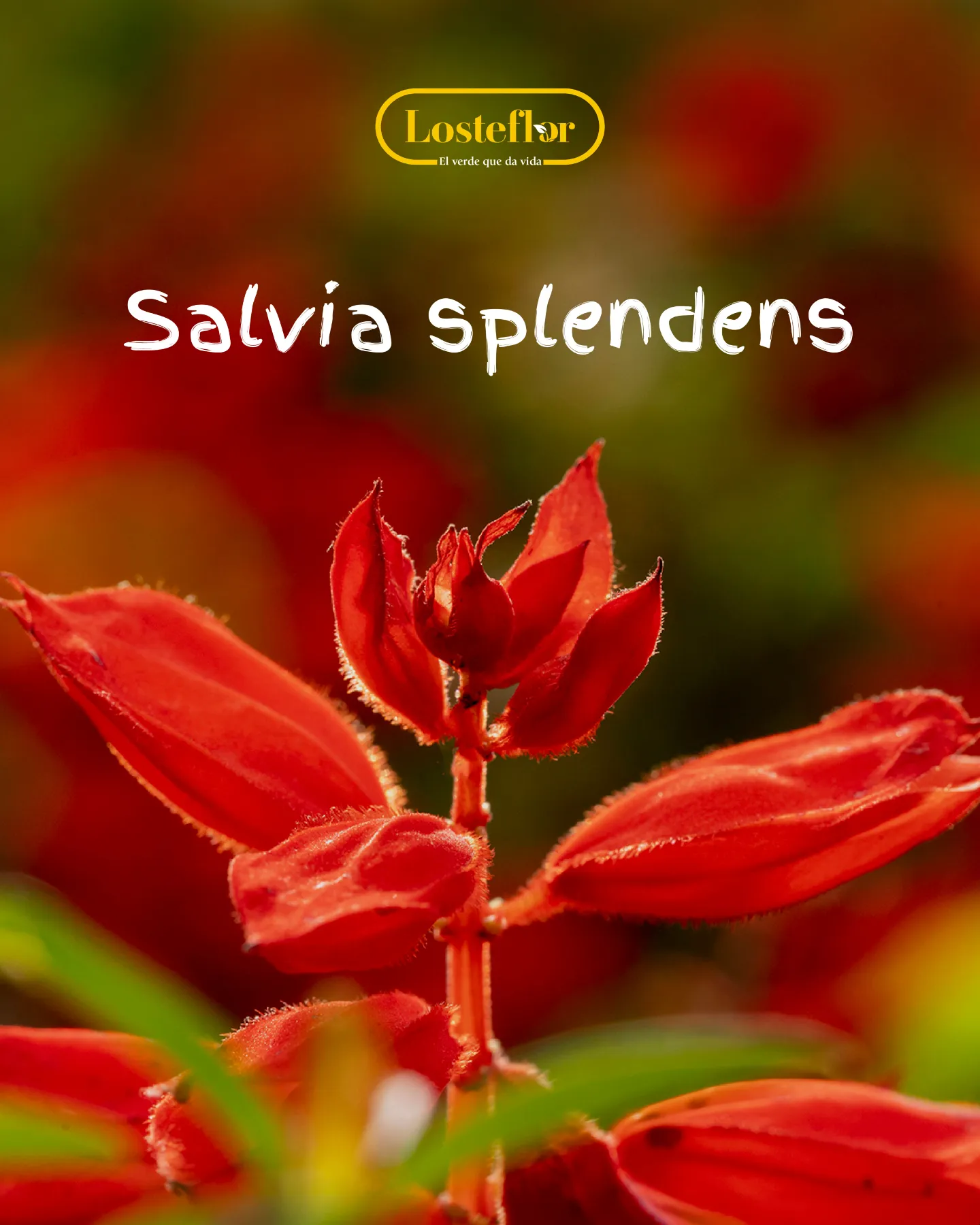
Salvia splendens is an explosion of red spikes that never goes unnoticed in flowerbeds, planters and balconies. It is an outdoor plant that enjoys the sun and regular watering during the warm months, and it flowers generously when it gets good light. Its fiery colour makes it one of the favourites for bringing the garden to life in summer.
3. Kalanchoe blossfeldiana
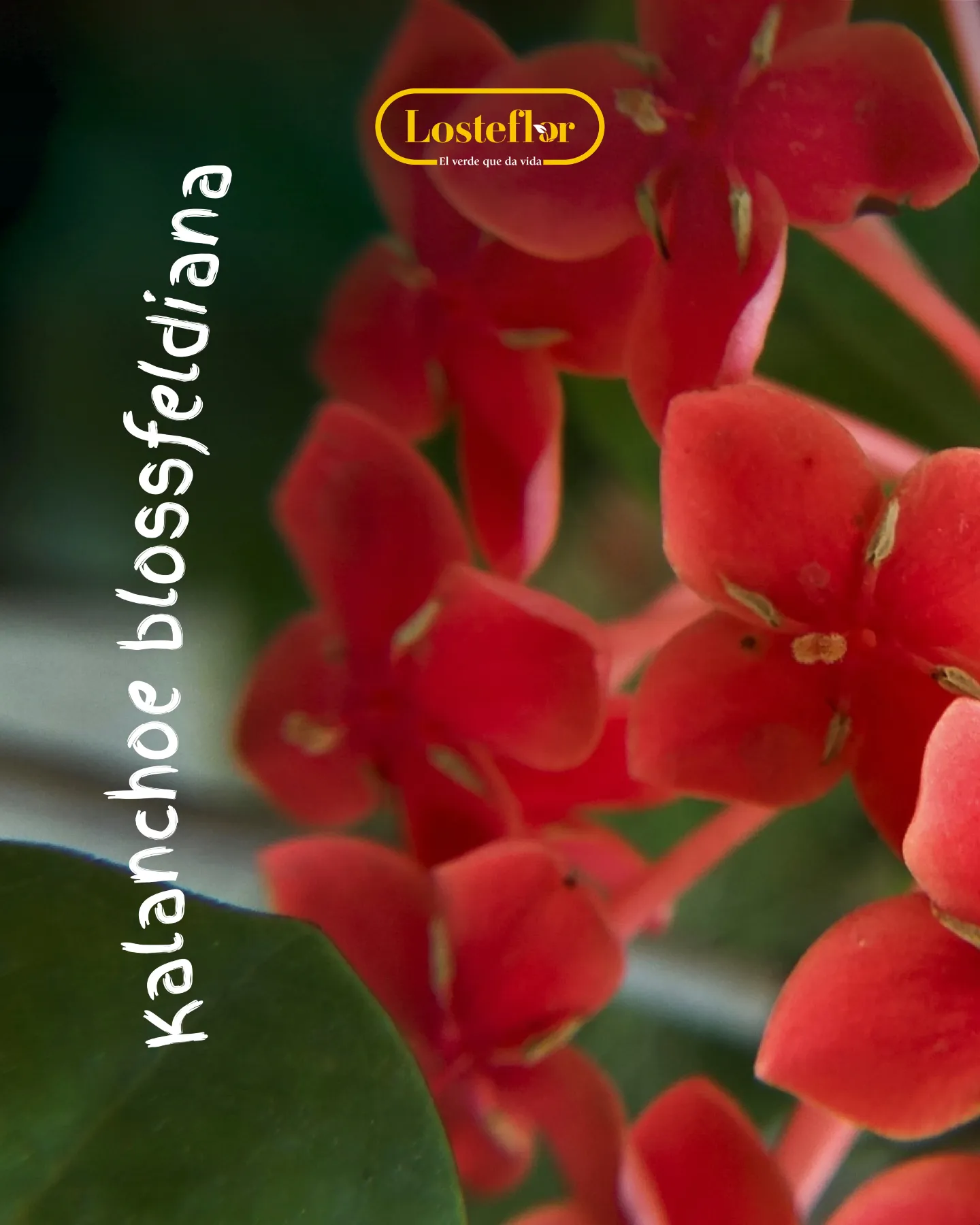
If you are after colour with minimal effort, the kalanchoe blossfeldiana is your ally. This succulent with clustered red flowers is very hardy, tolerates a lack of water well thanks to its fleshy leaves and blooms for weeks. It needs good light and spaced-out watering, letting the substrate dry between one and the next. Ideal for those starting out in the world of plants.
4. Caladium
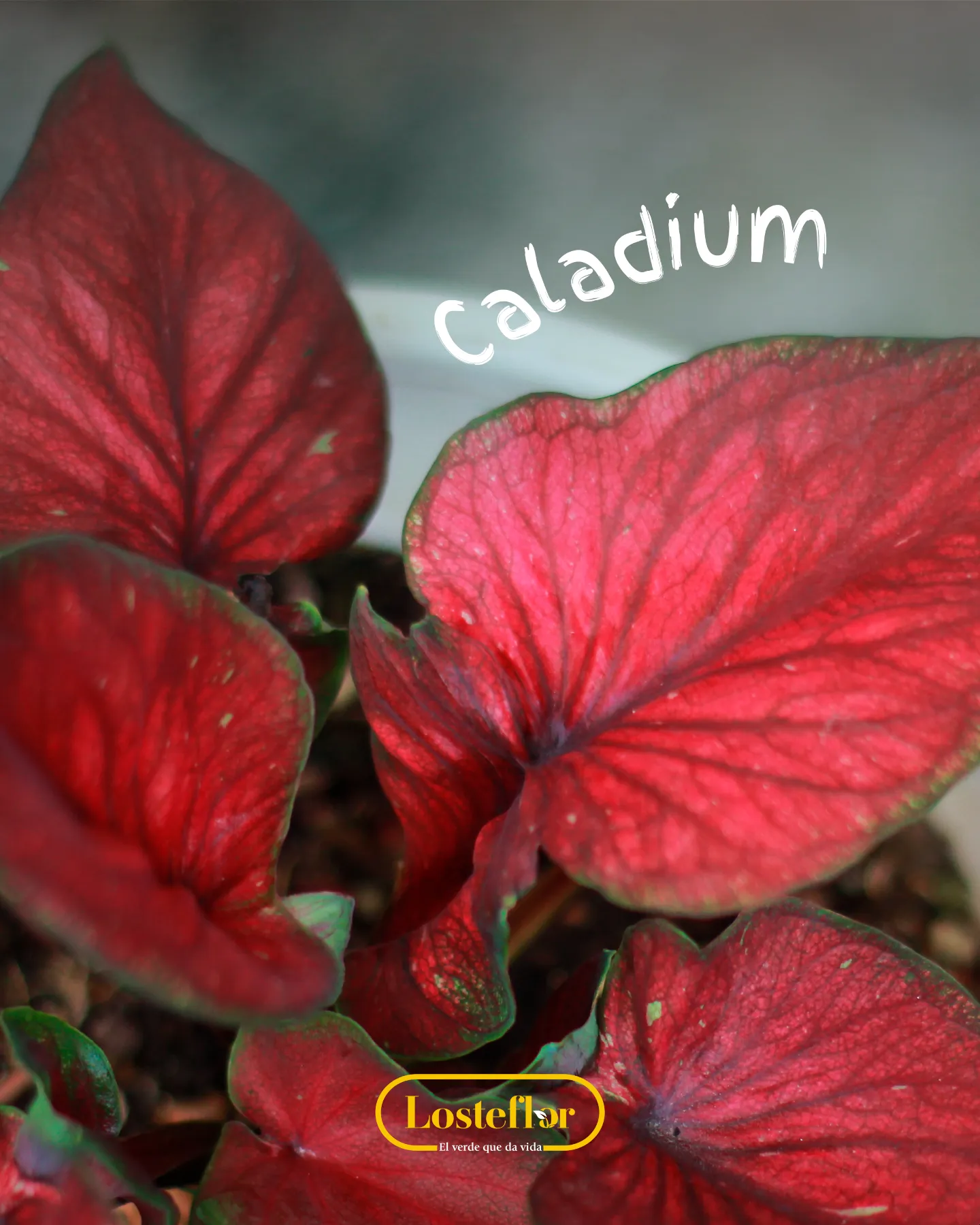
The caladium stands out not for its flower but for its spectacular red leaves with marked veins and green edges. It is a tropical foliage plant that enjoys warmth, ambient humidity and indirect light that enhances its colour without scorching the leaves. It brings a lovely drama to any indoor corner.
5. Red fittonia

The fittonia, known as the nerve plant, shows off green leaves crossed by a network of very striking reddish-pink veins. It is small and perfect for terrariums, tables and shelves. It loves humidity and soft light, and it warns you at once when it is thirsty by dropping its leaves, which recover once watered. One of the most original for indoors.
6. Red Ginger
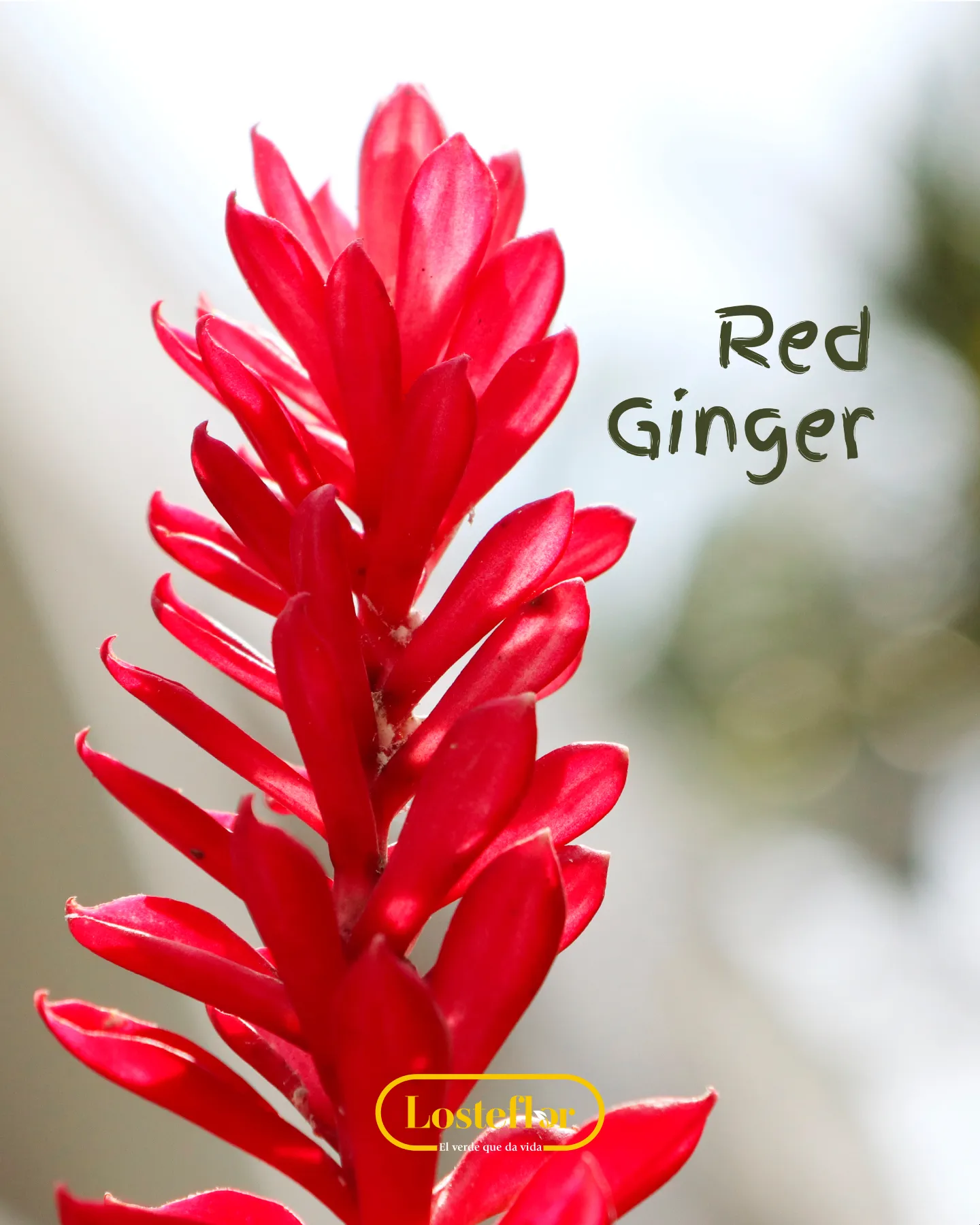
The red ginger (Alpinia) unfurls striking spikes of red bracts with an exotic air. It is a tropical plant that needs warmth and humidity to shine in all its splendour, much appreciated for its sculptural bearing and its long life as a cut flower. A treat for lovers of the spectacular.
7. Poppy

The poppy closes this guide with its wild charm. With delicate red petals and a simple look, it is an outdoor flower that loves full sun and well-drained soils. Perfect for giving a natural, countryside air to borders and gardens, evoking those red fields so typical of spring.
Tips for decorating with red plants
To make your red plants look their best, group them with green foliage that contrasts and enhances the colour. Spread the different shades of red around the house to create points of energy without overloading, and choose neutral pots that let the plant take all the attention. Respect the light each species asks for —direct for outdoor ones, indirect for indoor ones— and adjust watering to their nature: spaced out for succulents, more constant for the tropical leafy ones. With these simple gestures, decorating with red plants is very easy and the result is a home full of vitality.
At our nursery in Chiclana you will find many of these species and the advice to choose the one that best suits your home. You can see where we are at our location on Google Maps and come and discover them in person.
Frequently asked questions about red plants
Which red plants are best to keep indoors?
For indoors the anthurium, the caladium and the red fittonia stand out, as they adapt well to indirect light and to the somewhat humid settings of the home. The kalanchoe also works indoors as long as it gets good light.
Do red plants need a lot of sun?
It depends on the species. Outdoor ones such as salvia splendens or the poppy ask for direct sun, while leafy ones like the caladium or the fittonia prefer bright but filtered light so they do not scorch.
Is it hard to care for red plants at home?
It does not have to be. Many of them, like the kalanchoe, are very hardy and rewarding. The key is to respect the light and watering each one asks for; with those two basic cares they stay healthy and full of colour.
]]>What are Losteflor’s summer hours from Monday to Friday?
Throughout August, Losteflor’s summer hours move to a shortened schedule from Monday to Friday: we’re open from 8:00 am to 3:00 pm. This change is designed to let our team give you quality attention during the cooler hours, without the midday break we keep the rest of the year.
Losteflor summer hours: Saturdays and Sundays at the nursery
Weekends don’t change: on Saturdays and Sundays you can visit us at our usual hours, from 9:30 am to 2:30 pm. If you’d rather stroll among the plants at a more relaxed pace, the weekend remains the best time to do it.
Why we change Losteflor’s summer hours in August
The reason behind Losteflor’s summer hours is simple: taking care of you is our priority, and in the height of summer that means concentrating opening hours in the morning, when the heat is milder and a visit to the nursery is more pleasant both for you and for the plants you take home.
Tips for making the most of Losteflor’s summer hours
With the shortened schedule, mornings concentrate all the nursery’s activity. If you can, plan your visit early: you’ll find freshly watered plants, milder temperatures for walking among them, and more time for our team to advise you without rushing before closing. Take the chance to ask about summer care for whatever you take home, especially watering and placement, since the recommendations change quite a bit compared to the rest of the year.
How to care for the plants you buy during these summer hours
Shopping during the cooler hours also benefits the plants you take home. Avoid leaving them inside the car in the sun while you run other errands; if the drive is long, protect them from the direct blast of the air conditioning and place them in the shade as soon as you arrive. Water them as soon as you get home if the root ball’s soil is dry, and wait for the coolest hours of the day — early morning or dusk — to place them in their final spot in the garden or on the terrace. These are simple gestures, but they make the difference between a plant that settles in well and one that struggles with the move in the middle of summer.
Thank you for continuing to fill Losteflor with life on every visit: this adjustment simply aims to give that care back to you, while also looking after our team during the hottest days.
Frequently asked questions about Losteflor’s summer hours
What are Losteflor’s summer hours in August?
Monday to Friday we’re open from 8:00 am to 3:00 pm on a shortened schedule; Saturdays and Sundays, from 9:30 am to 2:30 pm, as the rest of the year.
Do Losteflor’s summer hours affect weekends?
No. The change to a shortened schedule only affects weekdays; Saturday and Sunday hours stay the same.
How long does this special schedule last?
Losteflor’s summer hours remain in effect throughout the month of August.
Do I need an appointment to visit the nursery?
No, you’re welcome to drop by freely within the hours listed. If you have any specific questions, feel free to contact us before your visit.
The good news is that none of these mistakes is hard to correct. With a couple of tweaks to your routine, your summer plants can go from just surviving to looking splendid, even during the hottest weeks in the south of Spain.
Mistake 1: watering at midday or wetting the leaves in full sun

When the heat kicks in it is tempting to grab the watering can at lunchtime, right when the soil looks driest. However, it is one of the most damaging slip-ups during a heatwave. The water left on the leaves under direct sun acts like a magnifying glass and burns them, leaving brown spots that never recover.
What is more, if you water hot soil at midday, the roots suffer a strong thermal shock. The solution is simple: always water first thing in the morning or at dusk, once the substrate has cooled down. That way the water really soaks down to the roots instead of evaporating before it can be used.
Mistake 2: moving the plant to a new spot all at once
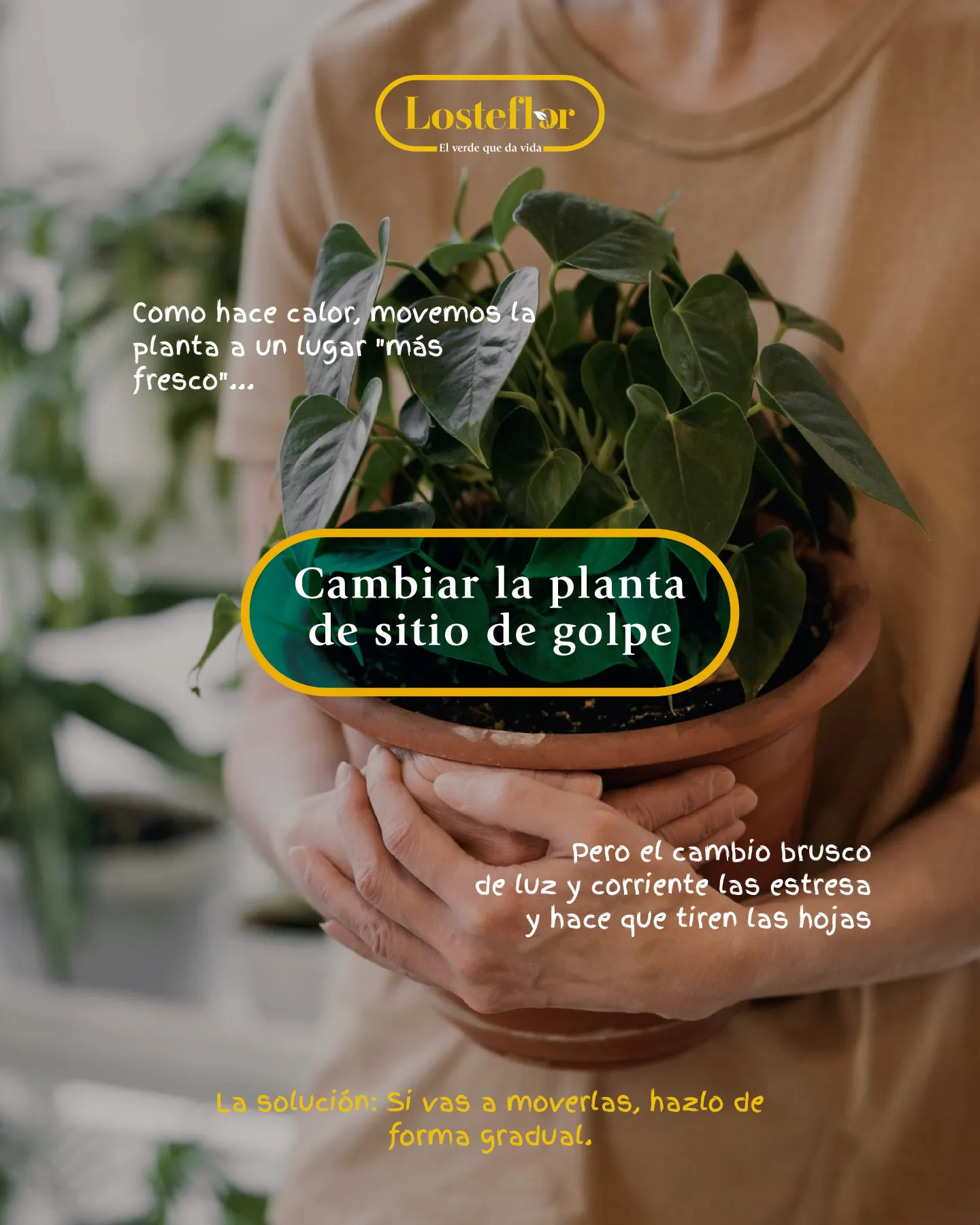
Because it is hot, instinct tells us to move the plant to a “cooler” place. It seems logical, but it is another classic mistake with summer plants. A sudden change in light and air flow stresses them and makes them drop their leaves overnight, just when we thought we were helping.
Plants need time to acclimatise to any new corner. If you really want to relocate one, do it gradually: move it a little closer to its new spot over several days. This way it adapts without any shocks and keeps its foliage healthy.
Mistake 3: flooding the pot “just in case”
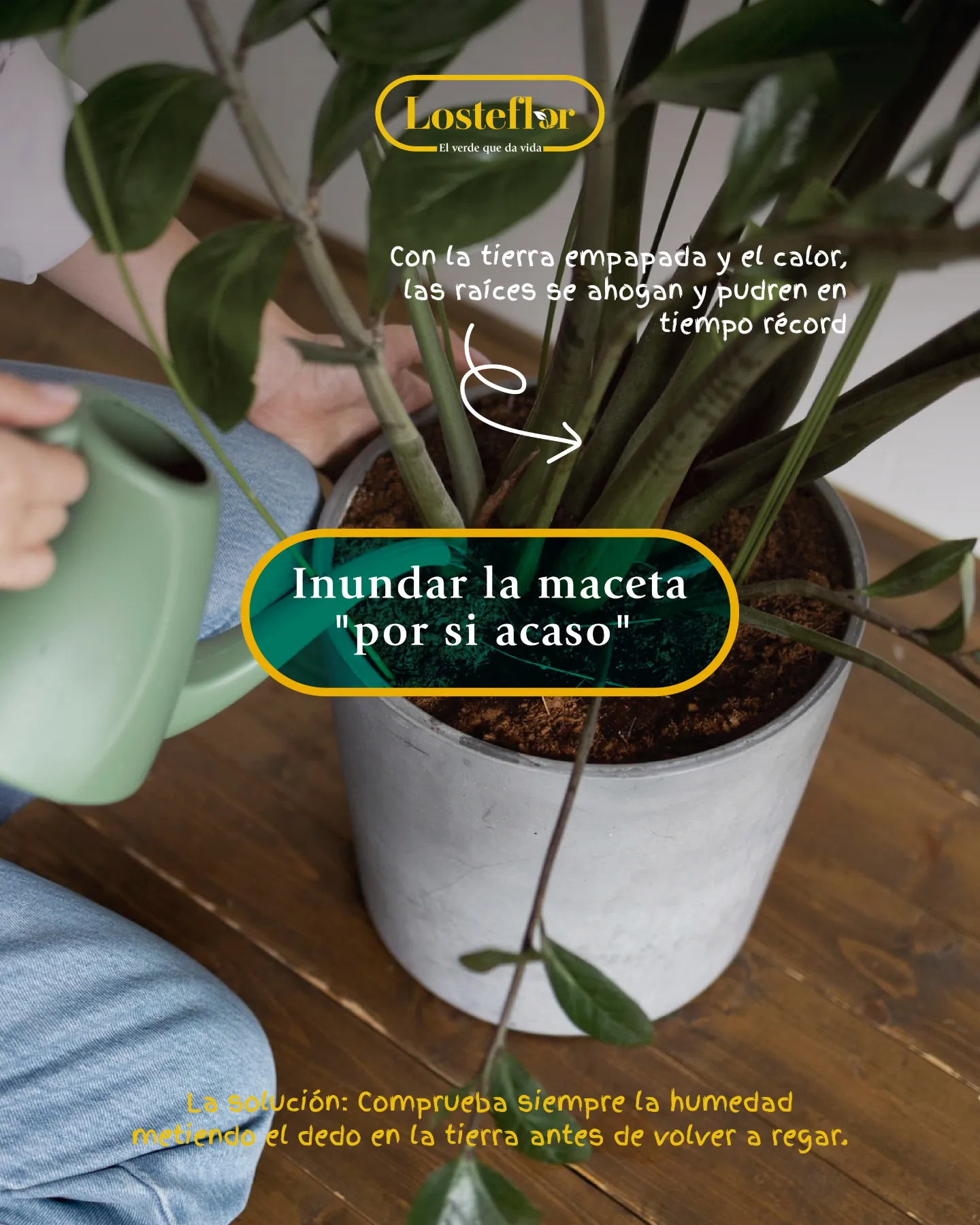
The third mistake is perhaps the most common: overwatering out of fear that the plant will go thirsty. With soggy soil and the heat, the roots drown and rot in record time. Hard as it is to believe, too much water kills more summer plants than drought itself.
Before watering again, always check the moisture by pushing your finger a couple of centimetres into the soil. Only when you feel the substrate dry to the touch is it time to give it a drink. A pot with good drainage and a saucer free of standing water make a huge difference during the hottest months.
How to keep your summer plants healthy and happy
Correcting these three habits is easier than it looks and, even so, it completely transforms how your summer plants look. Water early, move them patiently and check the soil before reaching for the watering can: with that basic routine you will avoid most of the season’s scares.
And if one is already showing signs of stress, do not give it up for lost. Often it is enough to remove the damaged leaves, adjust the watering and give it a few days of gentle shade so it bounces back strongly once temperatures drop.
Any questions? Visit us in Chiclana
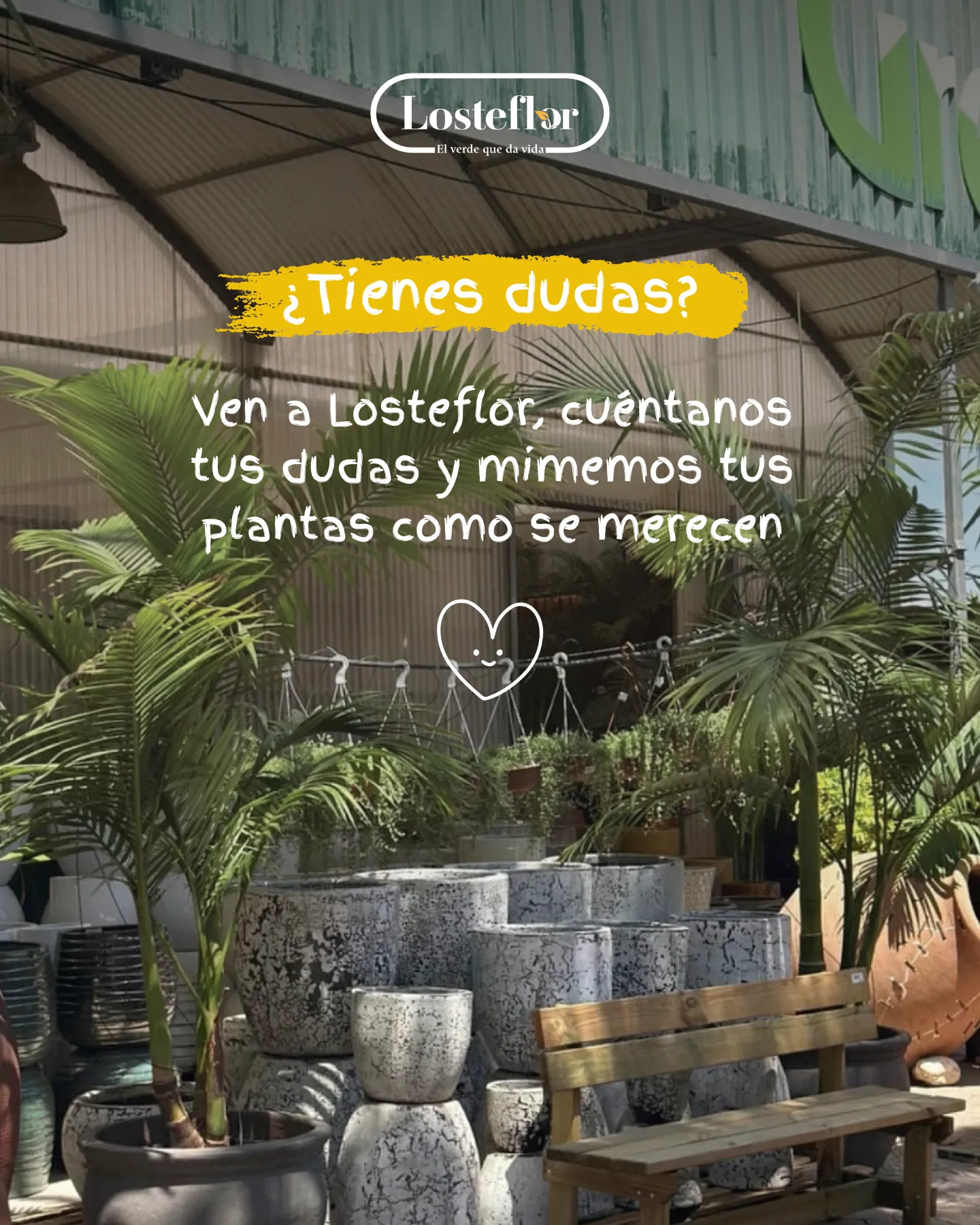
Every species has its quirks, and it is not always easy to get the ideal care right at home. If you have any doubts about how to look after your summer plants, come to Losteflor and tell us about your case: we will help you choose the right watering, location and substrate for each plant. You can find us at our nursery in Chiclana de la Frontera, where we care for your plants as they deserve.
Frequently asked questions about summer plants
What is the best time to water plants in summer?
The ideal moment is first thing in the morning or at dusk. At those times the substrate is cooler, the water does not evaporate as quickly and you avoid the drops on the leaves causing burns under direct sun.
How often should I water my plants in the heat?
There is no fixed number: it depends on each species, the pot and the location. The safest rule is to check the moisture with your finger and only water when the soil is dry below the surface, rather than following a rigid schedule.
Can I move my plants to a new spot when it is very hot?
Yes, but always gradually. A sudden move to a place with different light or air flow stresses them and makes them lose leaves. Move them little by little over several days so they acclimatise without suffering.
How do I know if my plant is rotting from too much water?
The typical signs are yellowish, soft leaves, dark stems at the base and a musty smell in the soil. If you spot these symptoms, stop watering, check the drainage and, if necessary, repot into fresh, aerated substrate.
]]>In this guide we bring together six orange plants that combine flowers and foliage full of visual vitamin, with their basic care explained clearly. You will find options for full sun, for partial shade and for pots, so you can choose the one that best fits your terrace, patio or Mediterranean garden.
Why choose orange plants
The colour orange brings a spectacular contrast against the green of the garden and against the pale walls so typical of the south. Many orange plants are also heat-resistant species with generous blooming, which makes them perfect allies for anyone looking for cheerfulness without complications. Several of them attract butterflies and bees, so they also help keep the garden’s balance alive.
Strelitzia (bird of paradise)
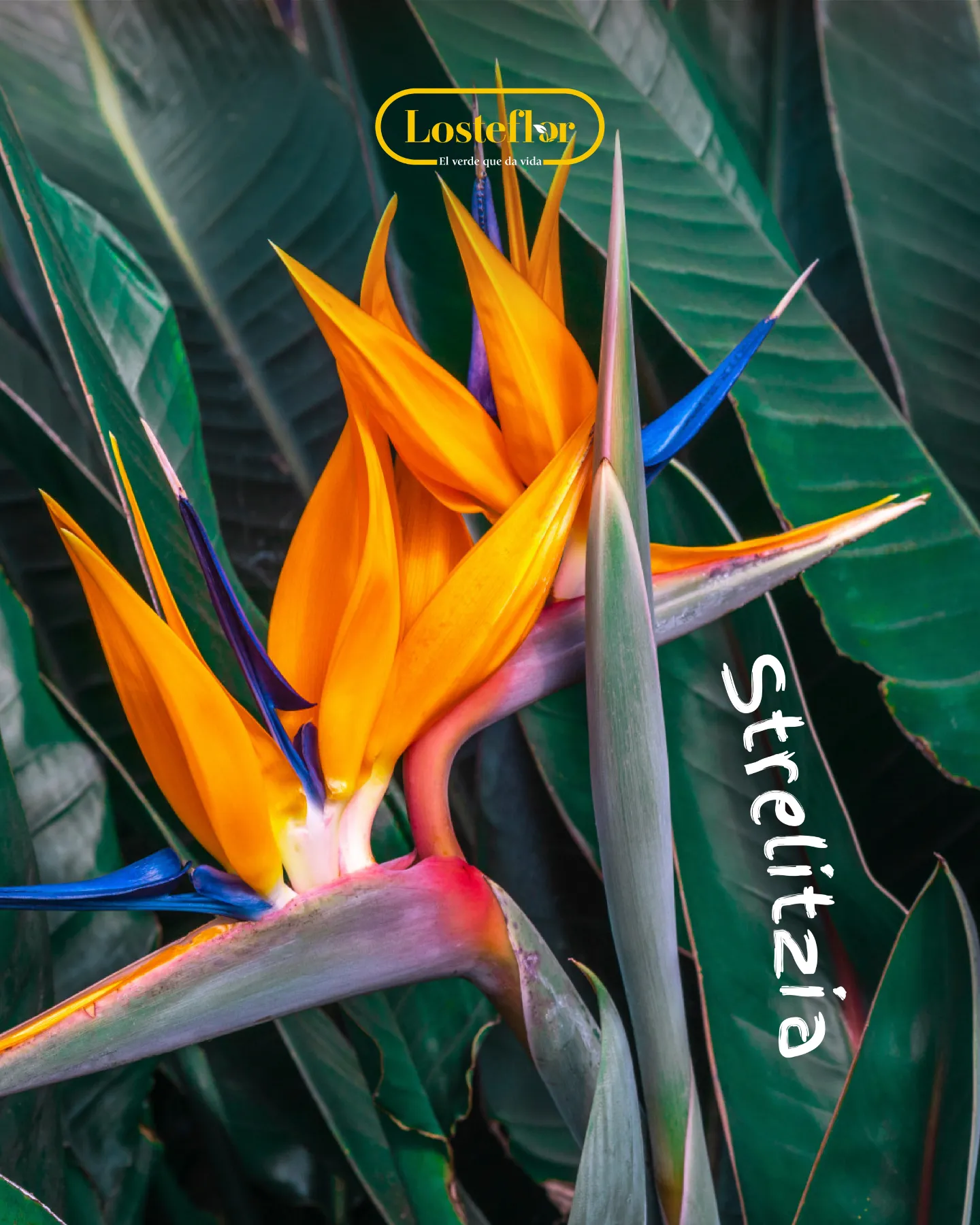
The strelitzia, known as the bird of paradise, is the undisputed queen among orange plants. Its flower resembles the plumage of an exotic bird, with intense orange bracts and blue details that look hand-drawn. It is a subtropical plant that adapts very well to the Cadiz coast.
It likes plenty of light, even gentle direct sun, and a soil with good drainage. Water moderately, letting the top layer of soil dry out between waterings, and protect it from hard frosts. With patience it rewards you with long-lasting blooms that hold up beautifully in a vase.
Clivia
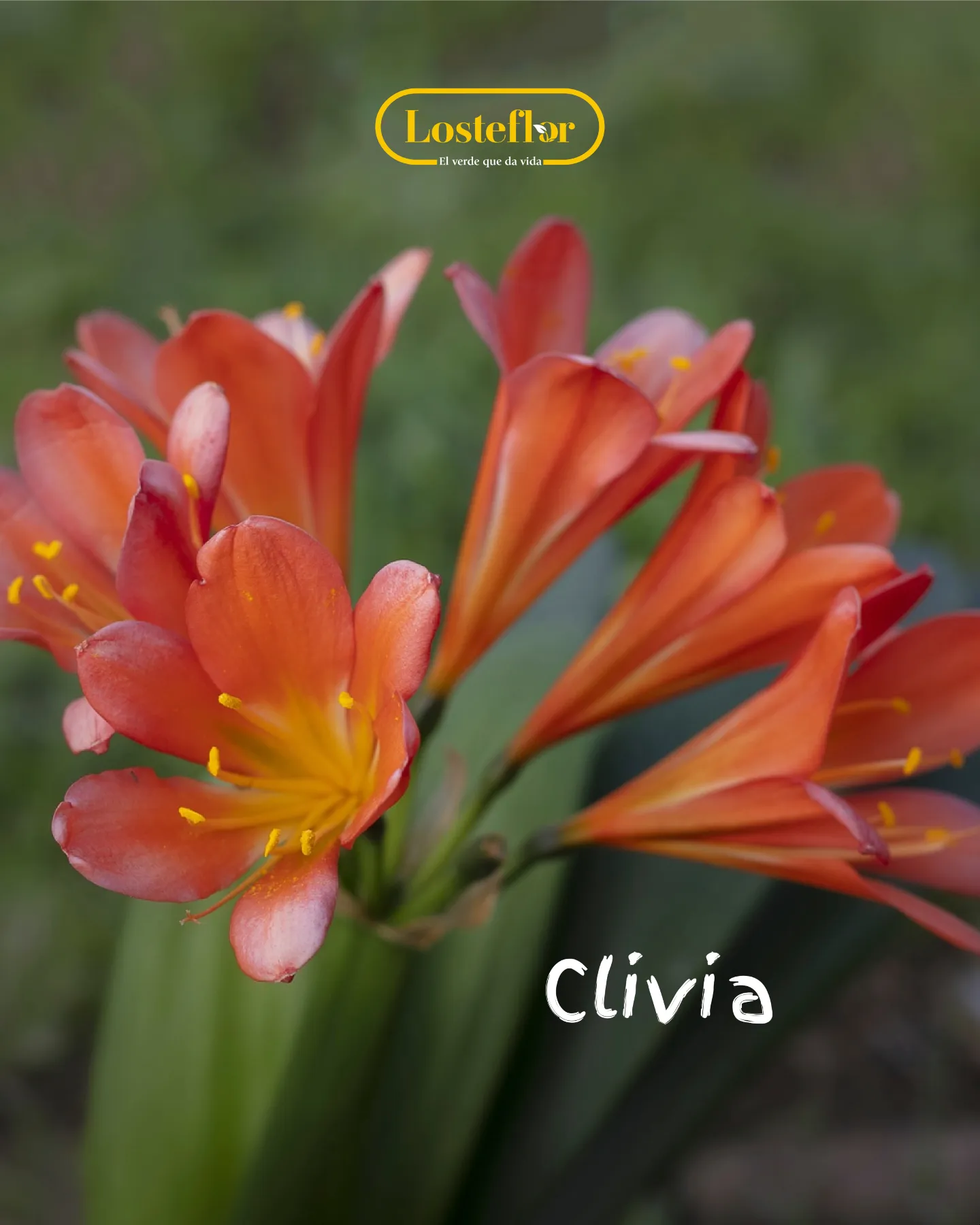
The clivia is perfect for those corners where other species do not thrive, because it appreciates partial shade and shelter. Its umbels of orange flowers with a yellow throat light up patios and galleries during late winter and spring, when a splash of colour is most welcome.
It prefers filtered light and fears the direct midday sun, which can burn its leaves. Water little in winter and a bit more during the growing season; it tolerates a certain amount of neglect well. A tip: it appreciates spending a few weeks drier and cooler before blooming, so do not pamper it too much.
Lantana camara

If you are looking for all-terrain orange plants for full sun, lantana is a safe bet. Its clusters combine orange, yellow and amber tones that shift as the flower matures, creating a very lively mosaic. It is one of the favourites of butterflies and bees.
It withstands heat, drought and the coastal environment with hardly a complaint. It only asks for direct sun, a soil that drains and spaced waterings once established. A light prune after flowering keeps the bush compact and prolongs the show for a good part of the year.
Crossandra
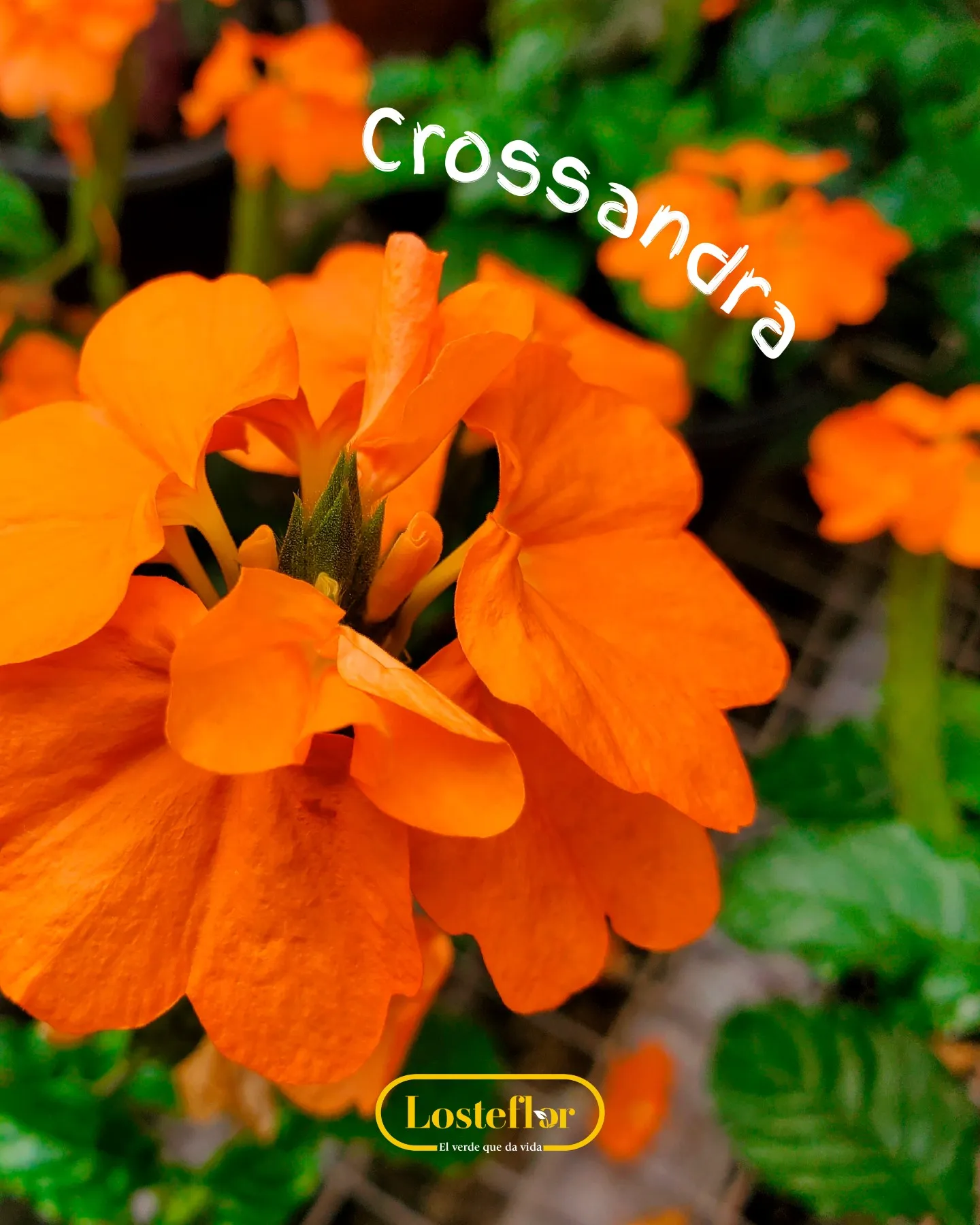
The crossandra brings a warm and very uniform orange thanks to its fan-shaped flowers, which appear tirelessly throughout the warm months. It is a compact plant ideal for pots, patio tables and bright indoor spaces.
It does well with bright but filtered light and a somewhat humid environment, without waterlogging. Keep the substrate slightly moist and avoid cold draughts. In areas with a mild climate it can spend the winter sheltered on the terrace, ready to bloom again as soon as temperatures rise.
Kalanchoe
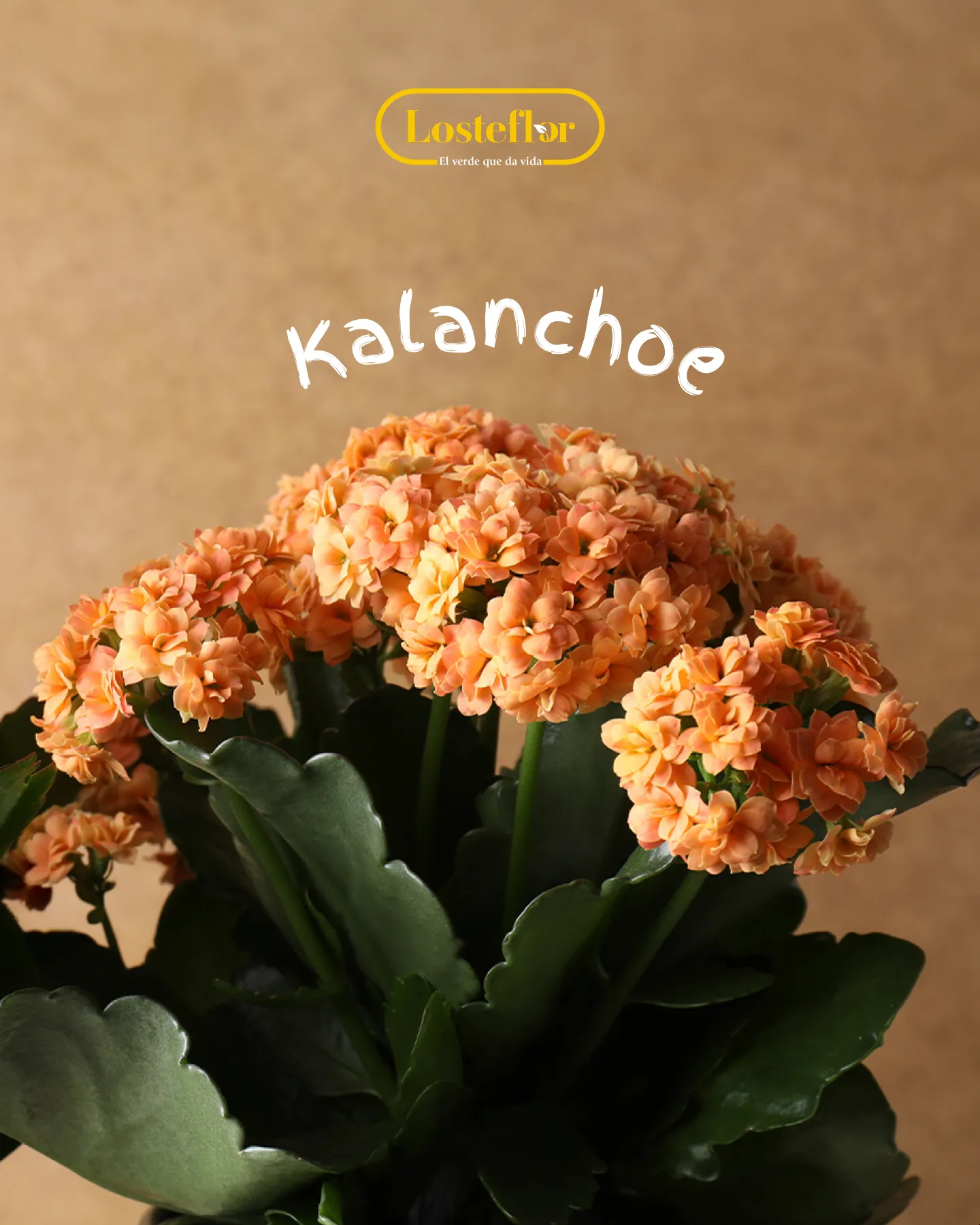
Among the most rewarding orange plants is the kalanchoe, a succulent with tiny flowers grouped in clusters that last for weeks. Its fleshy foliage stores water, so it forgives forgetfulness and fits perfectly for anyone starting out with plants.
It wants plenty of light to bloom strongly and very little water: water only when the substrate is completely dry. Excellent drainage is the key to preventing the roots from rotting. In pots, it brightens windowsills, staircases and sunny corners with minimal effort.
Heuchera
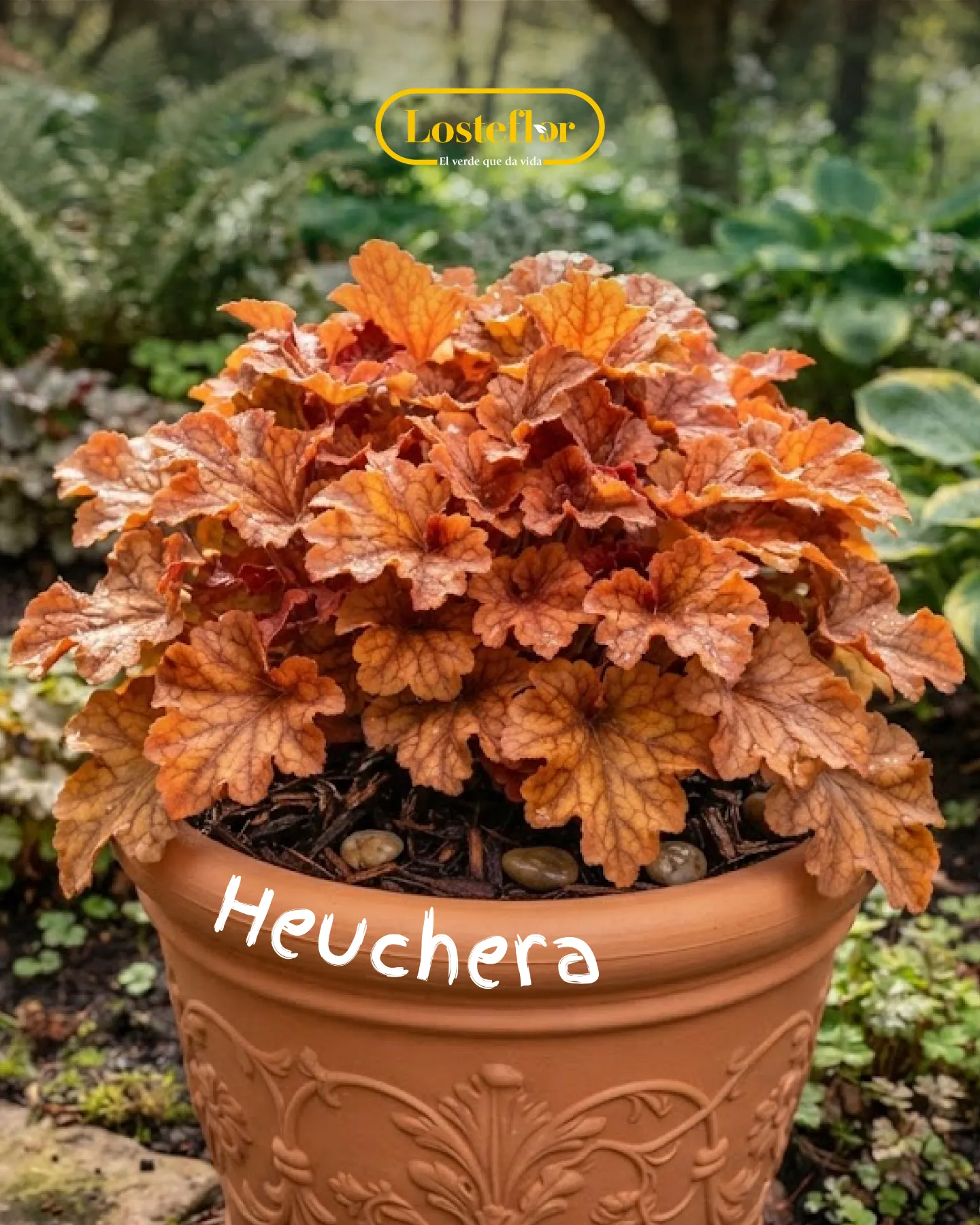
Not all orange comes from flowers: the heuchera proves that foliage can also take centre stage. Its wavy leaves display amber, caramel and coppery tones that hold for much of the year, adding colour even when other plants are resting.
It prefers cool partial shade and a soil that retains some moisture without becoming waterlogged. It is perfect for accompanying the flowering species above and creating contrasting compositions. A mulch around it helps keep the roots cool during the summer.
How to combine orange plants in your garden
The secret to showing off these orange plants lies in playing with heights and textures: the strelitzia as a sculptural backdrop, the lantana and kalanchoe in the sunny foreground, and the clivia or heuchera for the shady corners. Orange combines wonderfully with intense greens, with blues and with touches of white, so let yourself go.
If you want advice on which species best fits your space and climate, you can get in touch with our team. And if you prefer to see them in person, we look forward to welcoming you at our nursery in Chiclana de la Frontera, whose location you can check on Google Maps.
Frequently asked questions about orange plants
Which orange plants best withstand full sun?
Lantana camara and kalanchoe are among the orange plants that best tolerate direct sun and heat. Strelitzia also accepts plenty of light, always with proper watering and good drainage.
Are there orange plants for shady areas?
Yes. Clivia and heuchera prefer partial shade and are ideal for patios, galleries or sheltered corners where the midday sun does not reach strongly.
Can I grow these plants in pots?
Many of these species adapt well to pots, especially kalanchoe, crossandra and clivia. You only need a container with good drainage and a quality substrate for them to look healthy.
]]>