
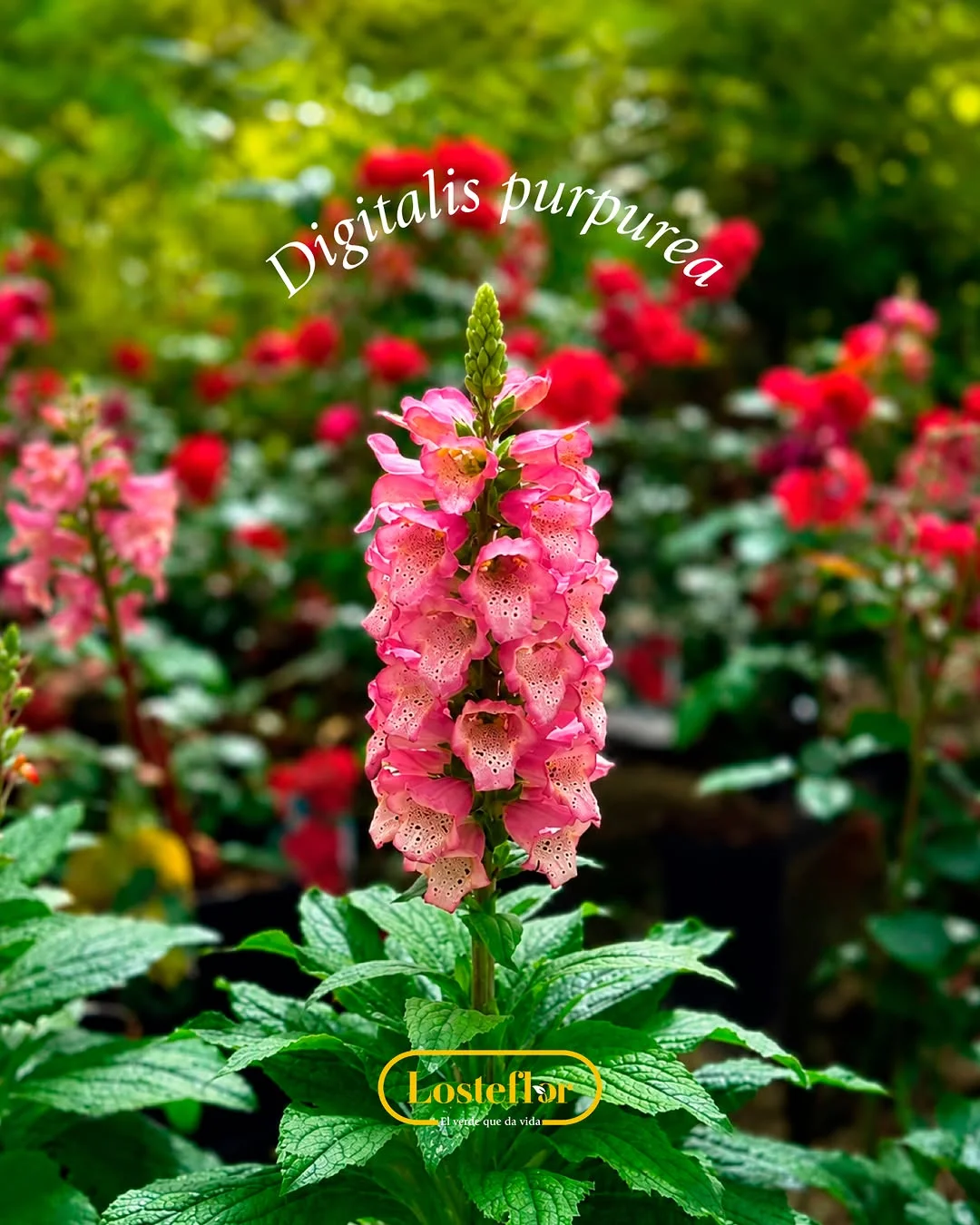
The foxglove (Digitalis purpurea) is one of those plants that stops you in your tracks the moment it blooms: a tall spike covered in bell-shaped, speckled flowers that brings height and color to any corner. Beyond its beauty, it is a fascinating plant, native to Europe and found in some of the most carefully tended gardens. At Losteflor, our garden nursery in Chiclana de la Frontera, we want to tell you why it deserves a spot in your garden and how to get the most out of it.
What is the foxglove and where does it come from?
It is a flowering plant of European origin that has earned a prominent place in ornamental gardening. Its botanical name, Digitalis purpurea, refers to the shape of its tubular flowers, which recall the thimbles once used for sewing. It grows by forming a rosette of soft green leaves from which a spectacular flower spike emerges, with dozens of tiered little bells in shades of pink, purple or white, almost always with the interior dotted with small speckles.
Its upright bearing makes it a natural star of flower beds and an ideal companion for roses and other garden plants, as you can see in the nursery setting. That is why the foxglove is considered a must-have in many of the most prestigious gardens.
The foxglove, an ally of pollinators
If there is one thing that sets the foxglove apart, it is its unique ability to attract pollinators naturally. Bees, in particular, feel irresistibly drawn to its bell-shaped flowers, which work like small landing pads loaded with nectar. Planting it is therefore a simple and beautiful way to support the biodiversity of your garden and to lend a hand to the ecosystem around us.
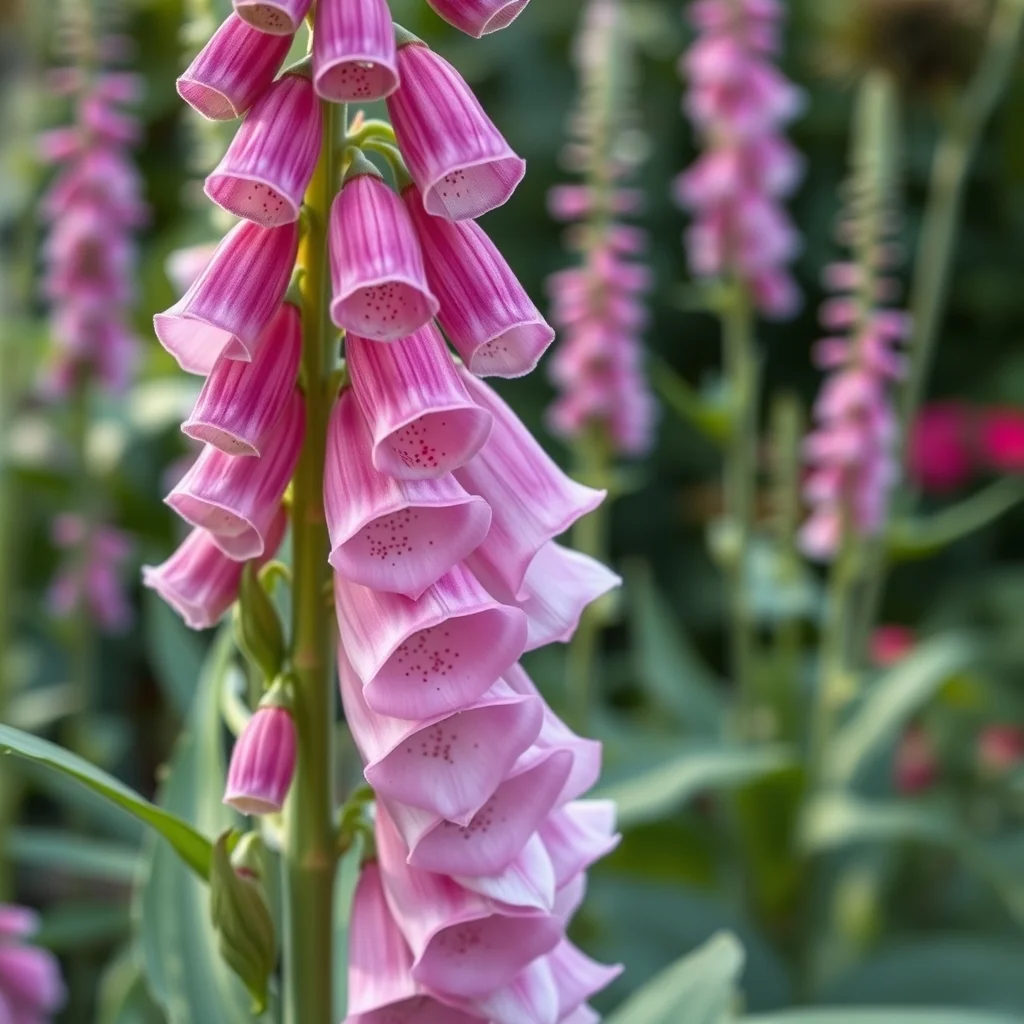
A garden full of pollinators is a more alive and healthy garden, where the rest of the plants benefit from their work too. This species thus becomes much more than an ornament: it is a key piece in helping your green space work as a small refuge for beneficial wildlife.
How to care for the foxglove in a Mediterranean garden
Adapting the foxglove to our climate in Chiclana and the province of Cádiz is perfectly possible if you keep a few basic guidelines in mind. These are the care tips that make the difference.
Light and location
The foxglove appreciates light, but in areas with hot summers like ours it prefers partial shade or gentle sun during the central hours of the day. Finding a spot sheltered from the most intense heat helps its flowers stay fresh for longer.
Watering and soil
The ideal is a fertile, well-draining soil that keeps a little moisture without becoming waterlogged. Regular but moderate watering keeps the plant vigorous; adding organic matter to the substrate and a layer of mulch helps preserve that freshness at the roots during the driest months.
Flowering and maintenance
During flowering, removing the spent blooms encourages the plant to keep producing and keeps the spike attractive. It tends to self-seed if you let some spikes mature, so with a little patience it can give you new plants year after year with hardly any effort.
A beauty best treated with respect
It is worth remembering that the foxglove is a toxic plant if ingested, in all of its parts. It is not the best choice if you have small children or curious pets with direct access to it, so it is worth placing it in controlled areas of the garden. If you are looking for gentler alternatives for those cases, at the nursery we can recommend pet-friendly plants that also offer plenty of decorative value.
Bring this plant to your garden
At Losteflor we have several foxgloves waiting for you, ready to give that fresh new look to your garden or terrace. Our team will help you choose the location and the care that best suit your space. You can write to us to clear up any questions or come and see us directly: we are at our garden nursery in Chiclana de la Frontera, where you can see the plants in person and take home the one you fall in love with.
Frequently asked questions
Does it need a lot of sun?
It prefers light, but in warm climates like the Mediterranean it grows better in partial shade or with gentle sun, protected from the hottest hours of the day.
Why does it attract bees so much?
Its bell-shaped flowers concentrate nectar and offer a perfect resting point for pollinators, which makes it one of the most effective plants for drawing them to the garden.
Is it dangerous for pets or children?
Yes, all of its parts are toxic if ingested, so it is best to plant it in controlled areas. If you need it, at the nursery we can point you toward safer options.
Where can I buy foxglove in Chiclana?
At Losteflor we have several units available. Drop by the nursery or contact us and we will help you choose the perfect plant for your garden.